
Collaborative Conservation Initiatives
A groundbreaking conservation program aimed at reviving the Andalusian buttonquail has been initiated through the establishment of two captive breeding populations, one located at the Zoobotanical Garden of Jerez in Andalucía, Spain, and the other at the Zoo of Aïn Sebaâ in Casablanca, Morocco. This initiative marks a significant step towards the potential recovery of a species that vanished from the Iberian Peninsula decades ago, while also bolstering its dwindling natural populations in Morocco. The endeavor is a testament to the increasing cooperation between institutions and specialists from both Morocco and Spain, facilitated by the International Union for Conservation of Nature (IUCN) in recent years.
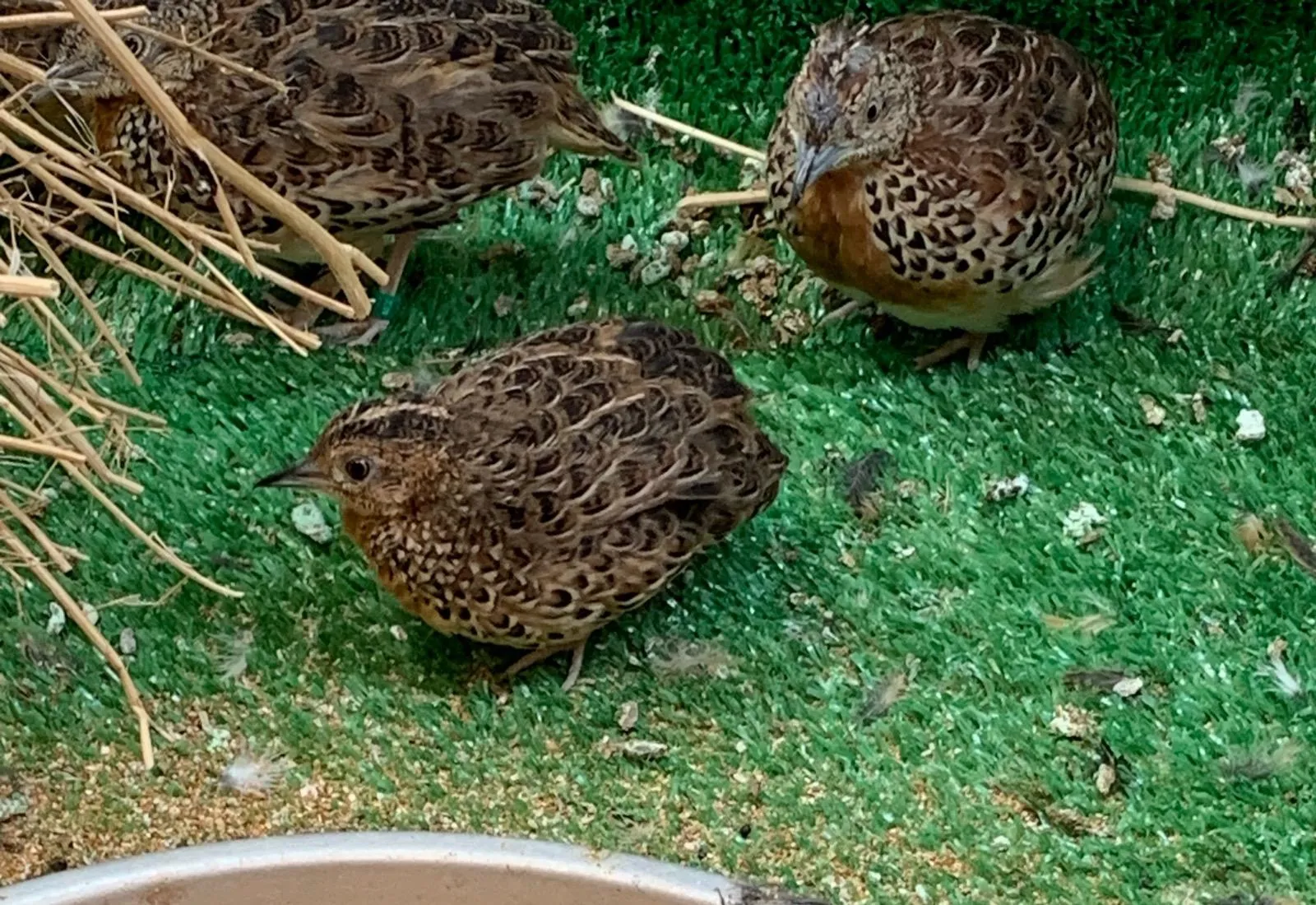
The project, launched in 2026 under the collaboration of the National Agency for Water and Forests of Morocco (ANEF), the Ministry for Ecological Transition and the Demographic Challenge of Spain, and the Regional Government of Andalucía, focuses on the conservation of the Andalusian buttonquail (Turnix sylvaticus sylvaticus). Intensive field surveys conducted by expert teams from both countries have successfully established a group of captive-bred individuals that will serve as a breeding population. Some of these birds remain at the Zoo of Aïn Sebaâ, aimed at reinforcing the species' population in the Oualidia region, while 18 specimens were relocated on September 9 to the Biodiversity Conservation Center at Zoobotanical Jerez, where an ex-situ breeding program will commence, as indicated in a press release from the Andalucía Ministry of Sustainability and Environment.
Strengthening Bonds for Species Conservation
The arrival of these birds in Jerez represents a crucial milestone in a process that, if the planned phases succeed, could eventually lead to the species' revival in places in Andalucía where it historically thrived, simultaneously enhancing its conservation in Morocco. The Andalusian buttonquail, a subspecies native to the Mediterranean basin, has not been seen in the Iberian Peninsula for years, with its last known population surviving in a small area of Morocco's Atlantic coastline, primarily linked to traditional agricultural landscapes. This precarious situation underscores the need for collaboration between the two nations for effective conservation.
The transfer of the birds to Jerez is the culmination of scientific, technical, and institutional efforts by the involved administrations and organizations. It also highlights the importance of exchanges in recent years that have brought together conservation specialists from both Morocco and Spain. In November 2024, the IUCN Mediterranean Cooperation Centre organized a visit to Andalucía by a Moroccan delegation led by representatives from ANEF, including experts in ecology, protected area management, ecotourism, and veterinary sciences. Over several days, Moroccan and Spanish professionals shared experiences related to captive breeding, reintroduction of endangered species, and management of protected spaces. The delegation visited various facilities, including the Zoobotanical Garden of Jerez and the Biological Station of Doñana-CSIC, among others.
This exchange allowed participants to learn from successful conservation experiences in Spain, such as those involving the Eurasian spoonbill and the Iberian lynx, while also exploring how to apply this knowledge to new conservation programs in Morocco. Discussions included the breeding and reintroduction of the African serval, the recovery of marine turtles, and the management of threatened species and protected natural areas, with the Andalusian buttonquail being a prominent focus.
Less than two years after those discussions, the 18 buttonquails from Morocco are now housed in the same center in Jerez that facilitated part of that significant exchange. Maher Mahjoub, the director of the IUCN Mediterranean Cooperation Centre, notes, "The arrival of these specimens in Jerez demonstrates the value of maintaining dialogue and cooperation between institutions and specialists from both shores of the Mediterranean. We have worked for years to facilitate these exchanges and connect conservation experiences between Morocco and Spain. Witnessing this cooperation pave the way for the potential recovery of a species that has disappeared from Spain holds profound significance."
The next phase has begun, according to the Junta de Andalucía. The 18 birds are descendants of eggs collected in Morocco, which were incubated until they hatched. After meeting the necessary veterinary and administrative requirements for international transfer, the birds arrived at the port of Algeciras before being transported to Jerez. A new conservation program will be developed at the Zoobotanical Garden to establish a sufficiently large and genetically diverse breeding group. The Junta plans to conduct at least four additional campaigns in Morocco over the next few years to help secure this safety population.
“The goal is not just to return the buttonquail to Andalucía. The Moroccan population is also at risk, and working together allows us to better understand it, protect the habitats it depends on, and eventually strengthen it with birds bred in both centers. What begins now in Jerez will also benefit the remaining populations in Morocco,” explains Zouhair Amhaouch from ANEF.
This project currently involves the Junta de Andalucía's Ministry of Sustainability and Environment, the Ministry for Ecological Transition and the Demographic Challenge, the Government of Morocco, IUCN Med, the Biodiversity Conservation Center at Zoobotanical Jerez, the City Council of Jerez, along with the Migres Foundation and scientific and environmental consulting firms like Rifcon and AUSTROS, among other scientific and corporate entities. For IUCN Med, facilitating dialogue among these stakeholders is part of a broader effort to promote knowledge and experience sharing in conservation across Mediterranean countries.
Cooperation is also bolstered through the IUCN Members network. The three public institutions— the Ministry for Ecological Transition and the Demographic Challenge, the Junta de Andalucía, and the National Agency for Water and Forests of Morocco—are all members of the Union. This common membership facilitates direct contact between technical teams on both sides and promotes work under shared scientific standards and criteria, supported by IUCN’s Secretariat and Commissions. The three institutions have expressed their commitment to continue collaborating on the recovery of endangered or extinct species of mutual interest.
As reported by iucn.org.