
Rediscovering Tadelakt: A Historical Approach to Modern Design
In recent years, the renovation of bathrooms, powder rooms, and other wet areas has brought to light a time-honored Moroccan technique known as tadelakt. This unique finish, composed of lime, water, black olive soap, and mineral pigments, forms a seamless, monolithic layer that eliminates the necessity for visible grout commonly found in modular flooring. Far from being just a contemporary trend, tadelakt boasts a rich historical lineage, with its origins tracing back to the 12th century during the Almoravid and Almohad dynasties. This ancient method has been cherished for its aesthetic appeal and practical benefits, becoming a popular choice for cisterns, tanks, and Moroccan hammams, where its moisture-resistant properties and polished finish have ensured durability over time.
The Chemistry and Craftsmanship Behind Tadelakt
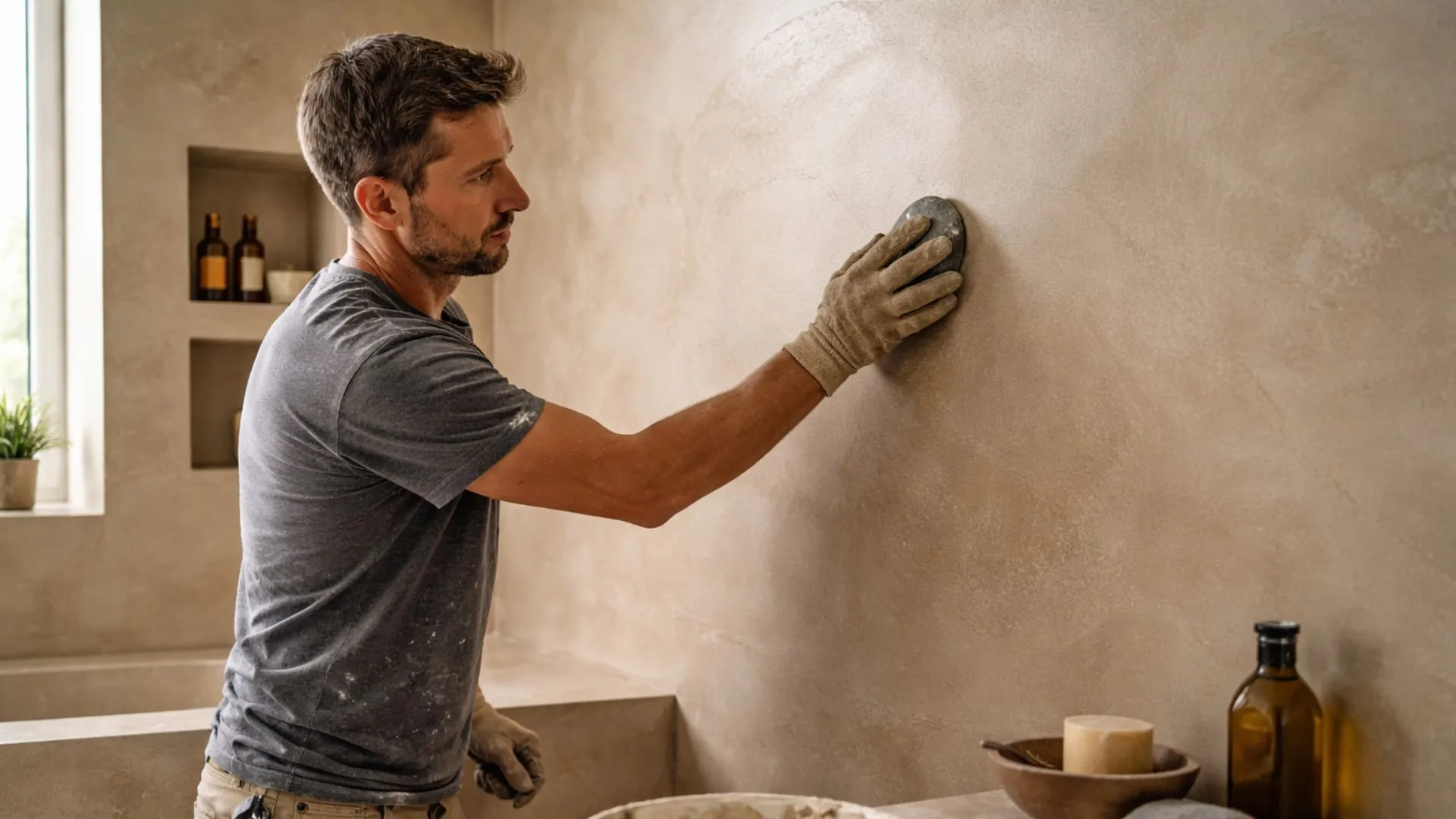
The re-emergence of interest in tadelakt can be attributed to its ability to create continuous surfaces that cover walls, niches, countertops, and sinks without the visual interruption of tile patterns. Tadelakt is defined by its polished, waterproof plaster finish, making it an ideal choice for a variety of applications, including walls, ceilings, and even bathtubs. The process of applying tadelakt involves a meticulous technique where soap is used during the initial hardening stage, followed by polishing with a smooth stone. This not only seals micro-cracks but enhances the shine and water resistance of the surface, distinguishing it from ordinary plaster that is simply painted at the end.
However, achieving the desired effect requires skilled craftsmanship, as the quality of the finish is heavily reliant on the consistency of the lime, the timing of application, and the expertise of the artisan. Known locally as maalems, these craftsmen play a crucial role in ensuring that the tadelakt is applied correctly, as any structural movement can lead to cracks if the underlying substrate is not adequately prepared. This preparation is vital because tadelakt is sensitive to the condition of the surface it is applied on, necessitating a firm and homogeneous foundation.
Moreover, in areas with constant water exposure, such as bathrooms and shower stalls, additional waterproofing measures may be recommended to enhance durability and prevent water ingress. Despite its robust characteristics, tadelakt requires regular maintenance, including cleaning with non-abrasive materials and the occasional reapplication of olive soap to maintain its water-resistant qualities and visual appeal. The artisanal nature of tadelakt results in subtle variations in texture and tone, giving each application a unique character that sets it apart from mass-produced ceramic tiles.
In conclusion, while tadelakt offers an elegant solution for modern renovations, it is not a one-size-fits-all answer for every space or budget. Its traditional composition and application method make it essential to engage skilled professionals for successful implementation. As homeowners seek to blend historical tradition with contemporary design, tadelakt stands out as a testament to the enduring art of craftsmanship that transforms ordinary spaces into extraordinary experiences.
As reported by en.clickpetroleoegas.com.br.