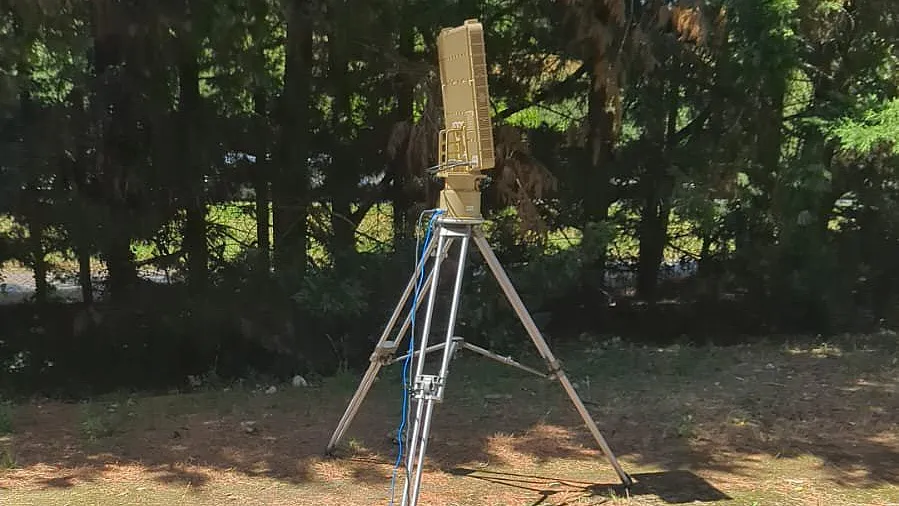

In an era where technological advancements are often accompanied by exorbitant price tags, a Moroccan engineer named Nawfal Motii has made waves in the electronics community with his innovative solution: the Aeris-10 radar system. This open-source radar, designed to rival commercial systems that typically cost around $250,000, is not only affordable but also highly accessible for tech enthusiasts eager to explore radar technology without breaking the bank.
The Aeris-10 comes in two impressive variants: the 10N Nexus, which boasts a range of 3 kilometers and features an 8x16 patch antenna array, and the 10E Extended version, capable of reaching distances of up to 20 kilometers thanks to its advanced 32x16 slotted waveguide array. What sets this project apart is Motii's commitment to transparency; he has made the entire project available on GitHub, where users can find detailed schematics, PCB layouts, components, firmware, and even software with a graphical user interface for controlling and monitoring the radar system.
At its core, the Aeris-10 employs an XCA7A50T FPGA, which serves as the central processor for performing complex FFT calculations, enhancing capabilities with features such as Moving Target Indicator (MTI), Doppler-effect speed estimation of moving objects, and CFAR false alarm detection control. Additionally, an STM32F746xx microcontroller manages various components including frequency synthesizers, ADCs, DACs, GPS, barometers, stepper motors, and the cooling system, making the Aeris-10 a sophisticated piece of technology.
One of the standout features of the Aeris-10 is its true phased array system, offering precise ±45° elevation and azimuth adjustments, which are critical for effective radar functionality. While the materials cost for the 10N is estimated at around $5,000 and $7,200 for the 10E, these prices are remarkably economical compared to the commercial alternatives, which can range from $120,000 to $200,000, especially for extended-range systems.
Motii highlights that while military surplus radars may be available for $10,000 to $50,000, they often represent outdated technology with limited availability of spare parts. Building a DIY radar system can be an arduous task for small teams, primarily due to the high costs associated with testing equipment, which can reach $50,000. Driven by a passion for innovation, Motii describes himself as a “guy in a workshop in Morocco with a soldering iron and an obsession,” aiming to bridge the gap for those interested in radar technology.
For those excited about the prospect of constructing their own radar system, Motii has announced a collaboration with the Crowed Supply platform, targeting a release in Q3 2026. However, it's important to note that Crowed Supply is not your typical crowdfunding platform; it emphasizes fully-designed projects with working prototypes and maintains a rigorous vetting process, rejecting 90% of submissions to ensure quality and authenticity.
Initially licensed under the MIT license, the project has now transitioned to the CERN-OHL-PT license, which is more suited for physical hardware protection. Aspiring builders should also take heed that the frequencies utilized by the Aeris-10 are likely subject to strict regulatory oversight in various jurisdictions, necessitating compliance with local laws.
As reported by tomshardware.com.