The Morocco Segment of the Africa-Atlantic Gas Pipeline: Key Details
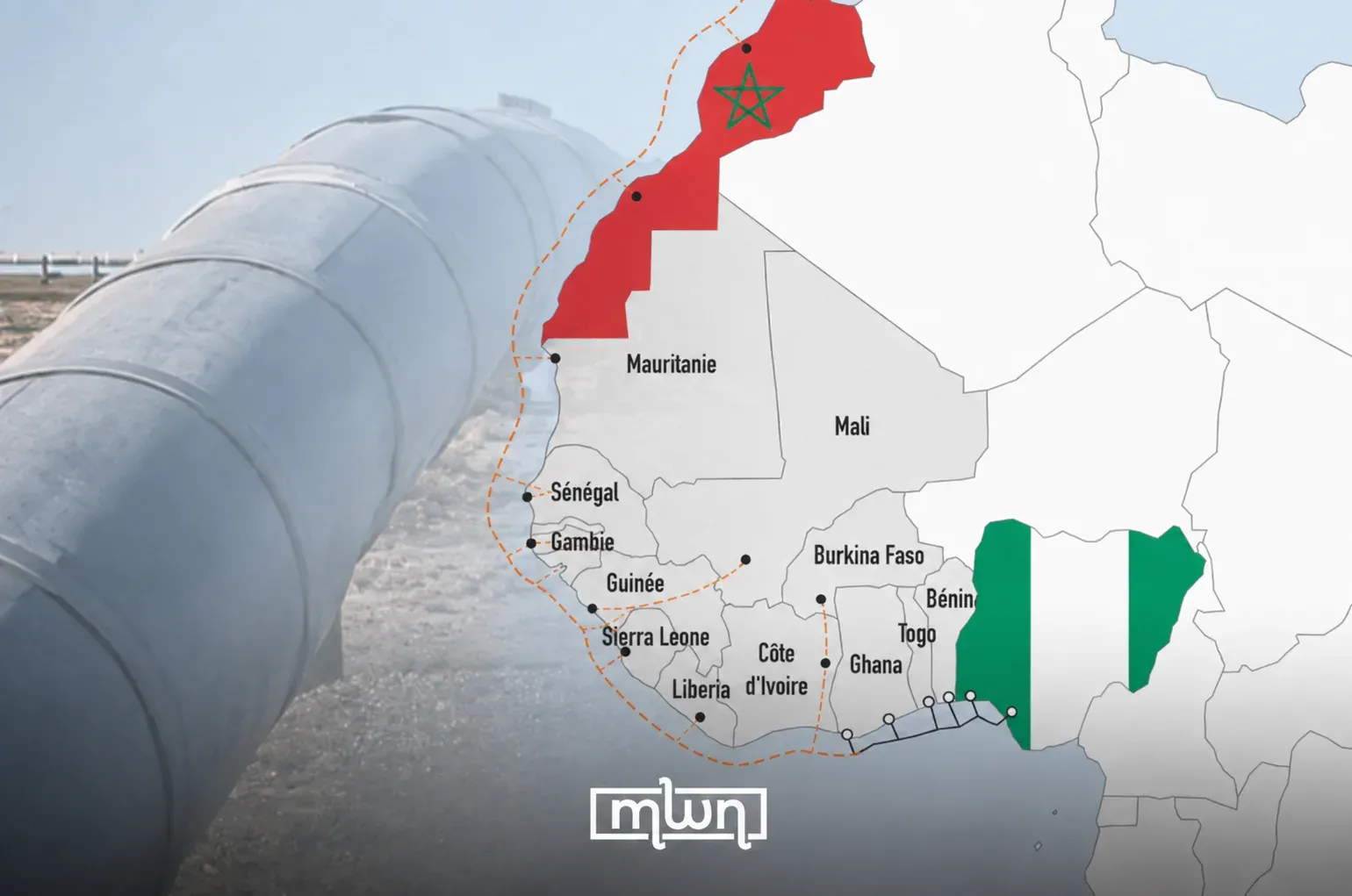
The Morocco section of the ambitious Africa-Atlantic Gas Pipeline is set to span an impressive 2,220 kilometers, marking a significant step in energy infrastructure development across the African continent. According to an environmental and social impact study recently published, this crucial segment will feature four compression stations, two receiving terminals, and establish six temporary construction camps, each with the capacity to accommodate up to 1,200 workers. The pipeline is anticipated to play a pivotal role in linking Nigeria's substantial gas reserves to various West African nations, including Morocco, ultimately facilitating access to European markets.
This extensive project, with a total estimated cost of $25 billion, will traverse approximately 6,900 kilometers through 13 countries along Africa's western coastline. Within Morocco, the pipeline will consist of 1,830 kilometers of onshore and 390 kilometers of offshore routes. It will be constructed using a robust 48-inch diameter design, ensuring it meets current gas demand while also accommodating future increases in production volumes across the transit countries.
Infrastructure and Construction Plans
The environmental study outlines the establishment of four strategically located compression stations along the onshore route, situated near Boujdour, Tan-Tan, Agadir, and Safi. These stations will be spaced approximately 300 to 320 kilometers apart, each occupying around 64 hectares, chosen for their proximity to ports and transport networks to facilitate efficient equipment delivery. These compression stations are essential for maintaining gas pressure over long distances, ensuring a steady flow rate throughout the entire length of the pipeline.
In addition to the compression stations, two receiving stations will be constructed in Morocco. The first station will serve as the primary entry point for gas arriving from Mauritania via the offshore segment, while the second will connect directly to the existing Maghreb-Europe Gas Pipeline, thereby enabling seamless gas exports to European markets.
To optimize construction efficiency, the project will employ distinct Engineering, Procurement, and Construction packages, allowing different contractors to manage various sections of the pipeline and stations. This segmented approach is designed to expedite the construction timeline by facilitating parallel work processes.
Temporary construction camps will be established along the Moroccan route, each covering approximately 300 kilometers and housing between 1,000 and 1,200 workers. These camps will include facilities such as pipe storage yards and equipment maintenance workshops, with a strong emphasis on local hiring and specialized training programs to empower the local workforce.
The offshore section of the pipeline will extend roughly 390 kilometers within Moroccan waters, stretching from the maritime border with Mauritania to the Dakhla region, with depths varying from 15 to 100 meters. To protect the pipeline, it will be gradually buried near the coast for about eight kilometers and reinforced with concrete coatings, anti-corrosion layers, and cathodic protection, ensuring an operational lifespan estimated at 40 years.
This comprehensive study was carried out by a consortium of four firms, including France’s Phénixa and Oréade-Brèche, CSA Ocean Sciences from the United States, and Morocco’s ZIZ GEO Consulting. It was commissioned by Morocco’s National Office of Hydrocarbons and Mines (ONHYM) and Nigeria’s National Petroleum Company (NNPC).
The project has garnered robust diplomatic support, with discussions about the pipeline taking place between Morocco’s Foreign Minister Nasser Bourita and Nigeria’s Foreign Minister Bianca Odumegwu-Ojukwu. Both nations anticipate formalizing an intergovernmental agreement, expected to be endorsed by their respective leaders. Furthermore, recent engagements with U.S. entities, including the Department of Energy and various think tanks, signal a growing interest in the pipeline project and the potential for international investment.
As reported by moroccoworldnews.com.