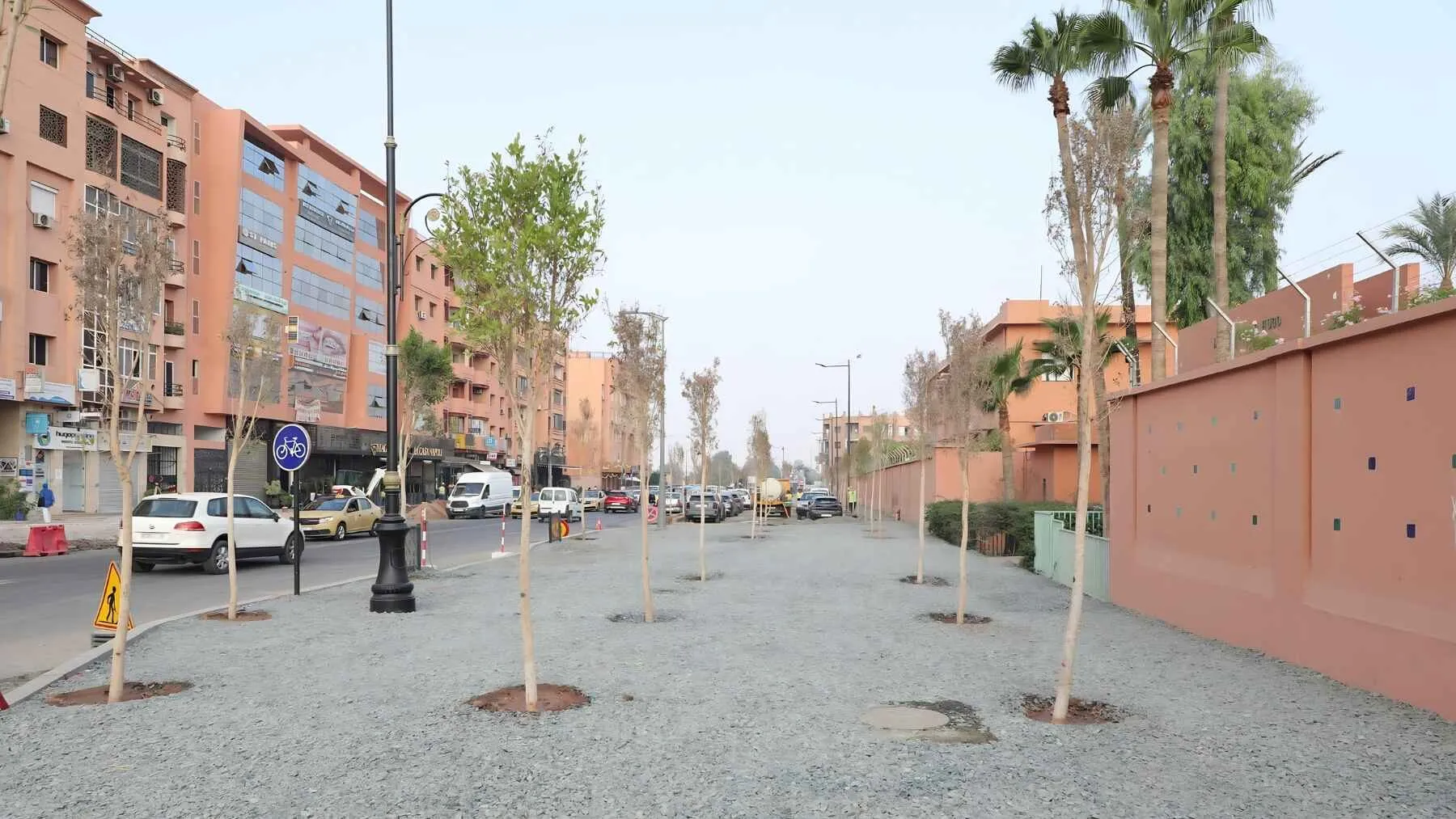

For generations, black asphalt has dominated urban landscapes, particularly in cities like Marrakech and Agadir, but recent developments indicate a potential shift towards a more innovative solution. Local Moroccan media reports highlight experimental initiatives aimed at replacing conventional asphalt with permeable pavement in certain urban areas. This new type of surface is designed to allow water to seep through rather than directing it into drainage systems. The implications of this change extend beyond mere aesthetics, as this "sponge" pavement has the potential to significantly enhance water management, mitigate runoff, filter pollutants, and even cool itself through evaporation when moisture is present.
The Urban Heat Challenge
As urban areas continue to expand, the phenomenon known as the "urban heat island" effect has become increasingly problematic. This effect occurs when dark pavements absorb solar energy during the day and release it as heat, causing built-up neighborhoods to remain significantly warmer than their rural counterparts, even during nighttime. For instance, a pilot study conducted in Arizona revealed that traditional asphalt could reach temperatures as high as 152°F, while specially designed cool surfaces maintained temperatures up to 16°F cooler. The discomfort experienced when walking on scorching pavement is all too familiar for many urban dwellers.
Permeable pavement offers a solution by allowing rainwater to penetrate through its surface and into a stone base, and potentially down into the ground, thus reducing surface temperatures and improving drainage. This innovative material can store moisture, which, through the process of evaporation, utilizes heat to cool the pavement—a principle comparable to how sweating cools the human body. However, it is essential to note that the effectiveness of this cooling method hinges on various factors including moisture levels, design, and local environmental conditions.
Marrakech's Sustainable Urban Initiatives
The current experiments with permeable pavement in Morocco are part of a broader initiative under the Marrakech Sustainable City program, launched in 2023. This ambitious project involves collaboration between Morocco’s Ministry of Energy Transition and Sustainable Development, local authorities, the United Nations Development Programme, and the Global Environment Facility. With a budget of $9.5 million, the program aims to bolster climate resilience, improve mobility, enhance waste management, support biodiversity, and increase energy efficiency for over one million residents. Although the current pavement experiments are limited in scope and do not represent a nationwide overhaul, they exemplify a significant step towards integrating climate adaptation into ordinary infrastructure.
For drivers and pedestrians alike, permeable pavement could enhance safety and comfort during rainy conditions by reducing surface water accumulation and improving traction. Moreover, a cooler urban microclimate might lower the reliance on vehicle air conditioning—an advantage for both gasoline and electric vehicles. However, the extent of these benefits may vary based on factors such as weather conditions and traffic patterns.
Beyond Morocco, Spain has also explored similar solutions through the LIFE HEATLAND project, which focuses on utilizing light-colored pavement to reflect solar energy and maintain cooler surface temperatures. This highlights the diversity of approaches available for urban heat management, as different materials can be utilized depending on the specific needs of each city.
While permeable pavement presents exciting possibilities, it is crucial to recognize its limitations. Factors such as sediment accumulation and heavy traffic can compromise its effectiveness, necessitating ongoing maintenance and careful design. Furthermore, water scarcity in regions like Marrakech complicates the implementation of such solutions, as planners must balance the desire for cooler urban spaces with sustainable water usage.
In conclusion, Morocco's experimentation with permeable pavement is a noteworthy endeavor that connects the challenges of urban heat and stormwater management—two often separate issues. While this innovative approach alone may not resolve these problems, it represents a significant step towards a more sustainable urban future, complementing other strategies such as increased green spaces and improved drainage systems.
As reported by ecoticias.com.