
The Unforeseen Departure
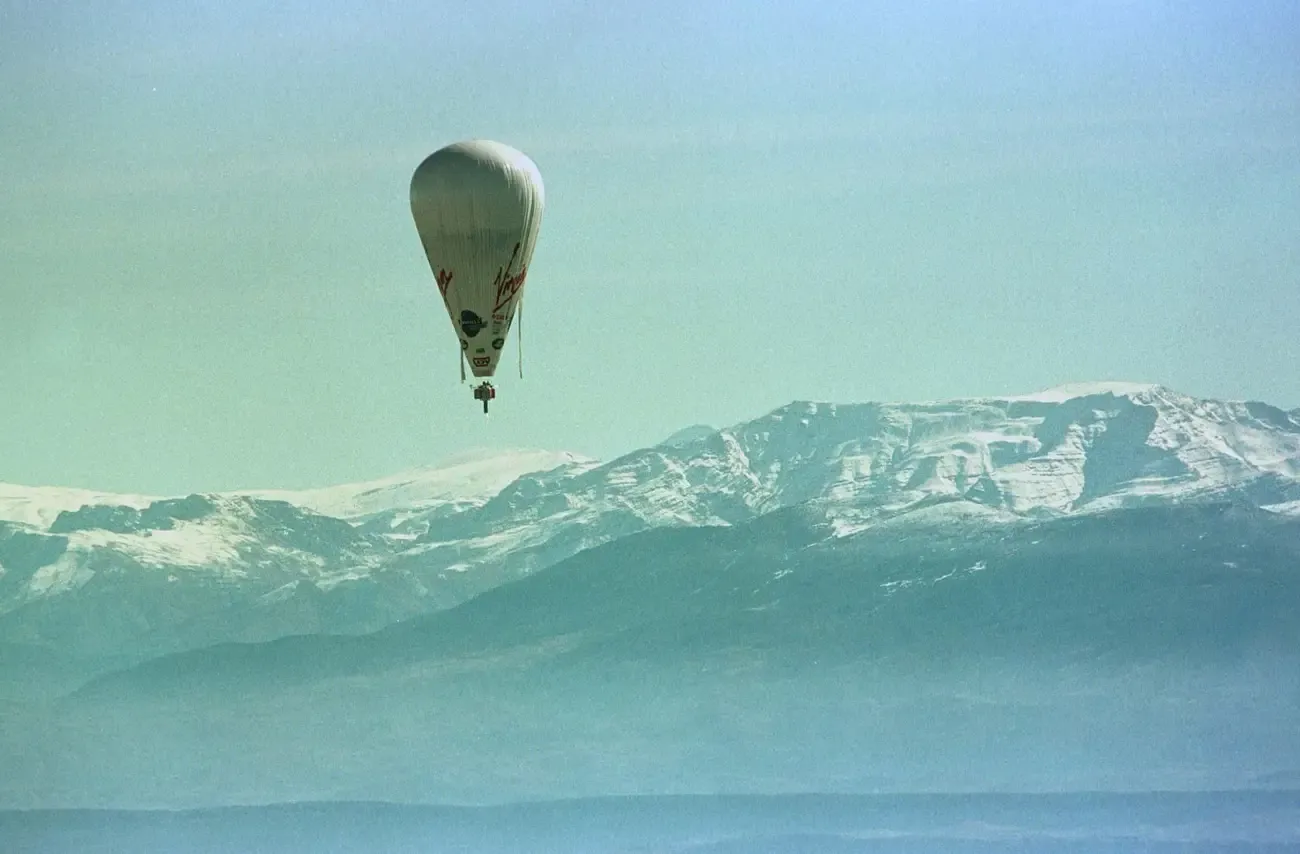
On December 9, 1997, at an airbase near Marrakech, teams were diligently preparing the Challenger for an ambitious non-stop journey around the world led by British billionaire Richard Branson. However, before the crew could board, a catastrophic event occurred; the balloon's envelope—an enormous gas-filled sail—detached and soared into the sky, leaving the capsule firmly anchored to the ground. Reports indicated that a small explosion was heard just prior to the envelope separating from the capsule and flying off without anyone aboard. This incident dashed Branson's dreams of embarking on a historic balloon adventure, forcing him to watch as his aspirations drifted away from the Moroccan sky. The intended journey was supposed to mark the beginning of a revolutionary world tour, but a previous attempt in January 1997 had already ended in a forced landing in the Algerian desert. This latest endeavor came to an abrupt halt before it had even begun. While observing the unfolding chaos from his hotel room, Branson remarked, 'I saw it rise and realized I should have been on board; something was wrong,' as noted by TIME.
A Race Through the Atlas Mountains
Archival footage from ITN captures the aftermath of the incident at the airbase, showcasing a broken tether, an immobile capsule, and Branson with his children. Co-pilot Per Lindstrand described the moment when the balloon tilted and took off unexpectedly. Displaying remarkable resilience, Branson stated, 'Always stand up to fight again.' The situation transformed into a frantic chase across Morocco, yet there was a glimmer of hope. According to The Irish Times, Moroccan military personnel spotted the partially inflated envelope in the Atlas Mountains near Ouarzazate, but a gust of wind whisked it away once more. The balloon continued its journey, abandoning its intended passengers. Reports from The Independent detailed how it reached around 60,000 feet before drifting into Algeria, where it was eventually subdued and secured to a tree to prevent further escapades, as Lindstrand prepared to retrieve it and return to Marrakech.
Branson was hopeful about resuming his journey in the following days. 'Hopefully, we will be ready by Sunday if the weather conditions are favorable and if the balloon isn’t too damaged,' he shared. However, the recovery took longer than anticipated. A Reuters photograph dated December 16, 1997, shows Moroccan military personnel unloading the retrieved envelope from a British Royal Air Force C-130 Hercules aircraft.
Although the long-awaited flight did not occur immediately, Branson's determination remained unshaken. In September 1998, he announced a collaboration with American aeronaut Steve Fossett, a former rival, and Swedish pilot Per Lindstrand. These adventurers had already faced the trials and tribulations of a world balloon tour. 'We learned from our mistakes and those of others,' Branson told the Associated Press. 'We simply hope for better luck this year than in previous attempts.'
On December 18, 1998, the trio launched from Marrakech aboard the ICO Global Challenger. This time, the crew ascended with the balloon, traversing Asia towards the Pacific. Their journey was marked by spectacular moments, with Branson noting that 'the flight over the Himalayas was one of the most extraordinary sights we have ever seen,' as reported by UPI. Unfortunately, the weather once again conspired against them. A depression diverted them south, away from their route to the United States, resulting in their abandonment near Hawaii on December 25. The islands offered essential rescue and medical infrastructure, as highlighted by UPI.
One year after witnessing his balloon depart without him, Branson had finally reached the Pacific from Marrakech, but his dream of a circumnavigation remained unfulfilled.
As reported by yabiladi.com.