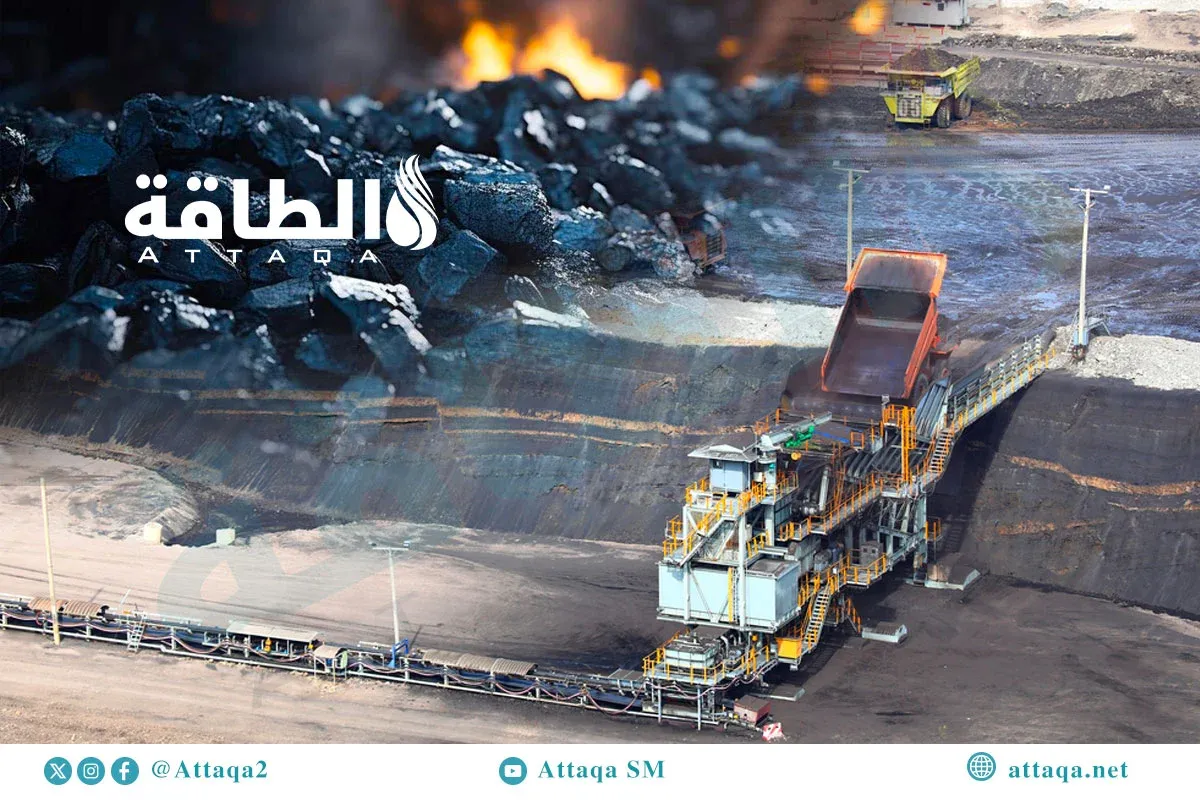

The consumption of coal in Arab countries continued its upward trajectory in the year 2025, primarily driven by Morocco and the United Arab Emirates. In contrast, Algeria recorded a significant decline in its coal usage. Despite the presence of Arab nations among consumers of this fossil fuel, which is recognized as the most environmentally damaging, their consumption rates remain among the lowest globally. This situation is part of a broader regional initiative to reduce emissions, coupled with the availability of domestic gas and oil resources in certain countries, which alleviates the need for coal imports.
Coal Consumption Trends in Arab Countries
Recent data from the Energy Research Unit, based in Washington, indicates that global coal consumption increased to 166.03 exajoules in 2025, up from 165.35 exajoules in 2024, representing a growth rate of nearly 1%. Asian countries, particularly China and India, remain the largest consumers of coal, accounting for a staggering 83.2% of total global consumption with 138.08 exajoules recorded in 2025. It is noteworthy that one exajoule equates to approximately 40 million tons of hard coal or 95 million tons of lignite and sub-bituminous coal.
The list of the top coal-consuming Arab countries in 2025 reveals Morocco as the leading consumer, uniquely utilizing coal for electricity generation, unlike other nations that predominantly use it in industrial sectors such as steel and cement production. The consumption figures for the six major coal-consuming Arab states in 2025 are as follows:
- Morocco: 0.28 exajoules.
- United Arab Emirates: 0.10 exajoules.
- Egypt: 0.06 exajoules.
- Kuwait: 0.01 exajoules.
- Saudi Arabia: 0.01 exajoules.
- Algeria: 0.001 exajoules.
Morocco topped the list with a 6% increase in coal consumption to 0.28 exajoules, compared to 0.27 exajoules the previous year. Coal remains the primary source for electricity generation in Morocco, although its share has decreased to 61.5% in 2025, as illustrated in the accompanying chart prepared by the Energy Research Unit.
Following Morocco, the UAE ranked second with a notable 42% increase in coal consumption, reaching 0.104 exajoules, up from 0.074 exajoules in 2024. Egypt secured the third position with a 10.2% growth, bringing its coal consumption to 0.06 exajoules, up from 0.05 exajoules the previous year. Kuwait maintained its coal consumption at 0.01 exajoules, unchanged from 2024, while Saudi Arabia experienced a slight growth of 1.5%, also recording 0.01 exajoules. In stark contrast, Algeria's coal consumption plummeted by over 90%, dropping to 0.001 exajoules in 2025, down from approximately 0.01 exajoules in the year prior.
Global Coal Consumption Overview
Globally, China continued to dominate as the largest coal consumer, with a consumption level of 92.24 exajoules, nearly the same as in 2024. India ranked second, with a rise in consumption to 23.1 exajoules compared to 23 exajoules the previous year. The United States came in third with a 10.4% growth in coal consumption, reaching 8.73 exajoules, up from 7.93 exajoules in 2024. Indonesia was fourth with a coal consumption of 5.15 exajoules, and Japan fell to fifth place with a decrease to 4.36 exajoules, down from 4.53 exajoules in 2024.
This data highlights the ongoing trends and shifts in coal consumption, both regionally and globally, as nations grapple with the challenges of energy production and environmental sustainability. For further details, you can refer to the original report As reported by attaqa.net.