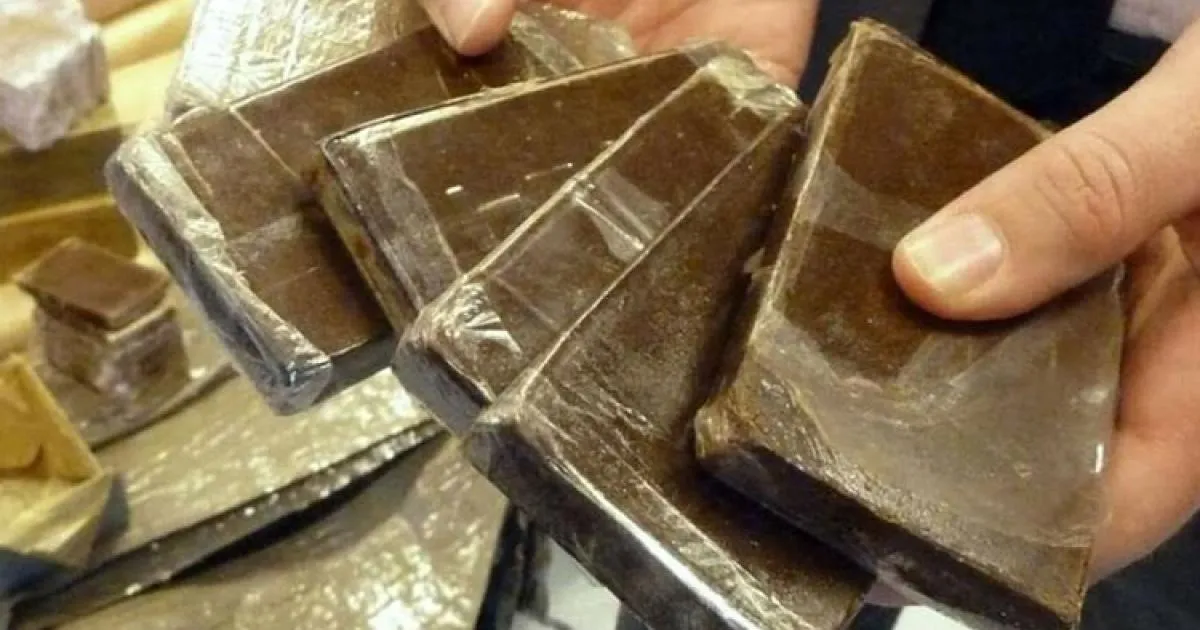

In Europe, the dismantling of international drug trafficking networks linked to Moroccan entities continues to unfold, drawing renewed attention to the increasing accusations against the Moroccan regime for transforming the kingdom into a base for money laundering and drug trafficking towards the northern shores of the Mediterranean. This situation has arisen alongside the growing influence of drug barons and the expansion of their activities within Morocco's borders.
In this context, a recent ruling by a criminal court in Rennes, France, revealed the extent of the connections between organized crime networks and the economic and real estate sectors within Morocco. The court sentenced Issam Lahrash, known as "La Plume" (The Feather), to ten years in prison and imposed a fine of €750,000 as a criminal penalty, along with an equivalent customs fine. Furthermore, the court ordered the confiscation of his real estate assets in Morocco, valued at over €1 million, and issued a new warrant for his arrest.
French media reports indicate that Lahrash, identified as one of the prominent cocaine lords in France, had managed to establish himself in Morocco for years, operating a part of his financial and commercial activities without facing legal repercussions. He reportedly benefited from an environment characterized by leniency towards money laundering networks and illicit trafficking.
The court's verdict was not merely a routine criminal conviction; it unveiled a vast network responsible for trafficking significant quantities of cocaine. The court held Lahrash accountable for major drug importation operations into France, including a shipment exceeding 360 kilograms of cocaine seized at the port of Montport du Bretagne in 2022, as well as 23 kilograms intercepted at Orly Airport in September 2023, along with another large shipment estimated in the hundreds of kilograms during the same year.
This case further amplifies European concerns regarding Morocco's potential transformation into a key hub for drug transit towards the continent, whether through the substantial flow of cannabis from northern Morocco or through cocaine networks that, according to consistent security and media reports, have established a foothold within Moroccan ports and logistical infrastructures.
These issues once again raise pressing questions about the nature of relationships between certain influential circles in Morocco and international drug trafficking networks. This is particularly relevant as Morocco is increasingly being used as a safe haven and a center for recycling illicit funds, amid rising European pressure to tighten oversight on routes originating from the kingdom.
As European investigations expand to encompass cross-border networks operating between Morocco, France, Spain, and Belgium, there is a growing consensus among observers that Morocco has evolved from being merely a traditional transit point to becoming a crucial axis in the system flooding Europe with drugs and engaging in international toxic trafficking, largely due to the regime's policies, the fragility of regulatory mechanisms, and collusion.
According to analysts, the case of Issam Lahrash reflects the dangerous transformation that crime networks linked to Morocco are undergoing, shifting from traditional cannabis trafficking to intensive involvement in the international cocaine market, carrying serious security implications for Europe and the Maghreb region. This situation coincides with increasing criticisms directed at the regime's policies and its complicity in the expansion of the drug economy and organized crime.
As reported by entv.dz.