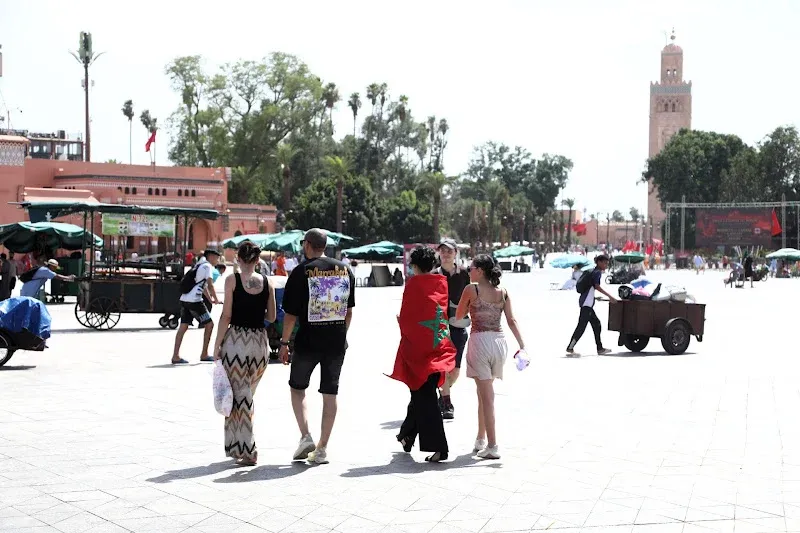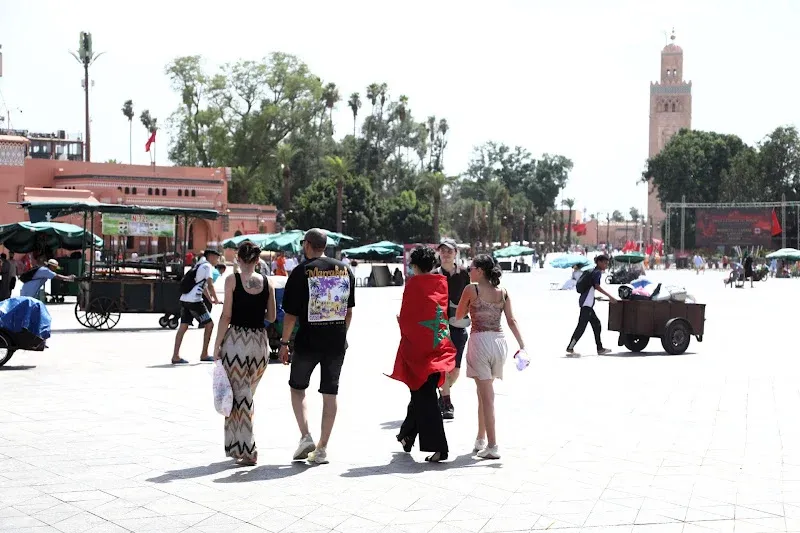

As climate change continues to pose significant challenges globally, a recent scientific study has indicated that the energy demands for cooling buildings in Marrakech could surge by approximately 40% by the year 2090, particularly under a high emissions scenario. This alarming prediction stems from research published in the journal "Environmental Challenges" by Elsevier, which highlights the urgent need for adaptive energy strategies in response to changing environmental conditions. The study was conducted by a multidisciplinary research lab at the Sultan Moulay Suleiman University and is detailed in volume 24 for the year 2026.
The research intricately connects climate change forecasts with the urban heat island effect and the energy consumption patterns of buildings, examining the impacts of these factors on three distinct urban fabric types in Marrakech. To generate future climate predictions, researchers utilized Meteonorm data alongside the Urban Weather Generator for urban climate simulation and the EnergyPlus program for energy needs assessment. The simulations explored scenarios for the years 2030, 2050, 2070, and 2090, factoring in different emissions pathways.
Cooling Needs Expected to Soar While Heating Demands Plummet
Under the RCP 8.5 scenario, which represents a high emissions trajectory, the research forecasts an overall electricity consumption increase of about 19.2% for buildings in the simulations by 2090, reaching approximately 146,104 watt-hours per square meter annually. However, this figure masks a more drastic shift in energy consumption dynamics; the energy required for cooling is anticipated to rise from 67,593 to 94,630 watt-hours per square meter per year, marking a nearly 40% increase. Conversely, the demand for heating is expected to plummet by around 85%, dropping from 4,170 to 632 watt-hours per square meter annually. This indicates a significant transformation in the energy balance of buildings, as the need for heating diminishes with rising temperatures while cooling requirements expand, shifting the energy pressure towards the hotter months.
In contrast, the less severe RCP 2.6 scenario predicts a modest increase in total electricity consumption of about 2.6% by 2090, equating to roughly 125,773 watt-hours per square meter annually, while a moderate increase of approximately 8.8% is expected in the RCP 4.5 scenario.
Examining Urban Patterns: Old City vs. Modern and Informal Areas
The simulation encompassed three different urban typologies in Marrakech: the historic old city, the Asil neighborhood as an example of a modern planned area, and the Iziki district representing informal urbanization. These locations were selected to illustrate distinct variations in density, building form, street width, and overall urban structure. The study relied on three-dimensional models of these areas and validated the urban climate model's performance by comparing it against field measurements conducted in the old city, demonstrating the model's efficacy in simulating urban temperature profiles.
Despite the clear differences among the three urban fabrics, the research revealed that the variations in total energy consumption resulting from these differences remained relatively insignificant, staying below 0.3% across various scenarios. This suggests that, within the framework of the employed model, the trajectory of rising temperatures is a more influential factor than morphological differences between neighborhoods.
The findings also highlighted seasonal shifts in the urban heat island effect, indicating that cooling costs associated with this phenomenon increase during winter under the high emissions scenario, while the temperature differential between urban areas and their surroundings diminishes during the hottest summer months as temperatures outside the urban fabric rise as well.
The implications of these results extend beyond mere thermal comfort within homes; the growing reliance on air conditioning signifies an escalating demand for electricity, particularly during periods of extreme heat, which poses challenges for electrical grid planning and its capacity to accommodate future loads. The research indicates that the demand for cooling in the RCP 8.5 scenario by the century's end could approach an additional 27,000 watt-hours per square meter compared to the current situation, representing about 22% of the total current electricity consumption of the typical building used in the simulations.
Furthermore, the study links the energy challenge to urban development choices, underscoring the importance of insulation, shading, and mitigating heat accumulation in urban settings while improving building design. However, the research emphasizes that these local interventions may have limited impact if global emissions trajectories continue to rise significantly. It is essential to note that the predicted 40% increase should not be viewed as an absolute forecast for all buildings in Marrakech by 2090, as the study is based on a standardized residential model tested across various urban climates, while actual buildings in the city exhibit diverse ages, construction materials, insulation qualities, air conditioning systems, and occupant behaviors—limitations acknowledged by the research itself.
The overarching conclusion of the study indicates that the future energy demand in Marrakech is closely tied to emissions pathways over the coming decades, with consumption growth remaining constrained in lower emission scenarios while the need for cooling accelerates dramatically in the more severe scenario. This transformation transforms rising temperatures into a significant challenge for urban planning, electric grid infrastructure, and household cooling costs.
As reported by hespress.com.