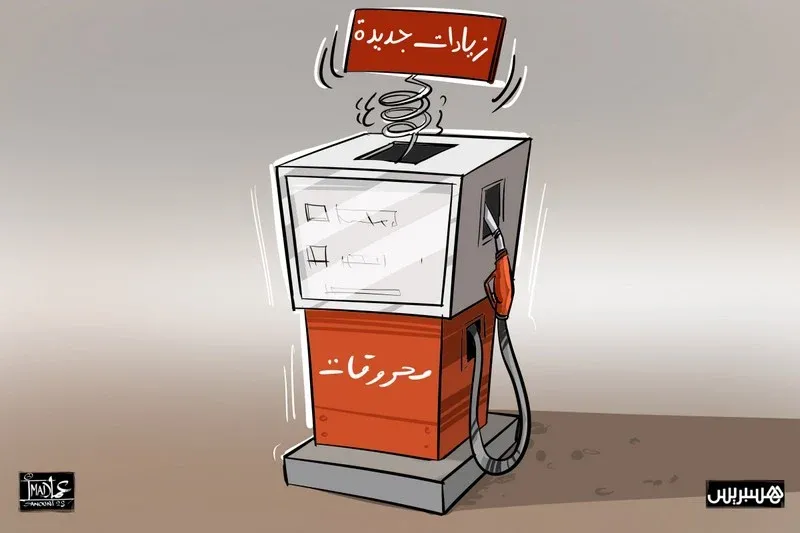

Rising Fuel Prices Spark Debate on Price Capping in Morocco
The sharp increase in fuel prices in Morocco has reignited public discourse surrounding the necessity of implementing price caps to safeguard citizens' purchasing power. Beginning this Monday, the prices of gasoline and diesel surged unexpectedly by two dirhams per liter, prompting widespread outrage among the populace due to the anticipated ripple effects on various consumer goods that will see price hikes as a direct consequence.
This latest price increase has fueled calls for a return to price capping mechanisms, as many believe that consumers should not be left at the mercy of corporations that raise prices at will. Abd al-Ghani al-Raqi, a member of the National Front for the Rescue of the Moroccan Oil Refinery, stated that this rise in fuel prices is neither new nor surprising. He described the increase as "unjustified," arguing that there should be national reserves in place to prevent such drastic price escalations.
In an interview, al-Raqi expressed his disappointment that fuel prices had not decreased, even in the absence of international conflicts that typically drive prices up. He attributed the current situation to the deregulation of prices initiated under the previous government, which he believes has led to escalating costs across various sectors and services. He warned that the repercussions of this increase would become apparent in the coming days, potentially widening the socioeconomic gap and threatening social stability.
Moreover, al-Raqi urged public authorities to intervene by reinstating price caps and ensuring the operation of the Samir refinery, which historically played a crucial role in stabilizing the market. Similarly, Abd al-Ilah al-Khadri, head of the Moroccan Human Rights Center, highlighted the escalating concern among citizens regarding the recurring hikes in fuel prices. He pointed out that price increases seem to occur almost instantaneously in response to news of international tensions or potential rises in global oil prices, often without any real impact from these developments on the national market.
Al-Khadri criticized the current state of the fuel market in Morocco, suggesting it resembles a cartel-like structure that ultimately harms consumers by eroding their purchasing power. He lamented the government's apparent indifference towards the ongoing crisis at the Samir refinery, which historically contributed to maintaining a balance in the supply of fuel products to the national market.
He stressed the urgent need for implementing price caps or instituting strict regulatory mechanisms to ensure transparency in price determinations, thereby preventing any exploitation of international circumstances or speculation for unjustified profits at the expense of consumers. Al-Khadri called for the government and relevant authorities, particularly the Competition Council, to fulfill their responsibilities in monitoring the fuel market and ensuring compliance with competition rules and transparency, thus protecting citizens’ purchasing power and restoring confidence in market mechanisms.
As reported by hespress.com.