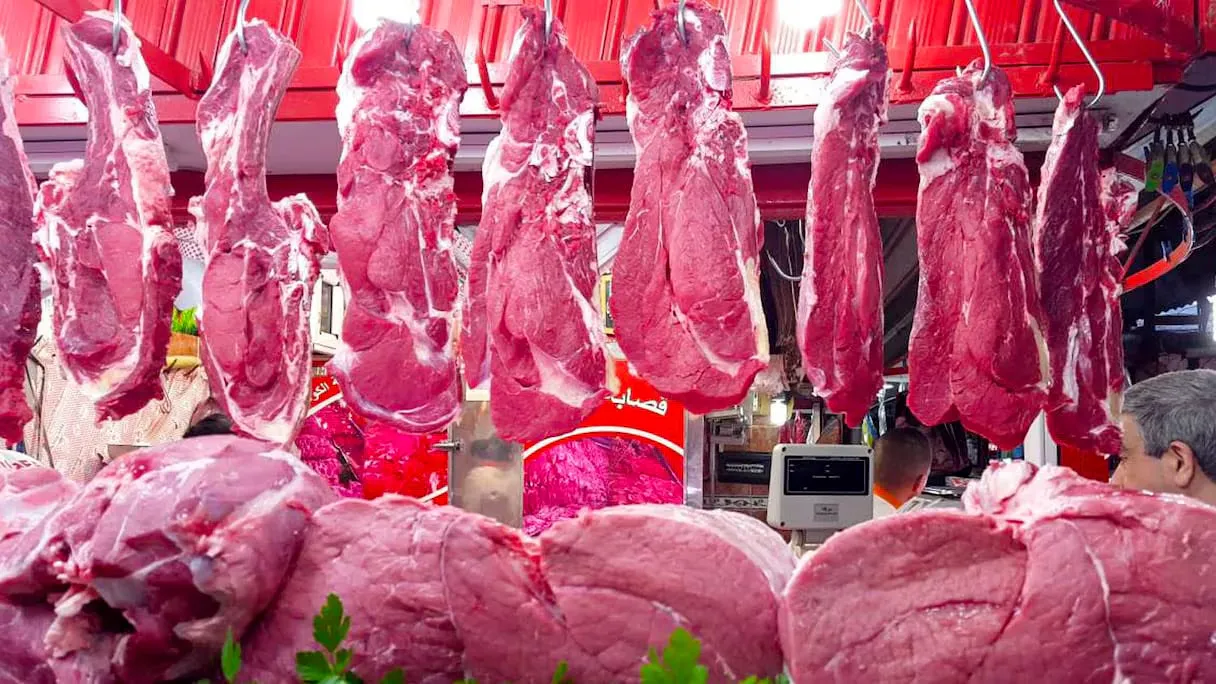

Current State of Meat Prices in Fes
Despite the government's decision to extend the suspension of import tariffs on live sheep, cattle, and goat meat until December 31, 2026, with the aim of curbing the rising prices of red meat, consumers are still facing exorbitant costs that exceed their purchasing power, significantly affecting their dietary habits. Additionally, poultry prices have seen a notable increase after a period of relative stability over the past few months.
According to information gathered by Le360, the price tags displayed in butcher shops clearly illustrate this upward trend. The cost of one kilogram of beef ranges between 90 and 120 dirhams, depending on the quality of the meat and the residential area, as well as whether it is sourced from the national herd or imported. Many consumers prefer purchasing meat from the national herd, which is sold at the same price as ground meat, known locally as 'kofte,' which has also experienced a significant price hike.
Challenges Faced by Consumers
As for sheep meat, its sale has become limited to certain areas, with butchers in middle-class and popular neighborhoods avoiding its sale due to prices ranging between 140 and 160 dirhams per kilogram. This pricing places it out of reach for a substantial portion of middle and low-income citizens. Furthermore, the prices of beef offal, particularly beef liver, have soared to record levels, ranging from 180 to 200 dirhams, making it unaffordable for many families. Even the beef head, previously considered a cheaper alternative for families coping with rising meat costs, has seen a significant increase, alongside other beef offals.
The inflation in the meat market is not isolated; it has also extended to poultry, which has recently experienced a sharp price rise after stabilizing for several months. The cost of white chicken now ranges between 18 and 20 dirhams at retail outlets, while farm prices fluctuate between 14 and 15 dirhams. This surge is attributed to increased demand in August, coinciding with weddings and family gatherings.
Egg prices have also risen significantly over the past few weeks, following a period of stability post-Ramadan. The price of eggs has now reached approximately 1.20 dirhams, depending on quality and size, up from around half a dirham.
Various analyses have emerged regarding the ongoing crisis despite government interventions. Industry professionals attribute the situation to consecutive years of drought that Morocco has experienced, while others place blame on intermediaries and speculators. There are also calls for more effective oversight from responsible authorities to limit the influence of speculators and monopolists, as well as to regulate profit margins between wholesale markets and retail shops.
As reported by ar.le360.ma.