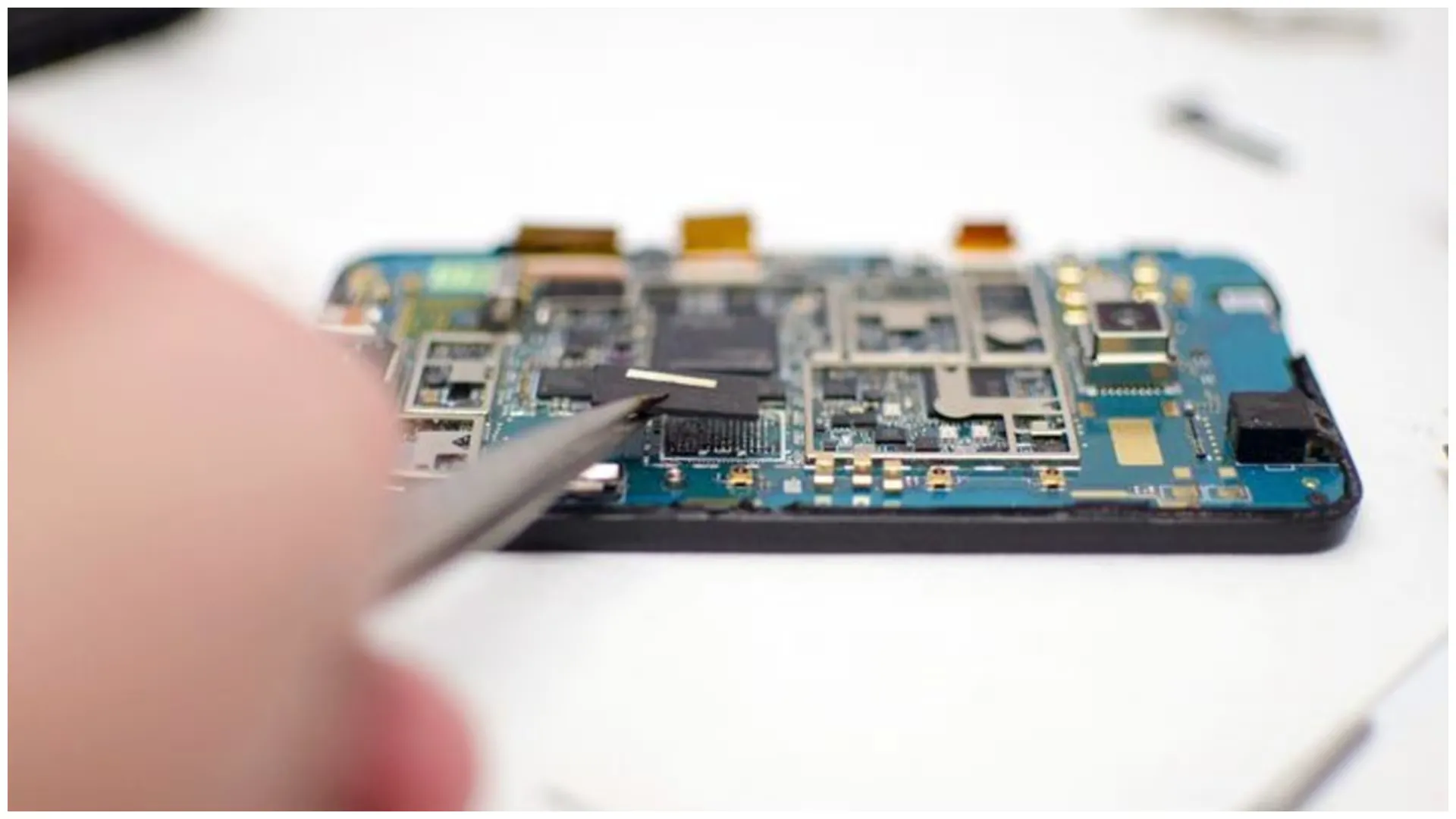
The smartphone market is on the brink of significant price increases as several Chinese manufacturers prepare to raise their prices this March, primarily due to soaring memory chip costs. This global surge in prices has been exacerbated by an unprecedented demand for generative artificial intelligence, creating shockwaves across emerging markets. The situation is further complicated by the ongoing conflict in the Middle East, which is expected to amplify these challenges.
In Africa, where affordable Chinese smartphones dominate approximately 50% of the market share, this crisis is likely to unveil structural vulnerabilities and accelerate strategic shifts. With 81% of smartphone sales priced under $200 and a heavy reliance on manufacturers such as Transsion (which includes brands like Tecno, Infinix, and Itel), the continent is becoming a testing ground for the implications of a global reconfiguration of technological supply chains.
Smartphone Deliveries in Africa and Annual Growth
According to projections from Omdia, the following table outlines the expected smartphone deliveries and market shares for major players in Africa for 2025:
| Vendor | Deliveries 2025 (million) | Market Share 2025 | Deliveries 2024 (million) | Market Share 2024 | Annual Growth |
|---|---|---|---|---|---|
| TRANSSION | 40.5 | 48% | 37.9 | 51% | 7% |
| Samsung | 15.3 | 18% | 13.9 | 19% | 10% |
| Xiaomi | 10.7 | 13% | 8.4 | 11% | 27% |
| HONOR | 3.5 | 4% | 1.4 | 2% | 144% |
| OPPO | 3.4 | 4% | 3.1 | 4% | 8% |
| Others | 11.1 | 13% | 10.0 | 13% | 11% |
| Total | 84.4 | 100% | 74.7 | 100% | 13% |
The global memory chip shortage is a result of a drastic sectoral realignment driven by two combined forces. Firstly, a massive diversion of production capacities towards more profitable artificial intelligence servers drastically reduces the supply available for consumer electronics, as noted by Counterpoint Research. Secondly, the cost of components has reached historic levels, with DRAM and NAND prices hitting unprecedented highs since tracking began in 2016, according to China's National Development and Reform Commission.
This dual pressure is severely impacting the cost structure of smartphones. In the entry-level segment (priced under $200), memory now accounts for up to 43% of the total Bill of Materials (BOM), leading to a quarterly increase of 25% in Q1 2026. Conversely, premium devices (priced over $800) are facing an additional cost of $100 to $150 per unit, with chips comprising 23% of the BOM. In response to this strain, manufacturers are implementing unavoidable joint measures, including price increases ranging from 15% to 25%, product line simplifications, and aggressive reductions in non-essential technical specifications to maintain already narrow margins in a hyper-competitive sector.
Markets Facing Acute Risk and Resilient Ones
The impact of rising memory chip prices in Africa reveals deep fractures among markets, amplified by their unique economic and commercial characteristics. Manish Pravinkumar, an analyst at Omdia, encapsulates this asymmetry: "With 81% of sales under $200 in 2025, the core volume in Africa remains highly exposed to component inflation." Nigeria and Kenya are set to experience the most acute pressures. Data from Omdia for Q4 2025 indicates that Nigeria, the continent's leading market by volume, saw its smartphone deliveries grow by 25% in 2025. However, this performance is driven by a massive dependence (60%) on models priced under $200. A price increase could create a scissors effect, pushing consumers toward the refurbished smartphone market or drastically lengthening replacement cycles.
In Kenya, where delivery growth has been only 3% year-on-year due to cost-of-living pressures, the anticipated price hike could further erode purchasing power. In contrast, Egypt, which is expected to see a 22% growth in smartphone deliveries in 2025, is likely to exhibit more resilience. Its local assembly strategy (for brands like Samsung, Xiaomi, and OPPO) is expected to serve as a buffer against logistical and customs cost dependencies. Moreover, its concentration of sales (60%) in the $100-$199 price range may provide a protective cushion against extreme shocks in the ultra-low-cost segment.
South Africa, with a projected 38% growth in smartphone deliveries in 2025, is anticipated to rely on a more mature market. Devices priced under $100 account for just 22% of deliveries, and the demand for 5G and postpaid offerings—less sensitive to price changes—provides unique absorption capacity across the continent. Algeria is expected to see a 5% increase in smartphone deliveries in 2025, but this growth could be vulnerable if it relies heavily on entry-level segments sensitive to rising costs. The lack of granular data on its market structure complicates the evaluation of its actual exposure, but its status as an import-dependent market for components may amplify tensions in the long run.
Morocco, on the other hand, is projected to experience a 3% decline in smartphone deliveries in 2025, attributed to relatively high import duties of 17.5% that came into effect in 2024. Prior to 2024, import duties were at 2.5%, which were raised to 17.5% through the 2024 Finance Law (following an initial proposal of 30%). This increase aimed to protect local production but has raised prices and favored parallel imports. As of January 1, 2026, the Finance Law has reverted these duties to 2.5% for assembled smartphones or CKD/SKD kits, aiming to rebalance the market and support 5G. This marks a return to pre-2024 rates without any other significant increases.
It is hoped that this reversal will help mitigate the global chip surge, which is expected to heavily impact household purchasing power, potentially undermining the competitiveness of well-established low-cost brands like Transsion.
In conclusion, the memory chip crisis is poised to catalyze a significant restructuring of the competitive landscape in Africa, creating performance disparities based on the strategies adopted. Transsion, a historical leader with a 44% market share in Q4 2025, is experiencing a sharp slowdown (+3% year-on-year), primarily due to its concentration on ultra-low-cost segments (under $100), where memory absorbs up to 43% of total costs, exacerbating its vulnerability. In contrast, Samsung (+27%) is demonstrating remarkable resilience through its diversification within the Galaxy A range ($400-$600) and its ability to absorb additional costs. HONOR (+88%) is capitalizing on aggressive upgrades (X series) and strategic partnerships with operators like Vodacom and MTN, while Xiaomi (+12%) is optimizing its local foothold and distribution channels to cushion the shocks.
This fragmentation reveals a crucial divide: players trapped in the low-cost segment suffer from maximum exposure, while those positioned in the mid-range are better able to absorb BOM increases due to stronger operating margins and customer bases that are less sensitive to price fluctuations. Notably, Transsion is showing only a 7% growth for 2025 compared to 27% for Xiaomi.
As we observe, Africa is on the brink of a historic market correction in 2026, with an anticipated 23% decline in deliveries according to Omdia, outlining three scenarios. Markets facing acute risk (Nigeria, Kenya) are likely to see a massive shift towards refurbished or basic phones, given their dependence on segments priced below $200, which leaves them fully exposed to 15-25% increases. In contrast, resilient ecosystems (Egypt, South Africa) are expected to consolidate around diversified players (Samsung, Xiaomi) and less cyclical 5G/postpaid demand.
This crisis also presents a structural opportunity—it could accelerate digital industrialization through projects like the one in Ghana and a rethinking of universal access policies. As Shenghao Bai of Counterpoint notes, "classic cost-cutting measures will not be sufficient. 2026 will be the year of strategic repositioning or regression." It is clear that the African model of digitization through imported low-cost solutions has reached its limits, necessitating urgent reconfiguration, diversification of suppliers, controlled upgrades, and the integration of technological sovereignty into industrial policies to build endogenous resilience.
As reported by afrique.le360.ma.