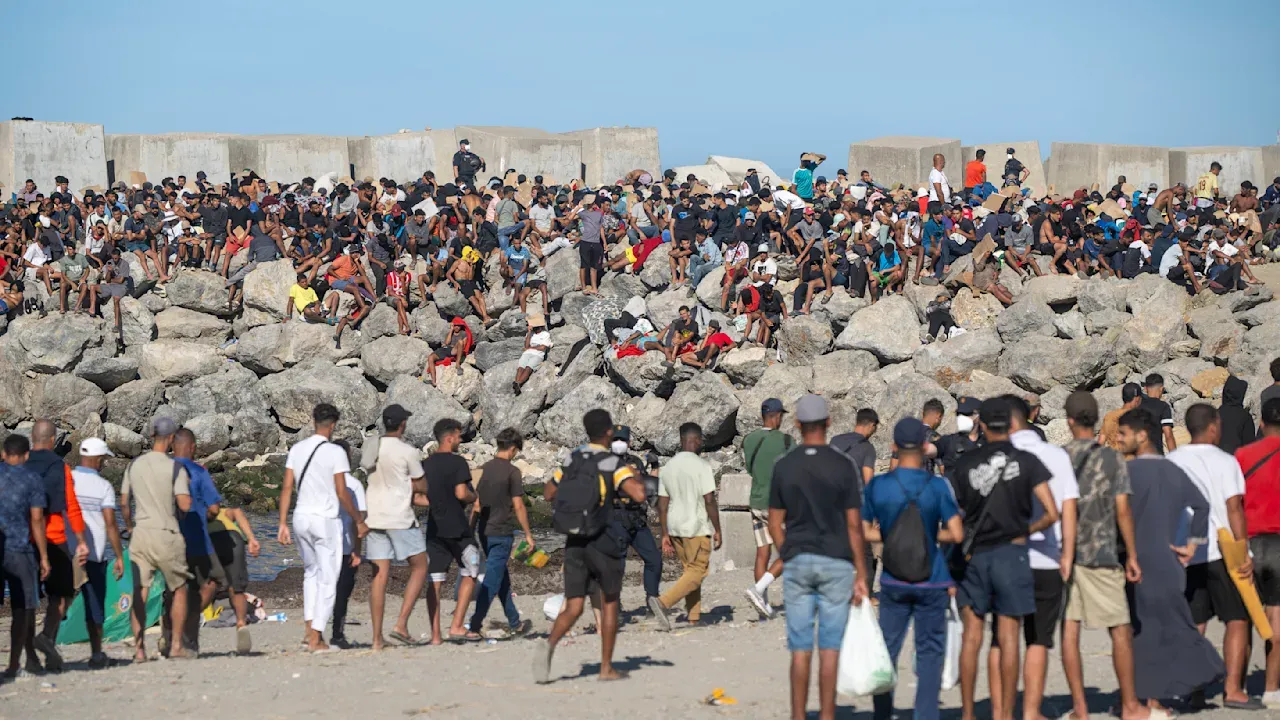

Ceuta Faces Challenges from Migrant Influx
The Spanish exclave of Ceuta continues to grapple with the repercussions of a recent surge in migration, which notably includes alarming incidents of sexual assault. A Moroccan migrant has been accused of sexually harassing a 16-year-old girl in the streets of Ceuta, prompting authorities to apprehend the suspect near the border with Morocco. Reports indicate that the individual allegedly intended to return to his homeland. As of Monday, a court has ordered the suspect to be held in pre-trial detention, although he denies the allegations. The girl's parents initiated the legal proceedings by filing a complaint.
This incident is not isolated; it is part of a disturbing trend following the influx of migrants that began in late July. According to the Spanish public prosecutor's office, there have been 23 reported cases of alleged sexual offenses, with nine of the alleged victims being minors. The identified suspects come from various nationalities, including three Spaniards. Investigations are ongoing, and all accused individuals are presumed innocent until proven guilty.
Concerns Over Safety and Security
Among the cases that have emerged is that of a 17-year-old Moroccan who allegedly sexually abused three girls aged 10 and 11. These children, along with the suspect, reportedly arrived in Ceuta during the migrant wave at the end of July and were housed at the 'Piniers' reception center for unaccompanied minors. Reports suggest that the assaults occurred in the initial weeks of August. In the aftermath of these alleged crimes, the suspect was reportedly beaten by other residents of the center. A special unit of the Spanish police has launched an investigation into the matter, suspecting that there may be additional victims and consequently interviewing other minors from the facility.
Significantly, the reception center is located in the socially challenged area of El Príncipe and serves as an emergency shelter for unaccompanied minors, highlighting the precarious situation faced by these vulnerable individuals. Despite increased security measures, many migrants managed to reach Ceuta in late July, exacerbating the already tense situation. On September 2, tens of thousands of people protested across various cities in Spain, expressing their dissatisfaction with the government's handling of the migration crisis. Many demonstrators called for stricter measures, the repatriation of migrants, and enhanced border protection, with some participants demanding the resignation of Prime Minister Pedro Sánchez.
Although most of the individuals who arrived at the end of July have since returned to Morocco, as of early September, approximately 5,000 migrants were still reported to be in Ceuta, according to the Spanish central government, while local authorities estimated the number to exceed 10,000.
As reported by bild.de.