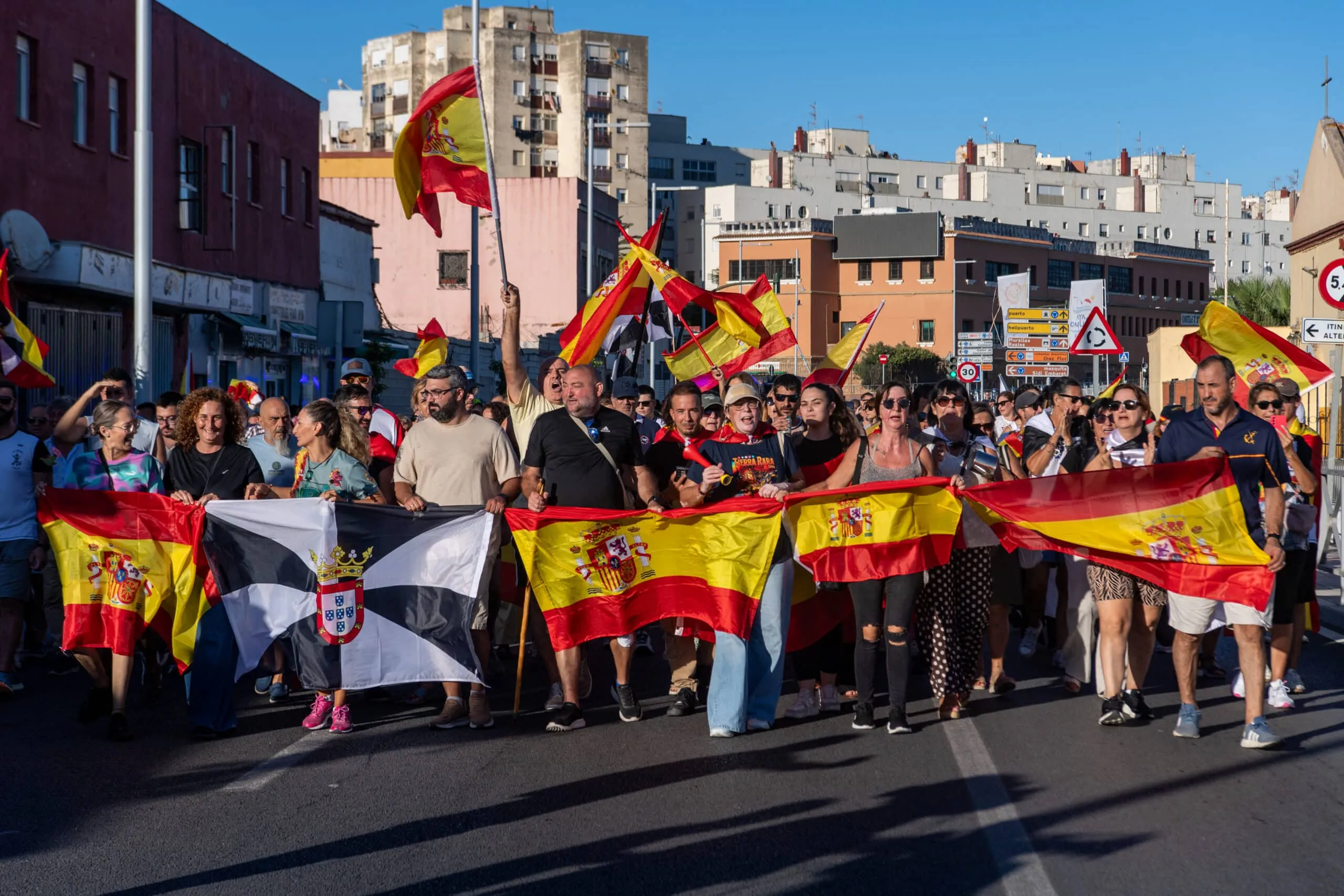

Incident Highlights Growing Strains in Ceuta
On August 29, 2026, a notable incident unfolded in Ceuta, Spain, where four Moroccan migrants were apprehended after allegedly throwing stones at a group of Spanish soldiers. This confrontation resulted in one soldier sustaining injuries while chasing the assailants, as confirmed by a police spokesperson to Agence France-Presse. This occurrence marks the second such violent clash within a matter of days, following the earlier detainment of 12 Moroccan migrants who hurled stones at a military vehicle, injuring one of its occupants. Reports indicate that the majority of these 12 individuals were subsequently deported back to Morocco, underscoring the escalating tensions surrounding migration issues in this small enclave.
The city of Ceuta, strategically located on the northern coast of Africa, has been a focal point of political and security challenges for Spain. The area witnessed a significant surge in migrant crossings from Morocco on July 30 and 31, raising alarms among Spain's European Union partners. Although many migrants left shortly after their arrival, a substantial number remain in Ceuta, leading to increased unrest among local residents. On Thursday, protests against the presence of remaining migrants escalated into clashes with law enforcement, prompting the Spanish government to call for calm amidst the unrest.
Government Response and EU Involvement
In response to this ongoing crisis, the Spanish government is actively seeking solutions to reduce the migrant population in Ceuta while adhering to European Union and international asylum laws. Magnus Brunner, the EU's commissioner for migration, announced on social media that Spain has requested assistance from the EU's border control agency, Frontex, as well as Europol and the EU Agency for Asylum. Brunner emphasized the urgency of the situation, stating, "The priority remains to ensure the swift return of all those who remain illegally in Ceuta." The unfolding circumstances in Ceuta continue to pose challenges not only for Spain but for the broader European community, as they navigate the complexities of migration and border security.
As reported by globalnation.inquirer.net.