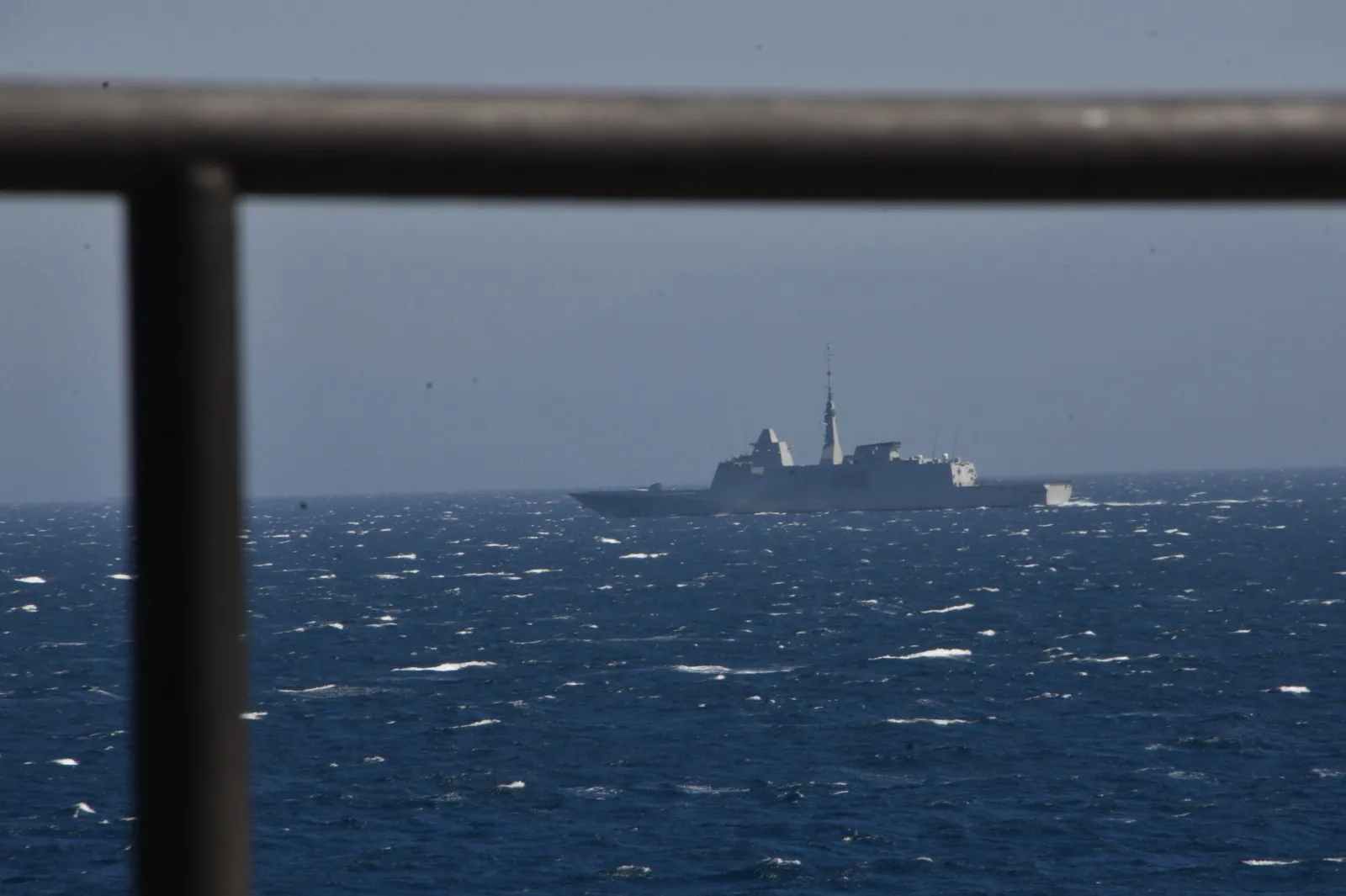

Moroccan Warships Raise Alarm Over Sovereignty of Ceuta and Melilla
The recent presence of Moroccan warships in Spanish waters near Ceuta on July 30 and 31 has ignited significant concern, prompting a sharp reaction from General Ballesteros, the former director of the National Security Department. During his appearance on the program _Espejo Público_, he analyzed the potential implications of Morocco's actions following confirmation from Spanish Prime Minister Pedro Sánchez.
General Ballesteros emphasized the seriousness of the situation, noting that the Moroccan warships patrolled Spanish waters for two consecutive days, underscoring the gravity of the incident. He stated, "This is a very serious fact, considering it is not an isolated incident but rather a two-day military presence that has compelled Spain to engage at the highest levels of military diplomacy." His assessment suggests that these maneuvers by Morocco could be part of a broader hybrid strategy aimed at pressuring Spain into negotiations regarding the sovereignty of Ceuta and Melilla. He cautioned against categorizing the events solely as an immigration issue, arguing that doing so is akin to missing the larger picture.
Government's Strategy in Communicating the Situation
Another topic of discussion during the interview was the delay in the public release of information regarding the Moroccan warships, which became known 75 days after the incidents occurred. Susanna Griso inquired about this delay, to which Ballesteros attributed it to the government's tight control over information dissemination. He suggested that the government aimed to manage the narrative to placate Morocco ahead of the royal family's visit to Ceuta and Melilla. This approach, according to him, complicates Morocco's diplomatic response and makes it more challenging for them to act aggressively.
Ballesteros expressed that Spain should have sought assistance from European institutions much sooner in response to what he perceives as a challenge from Morocco. He remarked, "It feels like the information has been released at a strategic moment to temper Moroccan reactions due to the royal visit. We should have activated European Union mechanisms already, given the severity and long-term nature of the challenge we face."
Additionally, the discussion touched upon a report from _El Español_ regarding a potential imminent visit by King Mohamed VI to the Ceuta border. Ballesteros recalled Morocco's response during a similar visit by King Juan Carlos I in 2007 and outlined how Spain should navigate a potential escalation in diplomatic tensions. He noted, "They recalled their ambassador for two months, but if Mohamed VI attempts to force the situation, Spain should turn to the EU to assert pressure on exports and treaties."
As reported by elfarodeceuta.es.