
The Escalating Conflict between the U.S. and Iran
The United States and Iran are inching closer to a significant escalation in their ongoing conflict, following the failure of mediation efforts aimed at halting the collapse of the Islamabad memorandum. Diplomatic intermediaries, particularly from Pakistan and Qatar, have been unable to convince both parties to cease hostilities and return to the negotiation table. A senior Iranian diplomatic source disclosed to the media outlet 'Al Jarida' that all attempts to broker a peace deal have thus far proven unsuccessful, leading Iran to prepare for a potential intensification of military actions.
As U.S. airstrikes against Iranian targets continue, Iran has responded aggressively to U.S. actions in the region. President Donald Trump has threatened to obliterate a site known as 'Pickaxe Mountain', which he described as Iran's fortified nuclear stronghold. Concurrently, the U.S. Navy has reinstated a comprehensive maritime blockade on Iranian ports in the Gulf, effectively preventing Iranian vessels from exiting the Strait of Hormuz.
Military Strikes and Naval Blockades
In a recent television interview, Trump stated, "We will eliminate Pickaxe Mountain. Tell the Iranians to be ready." He anticipates that an attack on this underground facility, believed to be a potential alternative to Iran's Natanz nuclear site, will occur soon. This facility had previously been targeted during a bombing raid in June 2025, amidst a twelve-day conflict.
After formally notifying Congress about the resumption of strikes against Iran, U.S. Central Command (CENTCOM) has conducted extensive airstrikes for the third consecutive day. These attacks, lasting five hours, aimed to undermine the capabilities of the Iranian Revolutionary Guard to disrupt maritime navigation in the Strait of Hormuz, as well as targeting oil infrastructure in the Khuzestan province near the Iraqi border. Notably, the city of Abadan, home to the Middle East's oldest oil refinery, and the coastal city of Mahshahr, a hub for petrochemical industries, were among the areas affected by the bombings.
Iranian state television reported five explosions near Hormuz, particularly around the coastal city of Bandar Abbas. The strikes also included communications towers and weapon depots on the islands of Kish, Qeshm, and Abu Musa. Furthermore, U.S. forces targeted four sites in the coastal city of Bushehr, where Iran's sole nuclear power plant is located. CENTCOM confirmed the presence of over 50,000 U.S. troops currently deployed throughout the Middle East, emphasizing their readiness and lethal capability.
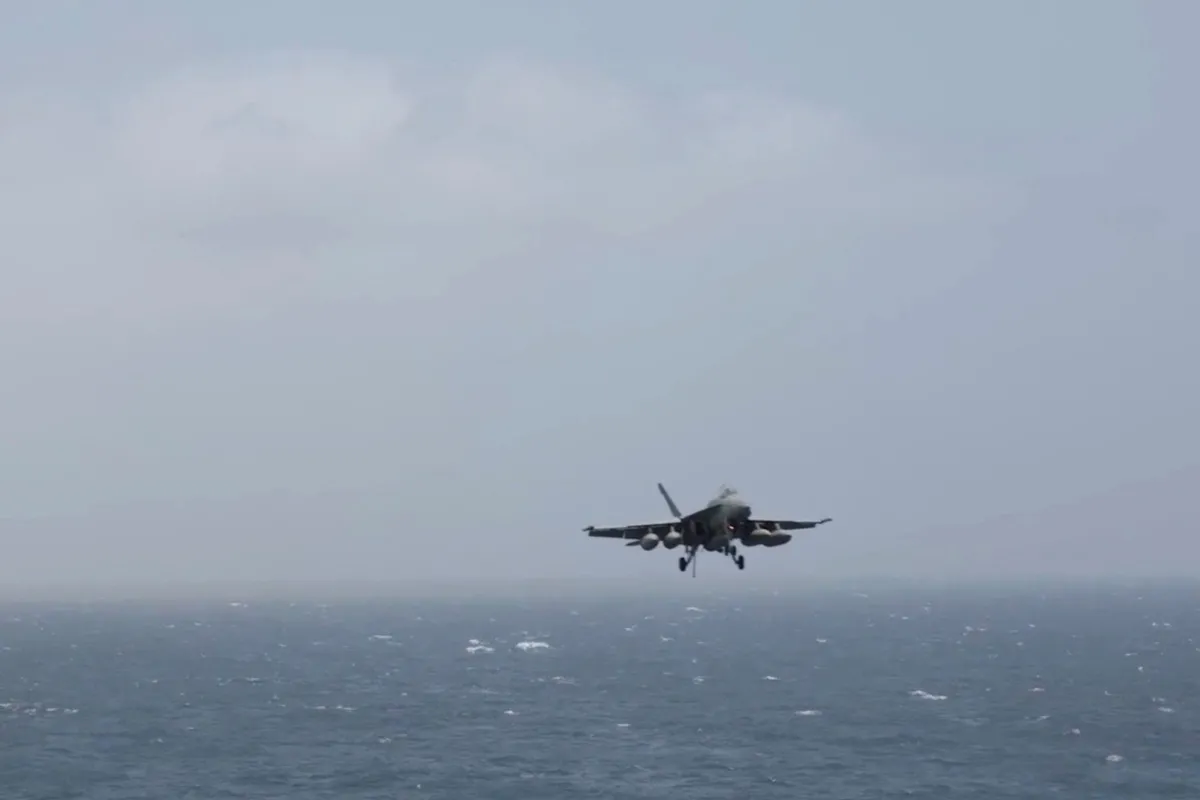
In the wake of these military actions, the U.S. has begun to re-establish a maritime blockade encompassing all Iranian ports, oil facilities, and coastal regions, stating that it will apply to all vessels regardless of their flags. An American official revealed that 19 warships have been deployed in the region, significantly enhancing the U.S. military's firepower and operational capacity to enforce the blockade.
As tensions heighten, the Emirati Ministry of Defense reported that Iran launched cruise missiles at two oil tankers in the southern corridor of Hormuz, resulting in one crew member's death and eight injuries. The Jordanian military intercepted and shot down four missiles entering its airspace from Iran, while Bahrain's Defense Force confirmed the interception and destruction of several Iranian aerial attacks targeting the kingdom.
Despite these provocations, Iran remains steadfast in its regional aggression, which has included attacks on facilities in Bahrain, Jordan, and Oman, as well as on Emirati oil tankers. Iranian military spokesperson Mohammad Akrami Nia asserted that "Hormuz will never open through war or American aggression," reinforcing that the armed forces will not compromise on Iran's rights in this strategic strait. An Iranian security official threatened devastating retaliation should Trump follow through with his threats against Pickaxe Mountain, asserting that American soldiers and regional partners would bear the consequences.
On the diplomatic front, Omani Foreign Minister Badr Al-Busaidi confirmed ongoing complex discussions aimed at establishing a long-term arrangement that guarantees freedom of navigation through the strait bordering both Oman and Iran. He emphasized that Oman bears the responsibility of working with Tehran and the international community to ensure safe passage through Hormuz. Meanwhile, the Omani Ministry of Foreign Affairs reiterated its commitment to transparent and neutral cooperation with all parties involved to restore maritime freedom in accordance with international law.
Warnings of a broader conflict loom as Israeli Prime Minister Benjamin Netanyahu cautioned Iranian leaders against contemplating an attack on Israel. As Israel approaches its first elections since the 'October Flood' attack, Netanyahu warned that any aggression would be met with a significantly stronger response than in previous encounters.
As reported by aljarida.com.