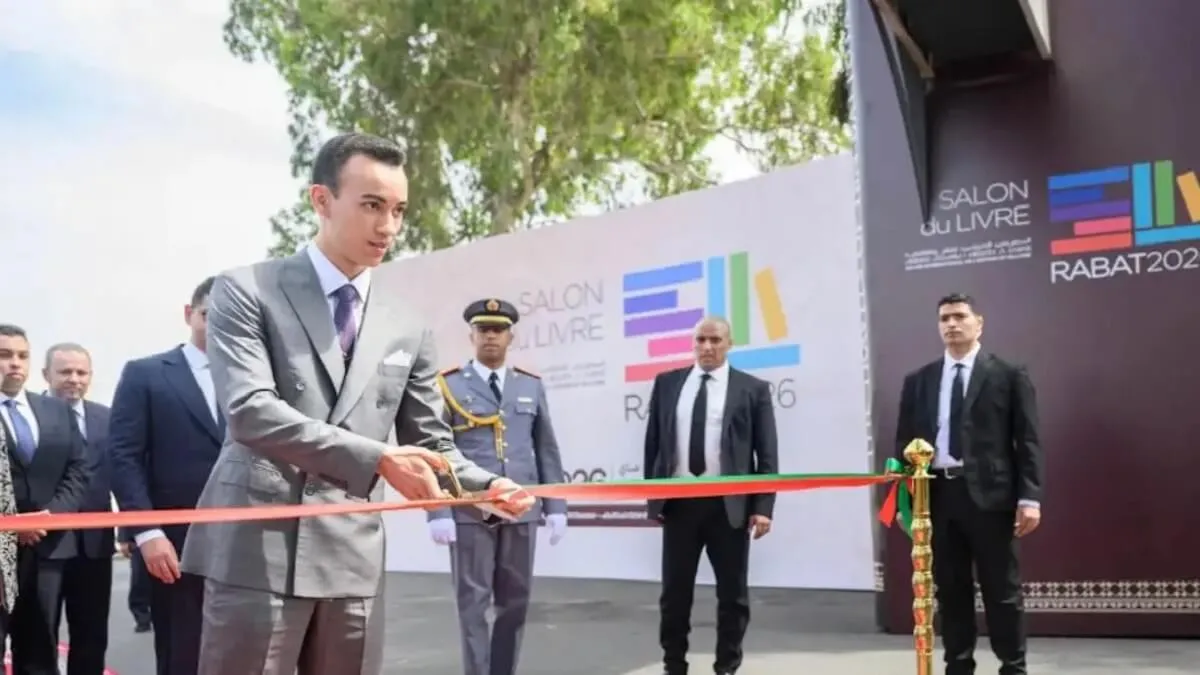

The recently unveiled book titled "Royal Diplomacy and the Moroccan Sahara Issue," presented at the Rabat Book Fair, delves into a nuanced analysis of a conflict that has persisted for decades. Rather than merely recounting historical events, this work investigates the pivotal moment when traditional elements of the conflict began to diminish, influenced by rapid regional and international changes. The authors aim to provide readers with a detailed analytical framework that traces the evolution of the Sahara issue, exploring its historical origins and internal dynamics, the complexities of its regional context, and the significant role of Moroccan royal diplomacy in redefining its international perception over recent decades.
Through a thorough examination of Morocco's engagement with international organizations and the evolving landscape of international law, the book posits a compelling argument: the autonomy initiative has transcended its status as a mere proposal and is now recognized as a feasible solution to resolve a long-standing conflict. This is particularly pertinent when considering the challenging circumstances faced by Sahrawis residing in the Tindouf camps.
The publication represents a collaborative effort by a diverse group of researchers who approach the Sahara issue from a fresh perspective. They focus on the evolution of Moroccan royal diplomacy in direct response to swift international changes and the trajectory of United Nations resolutions, culminating in the new implications introduced by Security Council Resolution 2797. This resolution marks a significant shift in the discourse surrounding the conflict, as it no longer treats all involved parties with equal consideration, instead emphasizing the necessity of a realistic political solution while affording substantial weight to the self-rule initiative.
What sets this book apart is its ambition to bridge the gap between academic analysis and practical understanding, illustrating how the Sahara issue has transitioned from a stalemate to a political process that is gradually steering towards resolution. Central to its thesis is the idea that Moroccan diplomacy has evolved beyond merely managing the conflict; it now actively seeks to orchestrate its resolution.
Since the ceasefire in 1991, the Sahara issue had been ensnared in a relentless cycle until the 2007 autonomy initiative emerged to break this impasse. However, the true transformation lies not only in the proposal itself but in the ability to establish it as an internationally acknowledged reference point. The cumulative effects of this initiative are becoming increasingly apparent: UN resolutions reflect a shift in tone, international stances are realigning, and recognitions of this initiative are gaining momentum.
One of the most notable examples of this shift is encapsulated in Security Council Resolution 2797, which signifies a departure from treating all parties equally and instead endorses the notion of a practical political solution, giving substantial prominence to the autonomy initiative. This evolution in UN rhetoric is more than a mere technicality; it signifies an indirect assertion that the era of stagnation is nearing its conclusion.
The international context further reinforces this narrative, highlighted by the United States' recognition of Morocco's sovereignty over the Sahara, the expansion of its consular presence in southern provinces, and the gradual decline or isolation of separatist narratives. We are witnessing a significant reshaping of the regional and international landscape, with Morocco demonstrating an acute awareness of these shifts and capitalizing on them effectively.
A noteworthy point made in the book, which I wholeheartedly support, is that the strength of Moroccan diplomacy does not stem from rigid alignment but rather from a strategic balance. By cultivating relationships with various global powers, engaging with African nations, and steering clear of entanglements in intricate international disputes, Morocco has secured a greater degree of maneuverability in addressing the complex Sahara issue.
Nevertheless, it would be premature to declare the resolution of this conflict as complete. What we are observing is more akin to a gradual dismantling of the long-standing discord, as its traditional components are systematically withdrawn: from the conventional rhetoric surrounding self-determination to the constriction of the separatist narrative, culminating in the assertion of a political solution as the predominant avenue forward.
Ultimately, the most critical takeaway from this book is that the Sahara issue has evolved beyond a simple territorial dispute; it now serves as a paradigm of how diplomacy can effectively reshape geopolitical realities. The pertinent question has shifted from who holds dominion on the ground to who possesses the ability to sway global opinion.
From the corridors of the Rabat Book Fair, the answer is increasingly evident: the contemporary struggle is determined through bilateral dialogues, founded on principles of good neighborliness and collaborative partnerships, and through the cultivation of alliances rather than succumbing to escalatory rhetoric that limits opportunities and closes doors. Thus far, Morocco appears to be navigating this intricate landscape with both patience and strategic efficacy.
As reported by atalayar.com.