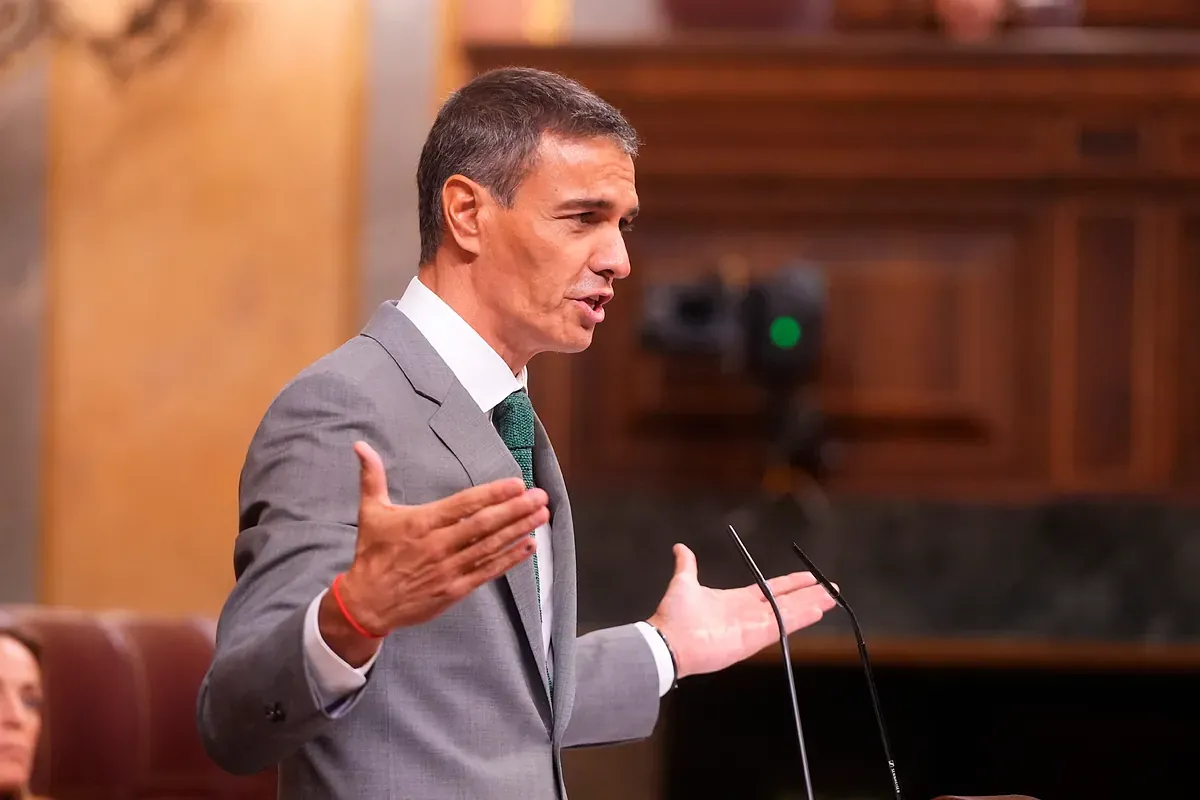

Pedro Sánchez Addresses Immigration Crisis in Ceuta
In a pivotal moment for Spanish politics, Prime Minister Pedro Sánchez has opened the door to potential investigations that could implicate the Moroccan government in the recent immigration crisis. This announcement comes on the heels of an alarming situation in Ceuta, where over 70,000 migrants entered the territory, prompting Sánchez to speak at the Congress to clarify the government’s position. The crisis has persisted for over a month without resolution, highlighting the urgency of the government's response. Sánchez has shifted his rhetoric regarding Morocco, moving from exoneration to the possibility of accountability should solid evidence emerge, stating that his administration would act "with total firmness" if necessary.
Government's Changing Narrative on Responsibility
For the past month, members of the Spanish government have consistently claimed that there was no evidence linking Morocco to the mass influx of migrants. However, this narrative has not been universally accepted within the Socialist Workers' Party (PSOE) or among the coalition partners and segments of the public. There is an emerging consensus that Sánchez's perceived leniency towards Morocco has affected public perception, prompting sources within the PSOE to emphasize the need for clarity and education on the government's actions and constraints. Some members have argued against absolving Morocco outright, especially when the facts surrounding the crisis were not fully known, stating that the public should not be treated as uninformed.
Despite the administration's insistence that there is no change in policy, Sánchez's recent comments suggest a willingness to reconsider the government's stance depending on the results of ongoing investigations by law enforcement and judicial bodies. He noted that while Morocco is not currently being singled out, the situation remains fluid, and any solid evidence of involvement would prompt a decisive response. This marks a significant shift in tone, as Sánchez aims to counter the narrative circulating among opposition parties, particularly the Popular Party (PP), which accuses him of being overly conciliatory towards Morocco. By asserting that the government will ensure accountability for those responsible for the crisis, Sánchez is positioning himself firmly against the backdrop of diplomatic pressures while also attempting to quell criticisms from his coalition partners.
The Prime Minister also hinted at a need for changes in bilateral cooperation with Morocco, stating that the dynamics of this relationship must evolve in light of recent events. Although specific details on how this cooperation will change were not disclosed, governmental sources have suggested that it may involve increased border controls and improved information sharing. Furthermore, Sánchez revealed that a meeting took place with the Moroccan ambassador on August 21 to address comments made by a Moroccan minister regarding Ceuta and Melilla, a move that had previously been kept under wraps for reasons of discretion. The government is acutely aware of the need to balance its diplomatic relations with Morocco while responding to domestic calls for a more assertive approach to governance.
Ultimately, Sánchez's appearance in Congress highlighted his isolation on this matter, with various political parties demanding greater accountability from his administration. The Prime Minister has pledged to release all relevant reports from intelligence and law enforcement agencies concerning the crisis, committing to transparency as a means of restoring public trust. He has consistently denied any prior warnings that could have anticipated the scale of the migrant influx, asserting that all information received was routine and did not suggest the severity of what ultimately occurred.
As reported by elmundo.es.