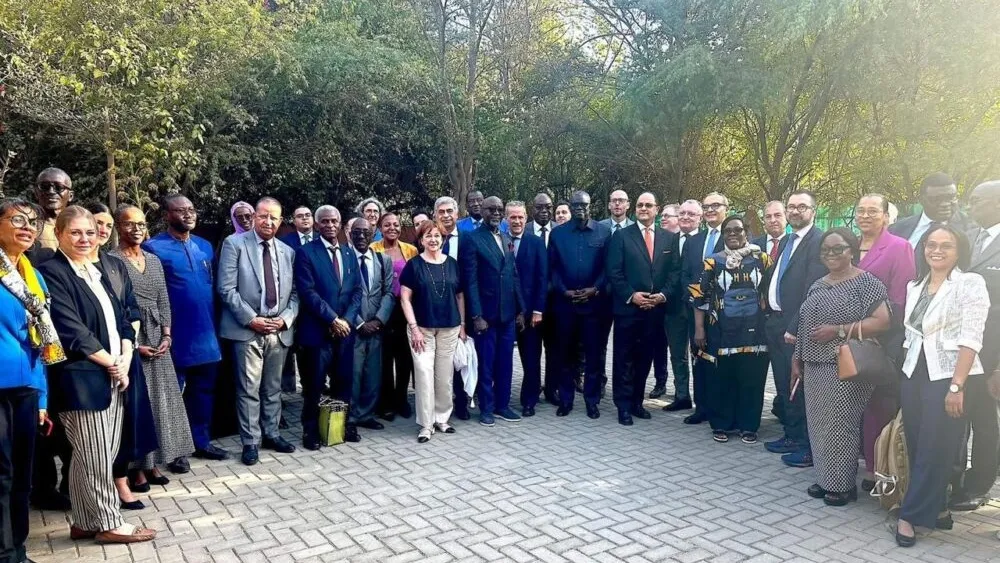

The illustrious Scientific Francophonie Week, following a remarkable edition held in Dakar, is set to take place this year in Agadir for its sixth iteration. Scheduled from October 12 to 15, this annual gathering will convene students, academics, researchers, policymakers, and international organizations under the compelling theme: "What is the role of Francophone scientific diplomacy in the face of global geopolitical challenges?" This event, organized by the Agence universitaire de la Francophonie (AUF), serves as a unique platform for dialogue, reflection, and collaboration. It aims to foster innovative ideas, bolster networks, and collectively address the significant challenges of our time.
This sixth edition promises a privileged environment to analyze the substantial transformations reshaping international balances, while also highlighting the increasing role of universities in knowledge production, fostering dialogue among nations, and seeking solutions to global issues. The agenda includes a Ministerial Conference that will delve into the political and diplomatic dimensions of these themes. Scientific sessions will examine various facets, such as sustainable development, peace, linguistic diversity, knowledge discoverability and circulation, as well as emerging technologies. Additionally, a Youth Congress will complement the discussions by addressing issues of information and misinformation, emphasizing the integration of citizenship as a crucial element of youth engagement.
Numerous workshops dedicated to the Scientific Francophonie in Morocco, university cooperation in North Africa, and other regional themes will enrich the exchanges. These workshops will complement the work of the Agency's governing bodies (Board of Directors, Scientific Council, Networks Council, Economic and Social Council, and the meeting of the presidents of regional rectors' conferences), transforming Agadir into the capital of Scientific Francophonie for the duration of this event.
This edition is particularly significant as it aligns with the Agency's new roadmap titled "Strategy 1+3." The "1" refers to the year 2026, marking a transitional phase dedicated to the profound transformation of the organization. According to Slim Khalbous, the Rector of AUF, this strategy aims to equip the Agency with a more resilient, agile economic model better suited to future challenges. It reaffirms the institution's major priorities, which include enhanced digital transition through artificial intelligence, the employability of youth linked to civic engagement, scientific diplomacy intertwined with university governance, strengthened pedagogical guidance through inclusion, and the promotion of impactful research that serves sustainable development.
As reported by lopinion.ma.