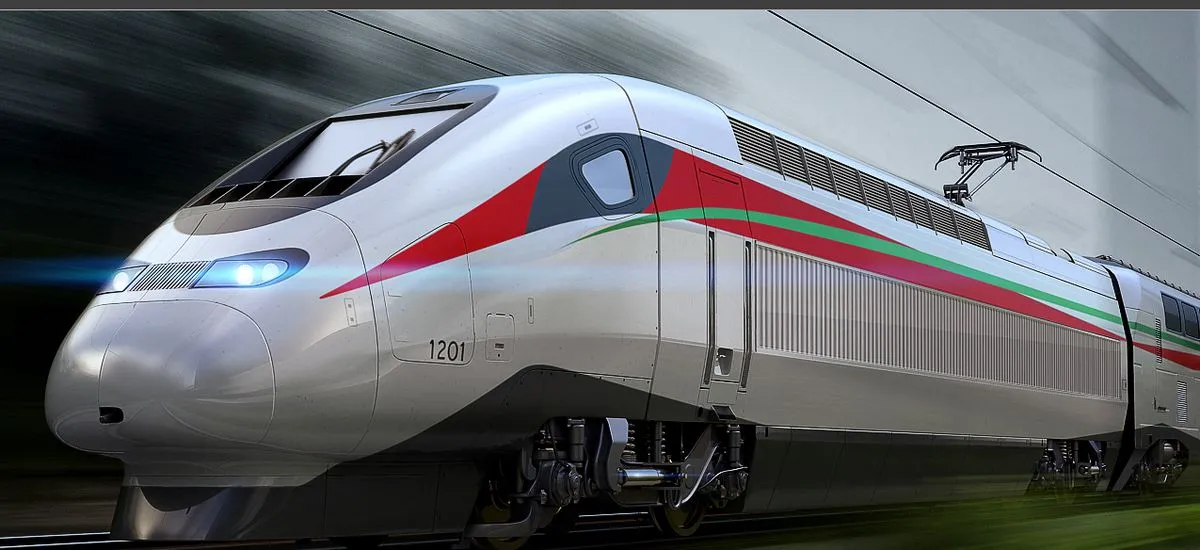

Challenges in the Kenitra-Marrakech Railway Expansion
The ambitious railway project connecting Kenitra to Marrakech faces a significant hurdle as part of the extensive construction process will need to go through the bidding procedure again. The National Office of Railways (ONCF) has declared the second phase of a contract concerning several new stations unsuccessful, as no companies submitted proposals for this segment. The affected contract is valued at approximately 385 million dirhams, excluding taxes, and includes the construction of a high-speed train station and a station for the future regional express network in Benguerir Green City, along with new railway facilities in Sidi Bou Othmane, Sidi Ghanem, and near the Grand Stadium of Marrakech.
This setback is limited to this specific contract, and other components of the broader railway program continue on schedule. In July, the ONCF awarded TGCC the construction of the Marrakech Guéliz station and the Marrakech technical center. The Moroccan company secured this contract with a bid of 562.7 million dirhams, while SGTM also participated with a proposal exceeding 572 million dirhams.
Investment in National Railway Infrastructure
This project is part of a national railway program estimated at 96 billion dirhams, with 53 billion dirhams dedicated to the infrastructure and equipment along the Kenitra-Marrakech axis. Additionally, 29 billion dirhams will be allocated for the acquisition of new trains, while 14 billion dirhams are earmarked for the modernization and maintenance of the existing network. The expansion of high-speed rail toward Marrakech is a central element of this transformation, with trains expected to operate at speeds of up to 320 km/h in commercial service, and the infrastructure designed to support speeds of up to 350 km/h.
The anticipated time savings are significant, with the journey from Tangier to Marrakech being reduced from just over five hours to approximately three hours. The travel time between Rabat and Marrakech is targeted to be around one hour and fifteen minutes. The project also includes a high-speed rail bypass around Casablanca, which will enable long-distance trains to avoid the busiest segments of the existing network, thereby freeing up more capacity for regional travel.
Accompanying this scale of change is the renewal of rolling stock, as ONCF prepares to procure 168 trains, which includes 18 high-speed trains, 40 intercity trains, 60 regional trains, and 50 units intended for future regional express networks. Several international manufacturers, such as Alstom, Hyundai Rotem, CAF, Talgo, and CRRC, are engaged in discussions and consultations related to this program.
The development of the regional express network will impact several major urban areas in the Kingdom, including Casablanca, Rabat-Salé-Kénitra, and Marrakech-Safi. In Marrakech, the future Grand Stadium station is set to provide a direct rail connection to the sports venue. In Benguerir, the new station aims to bring the national network closer to the academic and technological ecosystem surrounding Mohammed VI Polytechnic University.
Moving forward, ONCF will need to restart or adapt the bidding process for the stations within the contract that lacked candidates. However, this episode does not jeopardize the other contracts already awarded or the overall progress of a program that is set to profoundly transform rail connections between the north, center, and south of the Kingdom.
As reported by lenouvelliste.ma.