
Traffic Surge at Sète Port
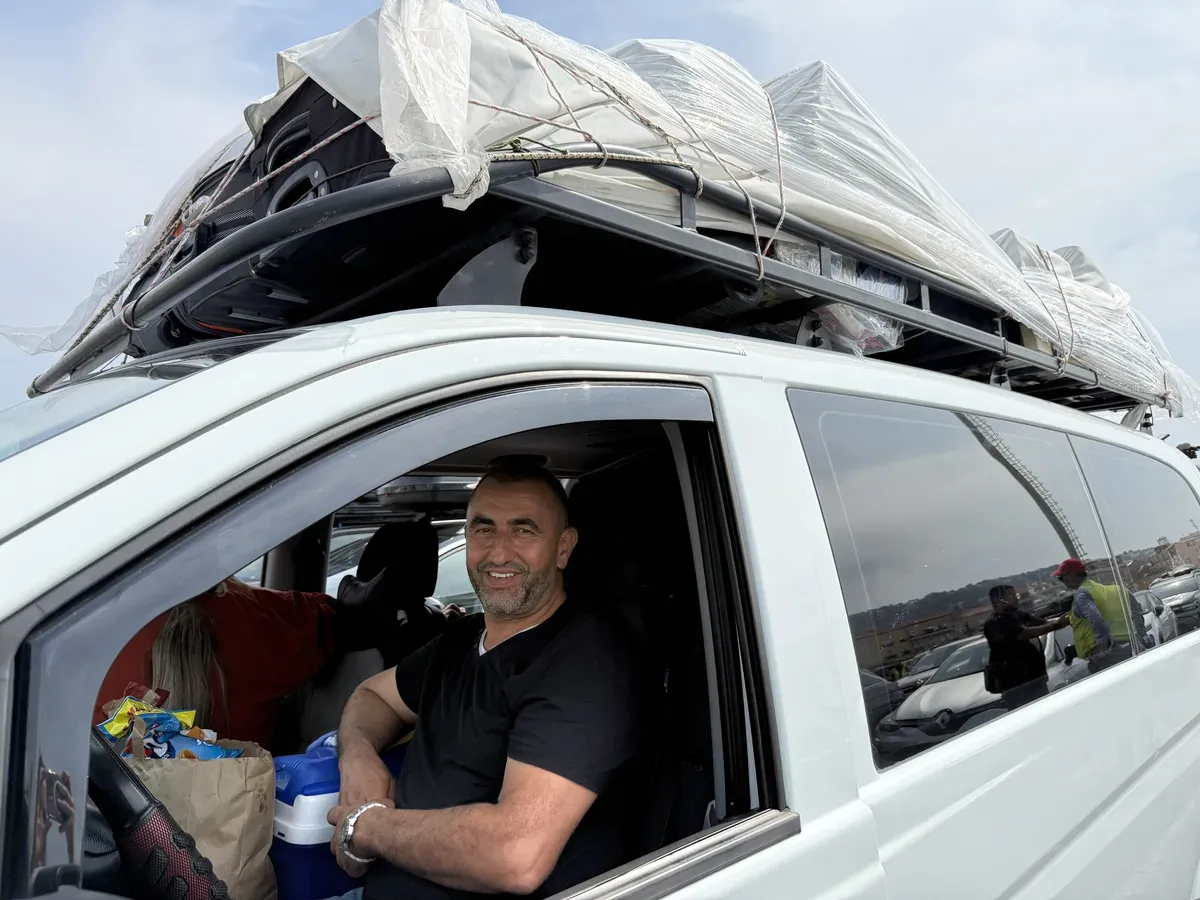
Within the bustling parking lot of the Sète port, positioned in front of the Orsetti ferry terminal, hundreds of vehicles, often overflowing with luggage, wait under the relentless sun and humid air, their engines running to power the air conditioning. Inside these vehicles, families and sometimes solo travelers endure long hours of anticipation before embarking on ferries bound for Morocco or Algeria. One such traveler, Youssif, carries two coolers filled with fresh water to share with his wife and children. “We left last night from Mulhouse, and we’ll arrive in Béjaïa, Algeria, by tomorrow around 4 PM,” he shares, expressing the challenges of traveling in the heat. Each summer, Youssif chooses the road for his vacation “back home” because it is significantly less costly than flying. His vehicle is loaded with wrapped bags on the roof and in the trunk, filled with essential household items, clothing, and appliances. He explains, “It’s for us and also for family back home; we can buy better quality items here than we can there.”
Impressive Growth and Infrastructure Expansion
By 2025, the Sète port is projected to accommodate nearly 300,000 passengers, with 155,000 opting for the GNV ferry service to Morocco, whether to Nador or Tangier. The port is also focusing on expanding connections to Algeria, with ferry services to Skikda, Béjaïa, Oran, and Algiers operated by three companies—Algérie Ferries, Corsica Linea, and reinforced by GNV since June 2025—resulting in nearly 80,000 passengers, three times the traffic from the previous year.
However, the increasing volume of travelers is placing significant strain on the port's infrastructure. To alleviate congestion around the Orsetti ferry terminal and to prevent long traffic jams that hinder access to the downtown area, a third entry point is under construction. Located on Avenue Gilbert-Martelli, north of the commercial port, between Lidl and Euromaster, this new access is set to be completed by the end of July 2026, following five months of work, as assured by the Occitanie Region, the owner of the Sète port.
This initial phase, costing €1.8 million, will allow travelers to directly access the ferry zone without passing through the city center, facilitating smoother traffic flow and enhancing the overall welcome experience. Furthermore, this new entry is expected to rejuvenate the modernization project of the Orsetti terminal. “A programming study is currently underway to adapt the facilities to target a traffic volume between 350,000 and 370,000 passengers per year. This will determine whether rehabilitation or reconstruction is needed while optimizing boarding areas and incorporating new services for travelers,” explains Frédéric Boisson, engineering manager at Port de Sète – Sud de France.
On July 15, the port anticipates another busy day with the Corsica Linea ferry set to depart for Béjaïa carrying 1,321 passengers and 521 vehicles, including 21 vans. Simultaneously, the Italian GNV vessel Majestic will head to Morocco with 1,231 passengers and 409 vehicles, including 64 vans, all waiting to pass through customs and border police before boarding.
Many travelers, like Mohamed, leave their car windows wide open, hoping to create a breeze as they await boarding the Majestic. After departing from Montpellier, he plans to disembark in Nador, then continue to Tinghir in southern Morocco. “We have a 700 km journey after landing in Morocco, which totals four days of travel. Out of a month-long vacation, we spend over a week just on the round trip,” explains the mason traveling with his children. Other passengers opt to relax at a small cafe on the edge of the parking lot. Karim, his wife, and their three children sit watching the parade of vehicles entering the boarding area. They are traveling from Ain, north of Lyon, and are taking the ferry to Algeria from Sète for the second time. Having previously traveled from Marseille, Karim notes, “Tickets were cheaper from Sète, so we didn’t hesitate,” as he looks forward to spending a month with family in Sétif.
Many vehicles in the lot bear a distinctive pink license plate, indicating their intended export to Algeria for resale, often at a higher price. This business is lucrative as resellers can reclaim VAT once they prove that the vehicle has exited French territory. “We come from Marseille, take the boat to Béjaïa, and then drive to sell our cars,” explains Adda, who sits at a cafe with two other drivers. They make two or three round trips per month, driving either new or used cars that will continue their journey in Algeria. They favor Sète because conducting this business through the ports in Oran or Algiers, served by Marseille, is not feasible due to Algerian regulations. Khalidou, who owns a bar-restaurant in Sète and has lived there for 20 years, smokes a cigarette next to his motorcycles destined for export. “I do business between Morocco and Algeria because there are no taxes there,” he explains, making the trip with two motorcycles and two cars driven by colleagues.
Despite the continuous flow of vehicles through customs and border police, the parking lot, which accommodates 500 vehicles, remains full. “We have more than 900 vehicles to board today in this heat; it’s going to take hours,” a member of the port's private security, responsible for managing the flow, reports. When the ferry doors finally close, travelers will leave behind hours of waiting, traffic jams, and oppressive heat, with only a night at sea separating them from the welcoming shores of Béjaïa or Nador, replacing the familiar sights of Sète.
As reported by echo-des-tribunes.com.