
Polisario's Diminishing Influence in Latin America
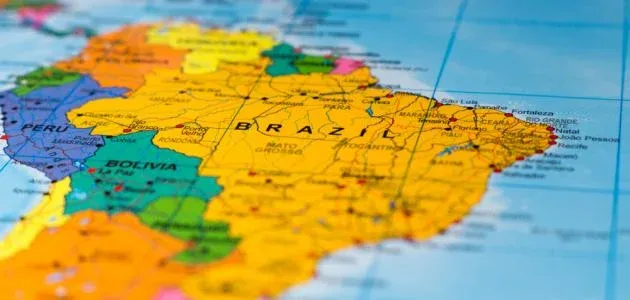
The Polisario Front is experiencing a significant decline in its international influence as an increasing number of countries voice their support for Morocco's sovereignty over the Sahara. This backing also extends to the autonomy initiative proposed by Morocco in 2007, which has gained traction as a viable solution to the long-standing territorial dispute. Historically, Latin America has served as a crucial bastion for the Polisario, providing a substantial base of political and diplomatic support. However, recent developments indicate a notable shift in this dynamic, particularly as Morocco has made considerable diplomatic strides in the region, effectively reshaping the geopolitical landscape regarding the Sahara issue.
Colombia has recently joined the ranks of countries reevaluating their stance on the Polisario. The newly elected government has taken decisive action by freezing relations with the self-proclaimed “Sahrawi Republic” and publicly endorsing Morocco's claim over the Sahara. Furthermore, Colombia aims to enhance bilateral cooperation with Morocco in various sectors, including trade, investment, food security, and infrastructure development.
In September 2023, Peru also signaled a significant policy shift, opting to sever its ties with the Polisario's so-called “Republic.” The incoming administration led by President Keiko Fujimori has expressed unwavering support for Morocco's territorial integrity and its sovereignty over the southern provinces, marking a clear departure from previous positions.
Similarly, in 2024, Ecuador announced the suspension of its recognition of the “Sahrawi Republic,” a move that traces back to its initial recognition in 1983. This decision, which also included the closure of an embassy established in 2009, signifies a pivotal moment in Ecuador's relations with Morocco, further solidifying Morocco's diplomatic achievements in the region.
Bolivia and Honduras have followed suit, with Bolivia halting all diplomatic relations with the Polisario Front and reaffirming its commitment to a realistic and lasting political solution aligned with United Nations guidelines. Honduras also expressed its decision to withdraw recognition of the “Sahrawi Republic,” highlighting its adherence to principles of non-interference and respect for the sovereignty of other nations.
Growing Support for Morocco from Regional Powers
Countries like Chile, Brazil, and Argentina have also demonstrated a shift towards Morocco’s perspective. Chile, which has never formally recognized the Polisario, has engaged in negotiations for a free trade agreement with Morocco, a deal that could implicitly affirm Morocco’s sovereignty over the Sahara. Brazil's political landscape has seen a growing inclination towards supporting Morocco's autonomy proposal, with the ruling Workers' Party endorsing the initiative as a means to foster dialogue and enhance the welfare of affected populations. Argentina's new right-wing government under President Javier Milei has also aligned more closely with Morocco, further limiting Polisario's influence in the region.
These transformations indicate that Morocco's presence in Latin America transcends mere bilateral relations; it now encompasses broader regional institutional frameworks. The Andean Parliament recently hosted a plenary session in Morocco, where its president commended the Kingdom as a “strategic bridge” connecting Africa, Europe, and Latin America, concurrently pledging support for Morocco's territorial integrity.
While a handful of Latin American nations, such as Mexico and Venezuela, continue to support the Polisario Front, the overall trend reveals a shift in favor of Morocco. Most Latin American countries are increasingly recognizing Morocco as a gateway to Africa, capitalizing on its strategic geographic position and robust economic ties. This evolving landscape not only enhances Morocco's diplomatic foothold but also reinforces its economic and trade partnerships within the region, aligning them with its overarching strategic interests.
As reported by en.yabiladi.com.