
Revisiting Ceuta's Status Amid Migration Pressures
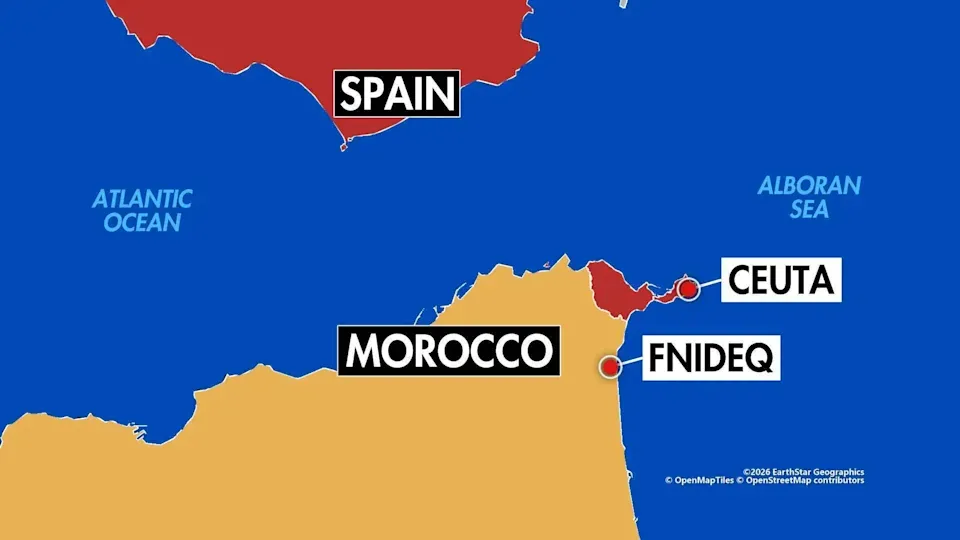
In a thought-provoking analysis published by Foreign Policy, the case is made for Spain to reconsider its claim over Ceuta, a territory that has become a symbol of outdated geopolitical complexities. The article, dated August 6, explores the historical context of Ceuta and its strategic location on Morocco’s Mediterranean coast, suggesting that the enclave's disputed status is not only an anomaly but also a source of unnecessary tensions that leave Europe vulnerable to migration pressures at one of its most peculiar borders.
The analysis argues that relinquishing control of Ceuta could effectively close off a backdoor into the European Schengen area, thereby alleviating some of the migratory challenges that have emerged as large numbers of people have sought to enter Spain from Morocco. This situation has highlighted the unique vulnerabilities associated with Spain's territorial claims on the African mainland, where Ceuta is geographically positioned yet politically aligned with Europe.
A Legacy of Colonialism and Territorial Disputes
For Morocco, the status of Ceuta represents an unfinished chapter in the narrative of decolonization. The Moroccan government has consistently asserted its claim over Ceuta and Melilla, arguing that both cities are integral to its territorial integrity. Despite these claims, Spain vehemently maintains that these enclaves are essential parts of its national territory, leading to a stalemate that has persisted for decades. The crux of the issue lies in the paradox of Ceuta: while it is physically located in Africa, it functions as an external border of the European Union, creating a complex interplay of migration policy, border security, and bilateral relations between Morocco and Spain.
The recent migration crisis has served as a stark reminder of how quickly tensions can escalate at this border. What may appear as a minor Spanish territory on a map has far-reaching implications, linking critical aspects of European and North African geopolitics. The article posits that addressing Ceuta’s status is not merely a matter of territorial adjustment; it could also pave the way for resolving a long-standing source of friction between Morocco and Spain. The potential for turning a recurring point of conflict into a cooperative opportunity is substantial.
For Spain, the decision to cede Ceuta would be historically significant and politically challenging. Nevertheless, the ongoing migration crisis underscores the limitations of maintaining the status quo, as a territory that Spain views as unequivocally European remains entrenched in a region marked by geopolitical dynamics. Ultimately, the argument presented by Foreign Policy encourages a reevaluation of the rationale behind Spain's sovereignty over Ceuta, suggesting that returning the territory to Morocco could offer a more pragmatic and peaceful resolution to one of the most enduring territorial disputes in the region.
As reported by northafricapost.com.