Sidi Mohammed Ben Abdellah University Engages Experts in Discussion on Western Sahara
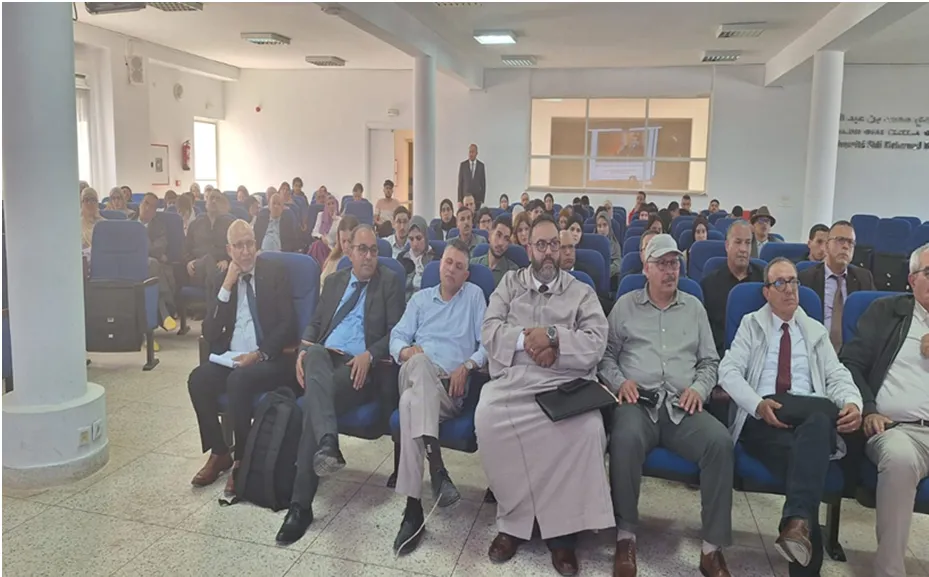
On April 17 and 18, 2026, the Laboratory of Literary Studies, Linguistics, and Media Communication at Sidi Mohammed Ben Abdellah University in Fez organized a significant national scientific seminar titled "Updates on the National Issue in Light of the UN Security Council Vote: Political, Legal, and Media Dimensions." This event saw the participation of esteemed researchers, academics, and experts specializing in the Western Sahara file, attracting considerable attendance from civil society as well as students and researchers from various Moroccan universities interested in the national cause.
Key Insights from the Seminar
During the opening session, Dr. Mohamed Al-Qasimi, the director of the Laboratory of Literary Studies, Linguistics, and Media Communication, emphasized that the issue of Western Sahara has witnessed accelerated dynamics in diplomatic, political, and legal arenas in recent years. A notable highlight was the recent UN Security Council vote endorsing the autonomy initiative, which conveyed significant political and legal implications, reflecting a substantial shift in international engagement with this regional dispute.
The seminar program featured three academic sessions that delved into various aspects: the political and diplomatic framework of the Security Council vote, the legal dimensions of the conflict, and a discussion on media representation of the national issue. Furthermore, the sessions explored the geopolitical and regional dimensions related to this matter.
One of the prominent speakers, Algerian journalist and political activist Walid Kbir, provided an in-depth analytical review of the transformations in Algeria's stance regarding the Western Sahara issue following the adoption of UN Security Council Resolution 2797 on October 31, 2025. He argued that this resolution was not merely a technical renewal of the MINURSO mission but marked a pivotal political shift that redefined the international framework in favor of the Moroccan autonomy initiative as a realistic basis for negotiations.
Dr. Sharqi Khitar, a researcher in political science and media and director of the Southern Center for Studies and Research, highlighted that Morocco's engagement in implementing UN Resolution 2797 revealed a fundamental intersection between two distinct phases: the period prior to 2007, dominated by the logic of a referendum, and the post-2007 phase, characterized by the introduction of the autonomy proposal. This transition shifted the international discourse from "Who governs the Sahara?" to "How should it be governed within Moroccan sovereignty?" This represents a normative transformation that aligns with the 2797 resolution, which endorses autonomy as the only feasible and applicable solution and serves as a new starting point following international acknowledgments and developmental measures.
Following two days of rigorous scientific discussions, the seminar concluded with several recommendations, including: enhancing Morocco's diplomatic presence in international forums, intensifying efforts to support the Moroccan autonomy initiative, promoting parallel diplomacy, particularly in academic, parliamentary, and civil domains to defend the national cause, recognizing the positive evolution of legal discourse within the UN towards a realistic political solution to this protracted conflict, and establishing specialized research platforms focused on international law related to the national issue.
As reported by marocmedias.com.