
The recent decline in gas exports from Spain to Morocco has raised eyebrows, as the flow has dramatically decreased since August 15, settling at approximately two-thirds of its usual capacity. The Washington-based platform Attaqa was the first to highlight this concerning trend, noting that normal daily exports typically range between 29 to 31 GWh, with the five-day average from August 19 to 23 dropping to about 21 GWh.
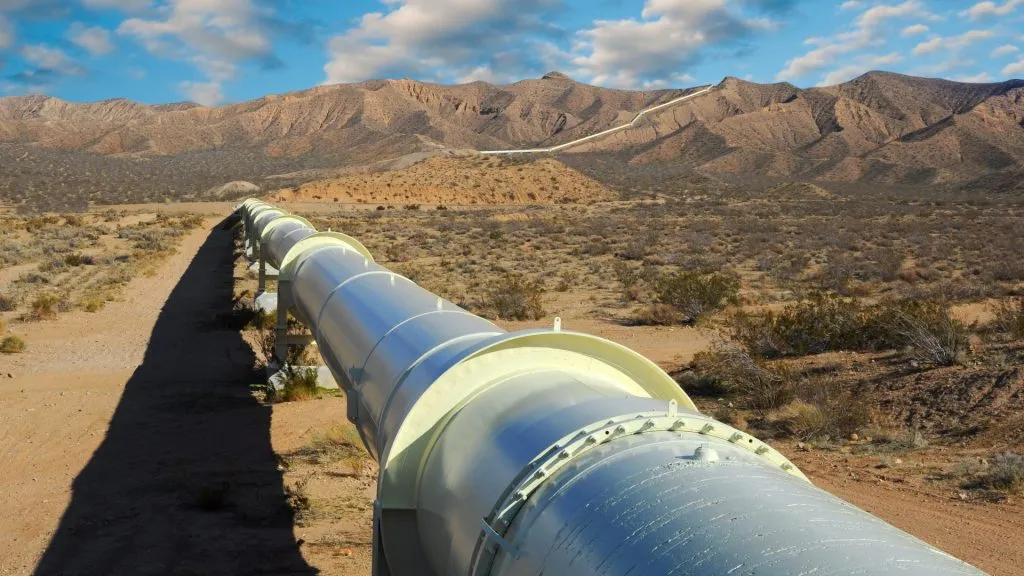
To verify these findings, Morocco World News (MWN) consulted data from Enagás GTS, the operator overseeing Spain's gas system. The physical-flow readings at the C.I. Tarifa interconnection—the point where the Maghreb-Europe Gas Pipeline crosses into Morocco—indicated a significant decline in gas flow. A negative reading at this juncture signifies gas departing from the Spanish system, with Tarifa's technical export limit capped at 32 GWh daily. The recorded declines show a gradual reduction: flows were measured at 30.57 GWh on August 14, dipping to 27.16 GWh on the 15th, and further falling to 20.70 GWh on the 18th, before stabilizing around 20.3 GWh through August 23.
The exact reasons behind this decline remain ambiguous. While Spain has not issued any formal announcements regarding changes in gas export policies, both Attaqa and Enagás data do not suggest any governmental decision affecting the gas supply. The uncertainty surrounding the reduction prompts speculation; it could be due to diminished demand from Morocco, supply chain disruptions, or varying regasification conditions. Factors such as shifts in electricity demand, plant availability, and gas injection scheduling could all potentially impact daily gas flows.
Amidst this decline, the overall picture for gas imports in 2026 appears mixed. In the first seven months of 2026, gas exports from Spain to Morocco fell by 13.7% year-on-year, totaling 4.95 TWh compared to approximately 5.74 TWh during the same timeframe last year. However, July saw a resurgence, with gas flows reaching 992 GWh, the highest monthly figure of the year, contrasting with a low of 342 GWh in April due to disruptions linked to geopolitical tensions, particularly the US-Israeli conflict with Iran.
Morocco's strategy includes purchasing liquefied natural gas (LNG) on international markets from various suppliers, including Russia and the United States, which is then regasified at Spanish terminals before being piped back through the Maghreb-Europe line, now operational in reverse following Algeria's cessation of transit in late 2021. The implications of this reliance on Spanish infrastructure for energy are underscored by recent media coverage emphasizing Morocco's energy dependency, which has been quantified at about 25% of its electricity supply and 100% of its imported gas sourced via Spanish channels.
In a notable commentary, Ignacio Urbasos from the University of Navarra's Center for Global Affairs has described Morocco's energy relationship with Spain as one of “asymmetric dependence,” suggesting a false perception within Spain of a one-sided reliance. The discourse has been further fueled by reports indicating that Spain may view Morocco's energy needs as more critical than its own, spurring discussions about the stability of this relationship as Morocco explores avenues to diversify its energy sources.
As Morocco seeks to diminish its energy reliance on Spain, the expansion of solar and wind capabilities is underway, alongside considerations for new regasification terminals and plans for a direct power interconnection with Portugal, which were revitalized earlier this year. This evolving energy landscape underscores the complexities and challenges facing both nations as they navigate their intertwined energy futures.
As reported by moroccoworldnews.com.