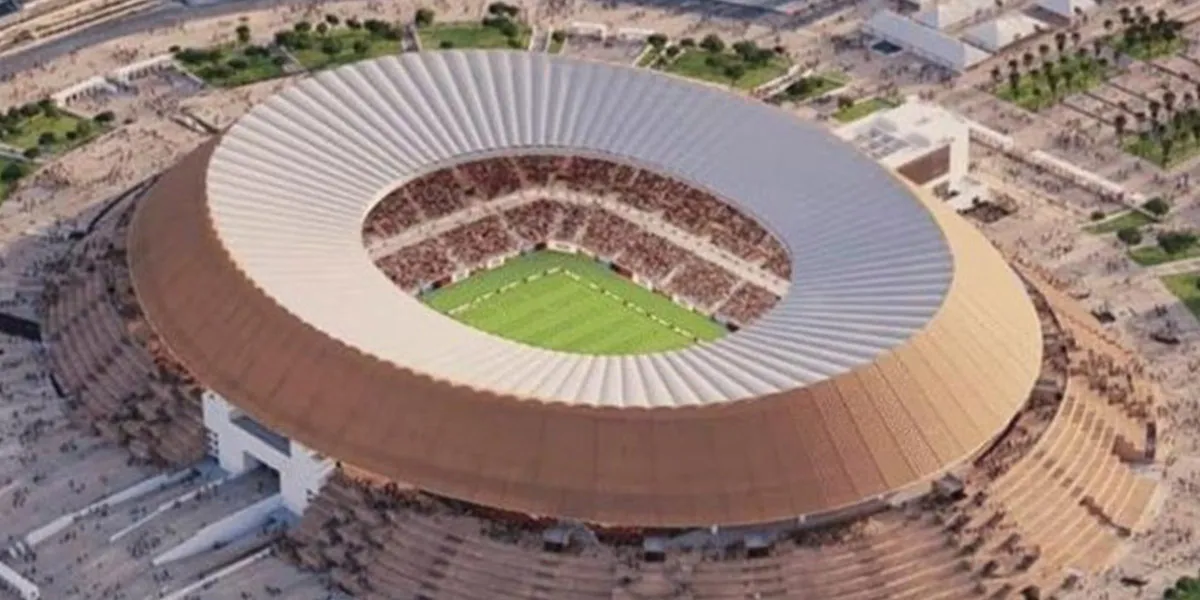

The National Agency for Public Equipment (ANEP) has recently initiated three additional contracts aimed at modernizing the Grand Stadium of Agadir, representing a total investment of 2.419 billion dirhams (MMDH). This new phase reflects an accelerated effort in the renovation of the sports venue, which is set to meet the technical and functional standards mandated by FIFA in preparation for the 2030 World Cup, co-hosted by Morocco, Spain, and Portugal.
The ongoing upgrade project at the Grand Stadium of Agadir is gaining momentum. Following the awarding of the first contract worth 1.08 billion dirhams, which covers essential construction works including structural work, waterproofing, coatings, false ceilings, carpentry, and painting, the ANEP has now launched three additional lots amounting to a total investment of 2.419 billion dirhams. This brings the total budget for the various contracts already launched to approximately 3.5 billion dirhams, highlighting the extensive transformation efforts underway to elevate the Adrar Stadium to meet international standards.
Key components of the project focus on enhancing the stadium's infrastructure, including the roof and facades, technical fluid installations, electrical systems, and additional complementary services. The modernization efforts aim not only to renovate the existing structures but to fundamentally enhance technical equipment and facilities to create a state-of-the-art venue.
Essential Structural Updates: Roofs and Facades
The first contract specifically addresses the roof and facades, marking a pivotal architectural aspect of the modernization initiative. According to the special specifications document, this contract primarily involves constructing a metal framework, establishing a cable network structure, upgrading the royal entrance canopy, and applying a new membrane and aluminum envelope. The primary objective of this component is to infuse modernity into the stadium's exterior while simultaneously improving its structural integrity, aesthetic appeal, and technical performance.
Moreover, the renovation plans include employing solutions that cater to mechanical and climatic constraints, ensuring coordination with other trades involved in the project. The contract stipulates the use of digital project management methods, such as BIM modeling, a quality assurance plan, topographic monitoring, environmental requirements, and adherence to HQE sustainable infrastructure certification standards. This component holds significant importance as the roof is one of the most visible elements of the stadium and directly impacts spectator comfort, weather protection, architectural integration, and the venue's image during international broadcasts.
Fluid Installations: Crucial for Stadium Operations
The second contract focuses on fluid installations, a critical technical aspect essential for the daily operations of the stadium and the safety of its users. The special specifications outline the establishment of plumbing networks, fire protection systems, air conditioning, ventilation, and smoke extraction systems, among other requirements. These systems form the invisible technical backbone of the infrastructure, directly influencing the quality of service for the public, sports teams, and various stakeholders.
These installations must ensure optimal water distribution, maintain a constant supply of fresh air throughout all areas, and create suitable thermal conditions in the stands, VIP areas, locker rooms, technical rooms, and media zones, adhering to international fire safety standards. Additionally, the specifications require integrating environmental standards and HQE benchmarks to enhance the stadium's energy performance and minimize its environmental impact. As with other contract components, all services will be coordinated among the various contractors involved in the project to ensure compatibility among all systems of the future modernized stadium.
The third contract pertains to electrical installations, which are also vital to the Grand Stadium's modernization. This contract entails a comprehensive program that includes high and low-voltage installations, specialized lighting, automatic fire detection and extinguishing systems, pre-wiring for IT and telephony, active computer networks, wireless networks, telephony, access control, perimeter LED screens, general and security sound systems, conference room equipment, broadcast networks for audiovisual broadcasters, timekeeping systems, centralized technical management (CTM), tele-distribution, display and projection devices, as well as video surveillance systems.
All these installations aim to provide the stadium with a digital and electrical infrastructure that meets the standards of major international competitions. Future equipment must ensure secure and redundant power supply, high-quality connectivity, constant monitoring of technical installations, and centralized management of the stadium's various systems. Additionally, there is a strong focus on enhancing the spectator experience through modern communication, information, and security systems while meeting the needs of media, organizers, and security services. This contract, therefore, serves as a cornerstone of the technological transformation of the stadium, which is set to host high-level matches.
The project has already entered its operational phase, just over a month after awarding the first contract for upgrading the Grand Stadium in preparation for the 2030 World Cup. Construction has commenced and is progressing both within the stadium and in its surrounding areas. At the northern entrance, excavation machinery is actively preparing for the interventions outlined in the first lot. Jointly overseen by the National Company for the Realization and Management of Sports Equipment (SONARGES) and the ANEP, this initial phase involves an investment of 1.08 billion dirhams. With the launch of the four new contracts, the total investment now approaches 3.5 billion dirhams, underscoring the importance placed on modernizing this sports infrastructure.
The bid commission completed its work on July 1, 2026, selecting the awarded company after reviewing the compliance of its administrative, technical, and financial documents. Previously renovated for the Africa Cup of Nations and benefiting simultaneously from a comprehensive urban and landscaping development program covering roads, parking areas, urban parks, as well as public lighting and furniture, the Grand Stadium of Agadir is now set for a new upgrade scheduled to last fifteen months. The overarching goal is to elevate the entire venue to meet FIFA's requirements for hosting international competitions. This operation is divided into several complementary lots, covering both structural works and architectural envelopes, technical networks, electrical installations, and digital equipment, reflecting a holistic approach to modernization aimed at making the Grand Stadium of Agadir one of the key venues for the major events of the 2030 World Cup.
As reported by leseco.ma.