
Spain's Allegations Against Israel and Russia in Migrant Crisis
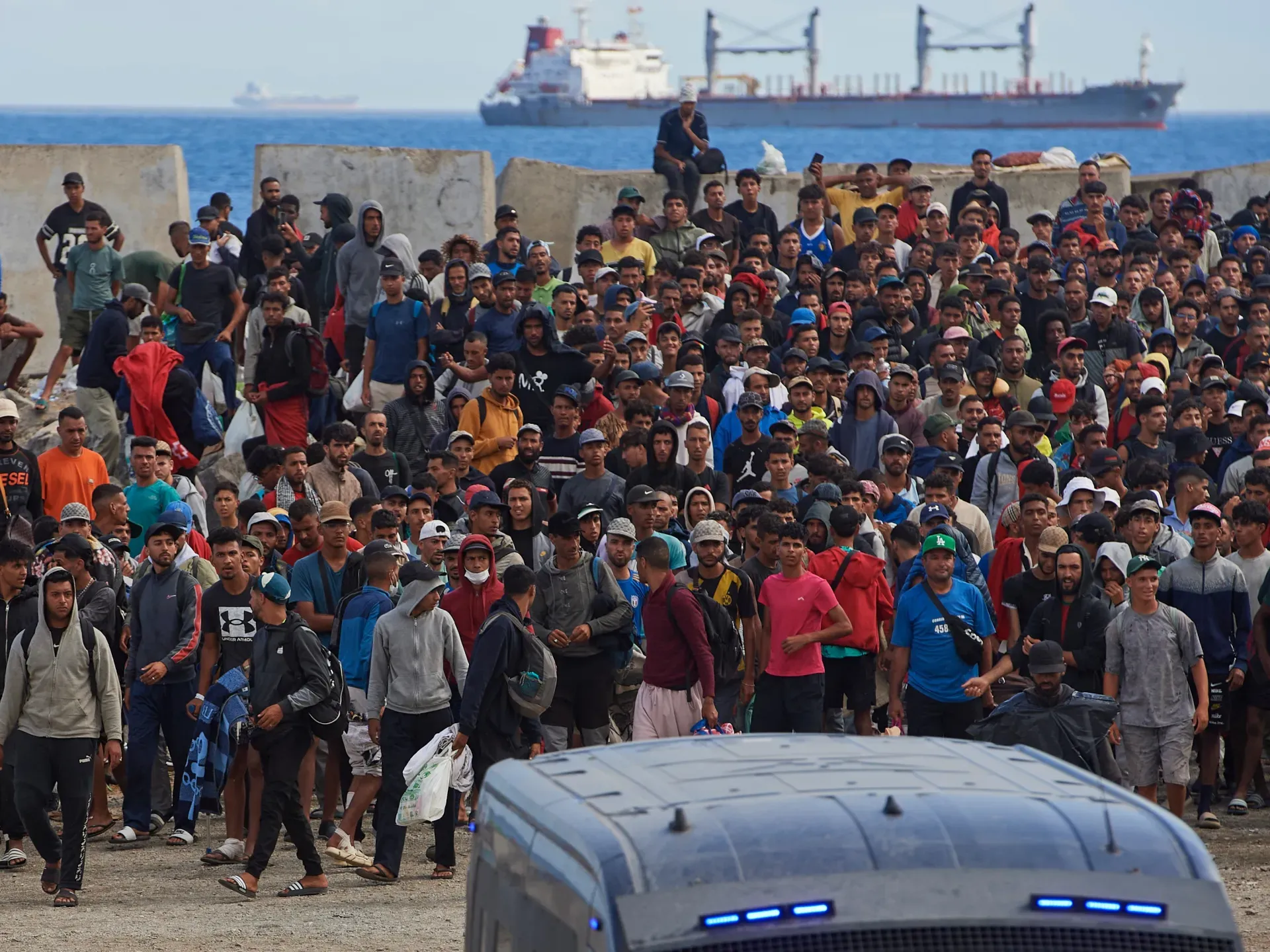
In a recent development, the Spanish government has made serious allegations against Israel and Russia, claiming that both countries are utilizing digital platforms to incite a surge of irregular migration towards the Spanish enclave of Ceuta. This assertion was made public by Elma Saiz, the Spanish Minister for Inclusion, Social Security, and Migration, during a press conference following a cabinet meeting. According to Saiz, the government's investigations have yielded evidence suggesting that these foreign entities are not only contributing to the migrant crisis but are also attempting to destabilize the European Union's unity by encouraging illegal crossings from Morocco to Ceuta.
This accusation comes in the wake of a notable incident where over 72,000 migrants crossed from Morocco into Ceuta within a span of just two days at the end of July, marking one of the most significant influxes seen in recent years. The Spanish authorities have reported that at least 100 individuals lost their lives during this perilous journey, underscoring the humanitarian implications of the situation.
Prime Minister Pedro Sánchez has previously hinted at the involvement of Russian and Israeli influence in this crisis, especially following the recent waves of migration from the Moroccan town of Fnideq to Ceuta. In the face of skepticism from Kremlin spokesperson Dmitry Peskov and Israeli Foreign Minister Gidon Sa'ar, who both challenged Sánchez's claims, Saiz reiterated the government's position, citing reports from the Spanish Foreign Ministry and a European Commission document describing Russia as a source of misinformation regarding the Ceuta crisis.
Saiz invited those interested in verifying these claims to examine social media publications, although she refrained from discussing whether Spain plans to pursue legal action against Israel and Russia for disseminating misleading information. The allegations have sparked a broader discourse about the implications of digital disinformation and its potential effects on international migration policies.
Moreover, Sánchez has connected the supposed digital targeting to Spain's political stance, particularly its resolute position on the humanitarian crisis in Gaza and the ongoing conflict in Ukraine. This complex situation highlights the intersection of migration, politics, and international relations, as Spain grapples with external pressures while navigating its own immigration policies.
For more details on this evolving situation, please refer to the original article on aljazeera.net.