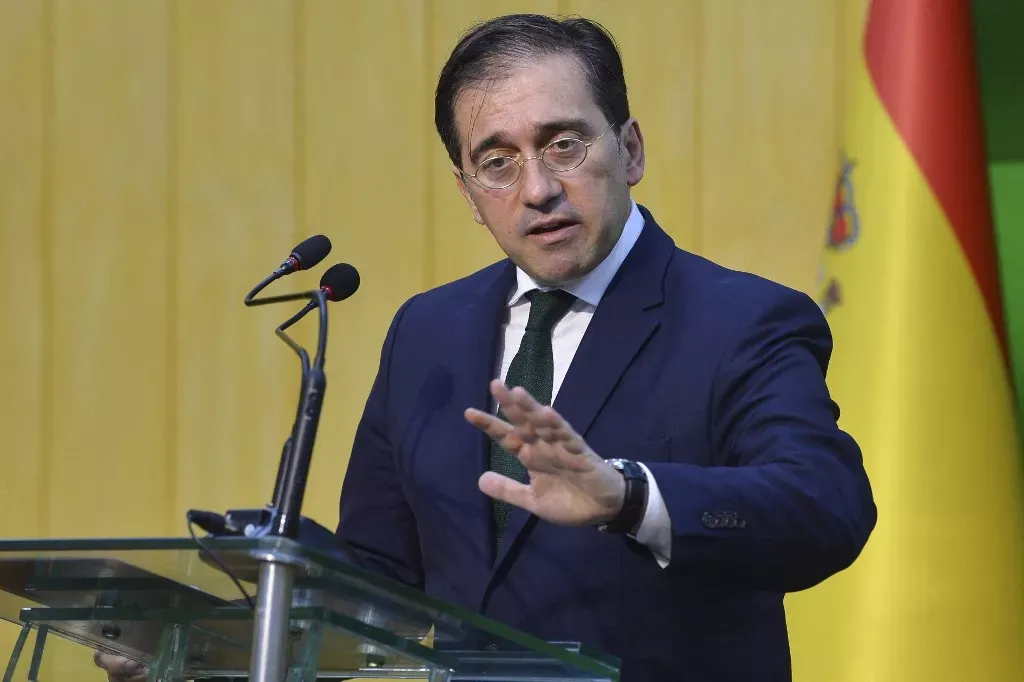

During a recent visit to Ceuta, Spanish Foreign Minister José Manuel Albares urged potential emigrants to _"not risk their lives, money, and futures in a venture destined for failure"_. He emphasized that Spain and Morocco are working closely together to repatriate all individuals who have entered irregularly. Albares pointed out that, in his view, these individuals would neither be able to reach the Iberian Peninsula or the rest of Europe, nor remain indefinitely in Ceuta or Melilla, stating that this is a _"joint decision"_ made by both Madrid and Rabat.
Albares clarified that this policy had not been altered by any judicial ruling, claiming that certain social media interpretations had distorted the content of these decisions. He referred specifically to interpretations related to [certain rulings by the Spanish judiciary concerning border repatriation procedures](https://telquel.ma/2026/08/03/refoulements-a-sebta-et-melilia-ce-que-dit-reellement-la-decision-de-la-cour-supreme-espagnole_2001837).
The Foreign Minister stated that Morocco has been cooperating _"from the very first moment"_ regarding the return of individuals who arrived during the wave of mass crossings. This cooperation has notably facilitated the return of a significant number of people on July 31, contributing to the restoration of order in Ceuta and preventing a similar crisis from occurring again.
During his meeting with Ceuta's government president, Juan Vivas, Albares addressed three main issues: accelerating the return of individuals still present in the city, enhancing border surveillance, and implementing measures to prevent another wave of mass crossings. Addressing the timeline required to complete the repatriation operations, the Spanish minister acknowledged the necessity of adhering to judicial decisions and existing legislation. However, he assured that the Madrid government is striving to restore Ceuta to its previous situation _"as soon as possible"_.
Albares also reaffirmed Morocco's willingness to accept individuals still in Ceuta, indicating that this position had been communicated to the Spanish government from the early stages of the crisis and that Rabat continues to show its readiness to collaborate on this matter.
On the European front, the Spanish Foreign Minister noted that Madrid is working with the European Union to enhance support for Ceuta and Melilla, taking into account their social, economic, and border-specific characteristics. He specified that both cities are subjected to a dual control system: one at the border with Morocco and another before any maritime or air crossing to the Iberian Peninsula. According to Madrid, this system ensures the integrity of the Schengen Area.
Albares added that _"no one"_ has left Ceuta for the Iberian Peninsula without passing through the control posts. He called on European institutions to support Spain in managing what he termed the _"most complex and unique border"_ of the European Union.
As reported by mobile.telquel.ma.