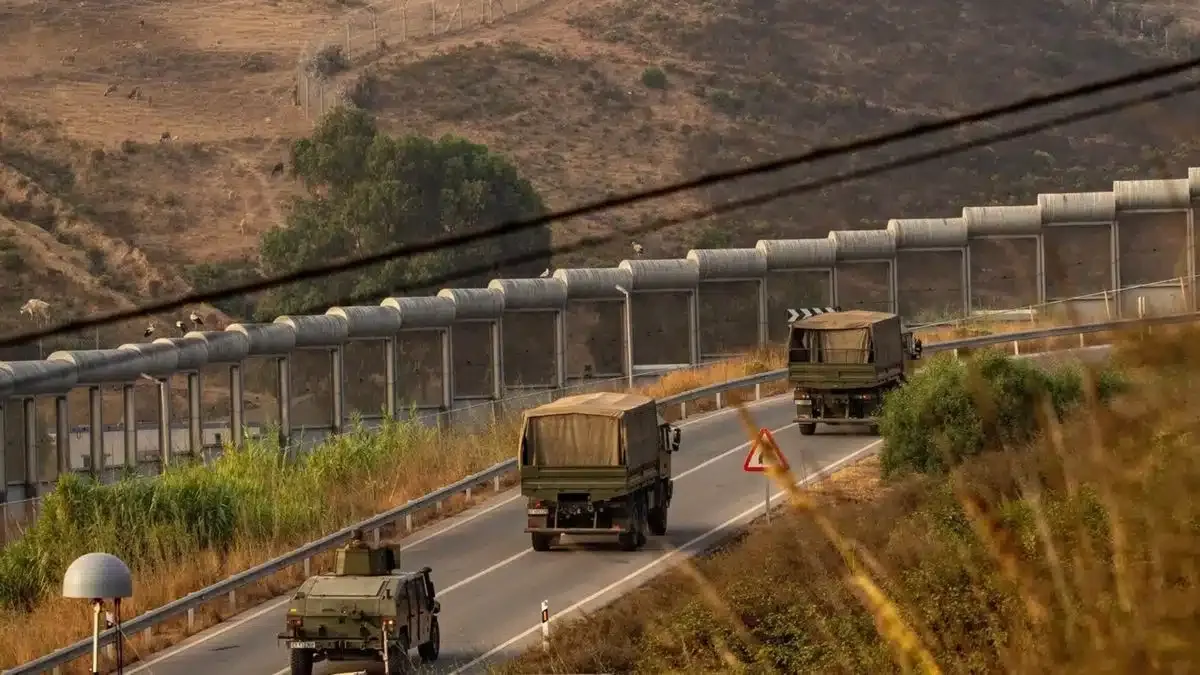

Increased Security Measures at the Ceuta Border
In response to a significant increase in border crossings at the end of July, Spain and Morocco have intensified their security protocols along the border of the Spanish exclave of Ceuta. Reports from Reuters indicate that social media platforms have been buzzing with calls for another mass gathering on August 15, coinciding with Spain's National Holiday, which has raised concerns among authorities. Moroccan officials have threatened to pursue criminal charges against organizers and participants of such gatherings, while both Madrid and Rabat are closely monitoring online activities and coordinating their responses.
Spain has made substantial enhancements to its presence in Ceuta, deploying an additional 300 police officers and 2,000 soldiers to the area. Furthermore, a floating barrier has been installed in the sea to deter individuals from attempting to swim to the city. Interior Minister Fernando Grande-Marlaska conducted an inspection of the border infrastructure and the new maritime barrier, as reported by Politico. He emphasized that the goal is to dissuade anyone from trying to enter Ceuta or Melilla illegally, asserting that no migrants will be allowed to remain in Ceuta or reach the Iberian Peninsula. Currently, approximately 5,000 migrants are still present in Ceuta, with over 500 asylum applications having already been rejected.
Heightened Tensions and International Reactions
On the Moroccan side, local media have reported an increase in security measures, including the installation of new barbed wire at fences near Ceuta and Melilla. In cities such as Casablanca, Fès, and Kenitra, several groups have reportedly been prevented from boarding trains and buses heading north. The Ceuta crisis has also sparked tensions within the European Union and reignited discussions regarding irregular migration. As a consequence, Italy has implemented border controls for travelers coming from Spain, prompting Spain to announce its own border checks for travelers arriving from Italy by air or sea.
According to the Spanish government, more than 72,000 individuals entered the exclave at the end of July, with newer estimates from Territorial Policy Minister Ángel Víctor Torres suggesting around 80,000 people had crossed over. Tragically, at least 96 individuals are reported to have lost their lives during these crossings, although the majority returned to Morocco shortly after.
As reported by hasepost.de.