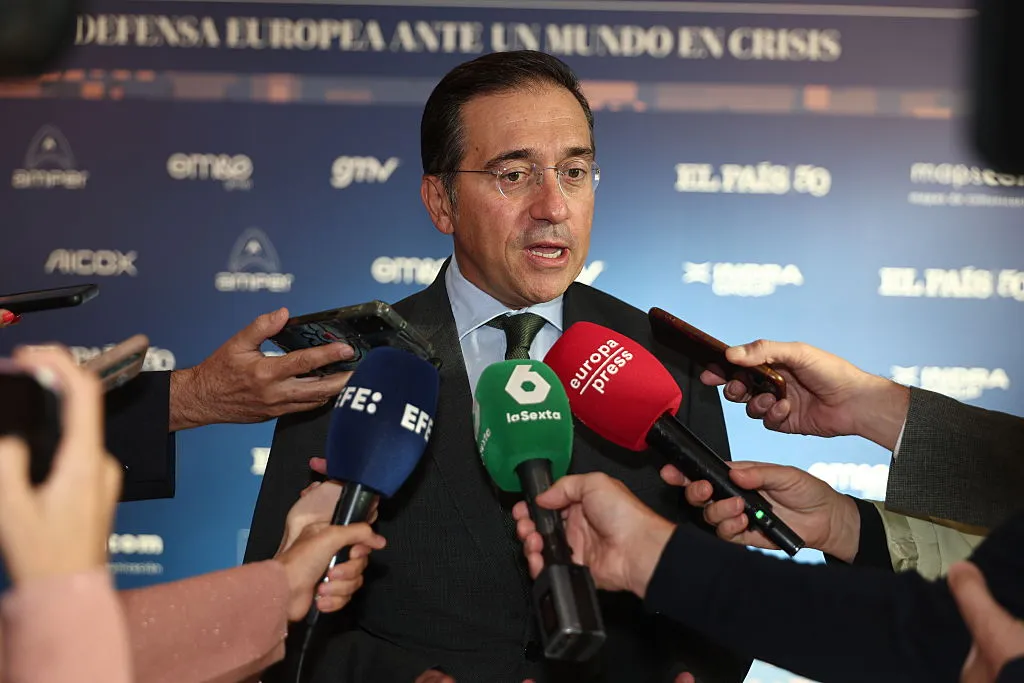

In a concerted effort to avert a potential influx of migrants into Ceuta, Spanish Foreign Minister José Manuel Albares announced on Monday that Spain is collaborating closely with Morocco. This announcement comes amid renewed calls on social media encouraging a mass storming of the border, which has raised alarms in Madrid about the possibility of a repeat of the significant surge experienced in July. During that incident, approximately 80,000 irregular migrants overwhelmed the tiny Spanish enclave in North Africa by both land and sea, tragically resulting in over 100 fatalities.
In an interview with Canal Sur, Albares confirmed that social media platforms are currently being utilized to incite a border crossing on September 23, coinciding with parliamentary elections in Morocco. He noted, “According to my information, there are some posts on social media. However, they do not have the same impact as those from July 30.” Since the crisis unfolded in July, Albares has maintained daily communication with his Moroccan counterpart, Nasser Bourita, urging Rabat to implement “all preventive measures,” including enhancing border security personnel.
Spanish Police Highlight Morocco's Role in Ceuta Crisis
A leaked report from the Spanish National Police has asserted that Moroccan authorities exhibited a “passive” and “negligent” response during the July border surge, highlighting an unusual absence of Moroccan forces at the heavily monitored border. Further investigation revealed that some Spanish police reports alleged that Moroccan security personnel may have facilitated the influx by directing migrants toward the border. However, Rabat has categorically denied any responsibility for the events that transpired.
Prime Minister Pedro Sánchez also addressed the situation in Congress, stating that Moroccan gendarmes allowed individuals to cross the border for up to ten hours, although his government has refrained from directly attributing blame to Rabat for orchestrating the influx. Albares cited a subsequent attempted crossing on August 15 as evidence of Moroccan cooperation, during which thousands of migrants, primarily from sub-Saharan Africa, were halted before reaching the boundary.
When questioned in a separate interview with Catalunya Ràdio about Morocco's actions to prevent another wave of migration, Albares expressed that Rabat had shown a willingness to combat misinformation on social media that encourages young Moroccans to attempt crossing into Ceuta. Morocco contends that networks of human smugglers and false information triggered the July surge, a stance that has been largely supported by Sánchez's government, even as scrutiny regarding Morocco's role continues to grow. Historically, Morocco has exerted migratory pressure during diplomatic disputes with Spain, while Moroccan officials persist in their claims over Ceuta and Melilla, Spain's other enclave in North Africa.
As reported by euractiv.com.