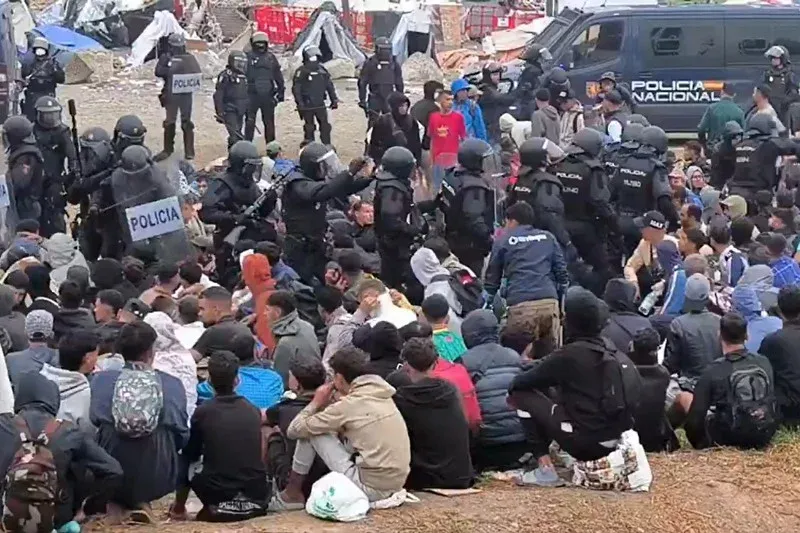

In a significant humanitarian response to the ongoing migration crisis, the Spanish government has initiated the establishment of temporary shelters in the enclave of Ceuta to accommodate hundreds of refugees who have fled from Morocco. This decision comes in the wake of an overwhelming influx of individuals crossing the border into Ceuta, with the aim of ensuring that they do not have to endure nights sleeping outdoors or on the beach. As of August 20, 2026, around 1,800 refugees remain in Ceuta, and the Spanish Ministry of Migration has described these facilities as "temporary reception centers" designed to provide essential support and safety for those seeking refuge.
The situation escalated at the end of July when approximately 72,000 individuals arrived in the Spanish enclave, some traveling overland while others made perilous sea journeys. Tragically, numerous people lost their lives while attempting to reach Ceuta, highlighting the dangerous conditions faced by migrants. In response to this crisis, the Spanish government is working to improve the living conditions for the remaining refugees, particularly since many have been living on the streets or beaches in harrowing circumstances. Residents of Ceuta have expressed their concerns regarding security and hygiene issues, urging the government in Madrid to take more decisive action.
In a related development, the Spanish government announced plans to relocate 500 girls from Ceuta to the mainland. These girls, some as young as ten or eleven years old, are reported to be in "very complex family situations" and require specialized care and support. Rubén Pérez Correa, Spain's Secretary of State for Children and Youth, emphasized the need for tailored assistance for these vulnerable minors, reflecting the country's commitment to safeguarding the rights and well-being of children amidst the ongoing migration challenges.
As reported by zeit.de.