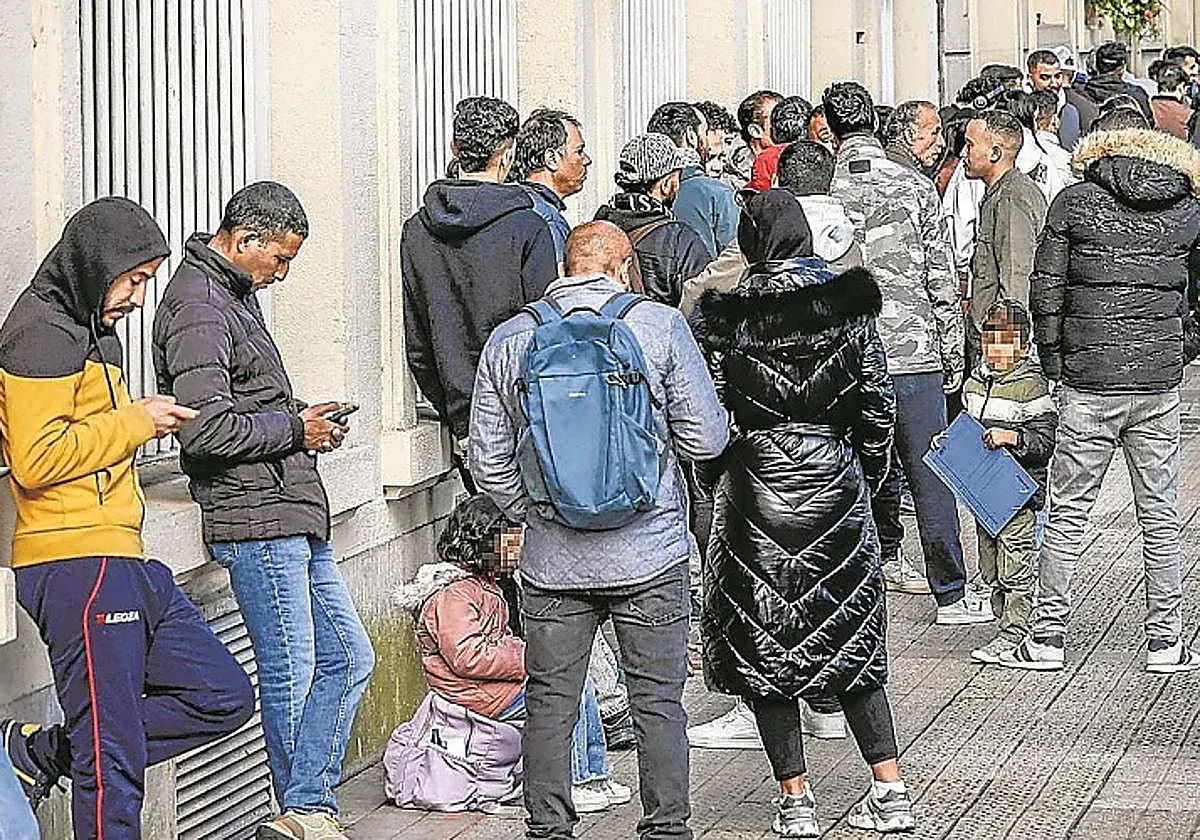

New Initiative to Regularize Immigrant Status in Spain
On April 16, 2026, Spain commenced an extraordinary process aimed at the regularization of immigrants, implementing a strategic plan designed to streamline the potentially overwhelming influx of applications. With an estimated 500,000 individuals in irregular situations nationwide, including around 26,000 residing in the Basque Country, the Ministry of Social Security and Correos has devised a robust framework that relies heavily on the support of social organizations. This collaborative effort is crucial in preventing administrative bottlenecks that could hinder the regularization process.
According to officials from the Social Security department, over 550 personnel will be recruited across the country to bolster both entities' offices. The regularization initiative officially began on Thursday through an online platform, which the government has launched to provide comprehensive information to applicants. However, the program will face its first major challenge on Monday when in-person services commence. Social organizations play a pivotal role in this effort; in the Basque region alone, 22 organizations, including Cáritas, Arrats Elkartea, Haurralde Fundazioa, and Zehar Errefuxiatuekin, will act as mediators, assisting individuals who may lack the necessary technical means or digital skills to complete their online applications.
Logistical Preparations and Accessibility
The Government Delegation in the Basque Country has emphasized that in-person assistance will only be available by appointment, which can be scheduled through the Ministry's website or by calling 060. In Gipuzkoa, logistics will focus on seven strategically located Correos offices and Social Security facilities, such as the General Treasury office in Riberas de Loiola, San Sebastián. The postal offices in the capital (Urdaneta, Gaztañeta, Luzuriaga, Bertsolari Txirrita, and Maestro Santesteban) will operate both morning and afternoon shifts to accommodate demand, with appointments available until June 30 for both online and in-person applications.
Starting next Monday, applicants will need to schedule appointments in advance. The Social Security offices (INSS) and General Treasury in Donostia will be open in the afternoons from 16:00 to 19:00, while the Correos offices in Gipuzkoa will run from 8:30 to 14:30 in the morning and from 16:30 to 19:30 in the evening, except for Urdaneta, which will be open from 14:30 to 17:30.
Social organizations in Gipuzkoa, including San Nikolas Zabalik, Mujeres Hegoak, and Cáritas, will provide essential support throughout this process. It is important to note that the central office of Social Security in Gipuzkoa has long been experiencing significant congestion. The ongoing challenges faced by citizens in securing appointments—an essential step for being attended to since the onset of the COVID-19 pandemic—have led to numerous complaints and frustrations.
This spring's regularization effort is anticipated to be one of the largest since the historic initiative during José Luis Rodríguez Zapatero's administration in 2005, which allowed over 576,000 individuals to gain legal residency. This timely response aims to avert the chaos observed at consular locations, particularly in Bilbao, where a last-minute requirement for a criminal record certificate—a mandate from the State Council—has intensified pressure on diplomatic missions. Without this essential document, which must also be officially translated, the government will not proceed with any regularization.
While the online application method is the preferred route for the administration, the reality on the ground reflects an acute reliance on professional and organizational support services. Many immigrants face barriers such as the lack of electronic passwords or home internet access, compelling them to seek assistance from lawyers or local businesses to initiate their applications. This digital divide underscores the vital role social organizations play in ensuring that the labor market enrollment process remains uninterrupted by bureaucratic obstacles.
The government's dependence on social entities is not merely a logistical detail; it represents an acknowledgment of the technical limitations when confronting social realities. The administrative framework is designed for a digitized citizenry equipped with electronic certificates and high-speed internet at home; however, the profile of applicants for this regularization often exists on the fringes of the system. By delegating responsibilities to community organizations, the state not only aims to prevent telephone traffic congestion but also seeks to instill a sense of trust in the process. For an immigrant in an irregular administrative situation, entering a police station or official office can evoke a deep sense of institutional fear, which dissipates in the more welcoming environment of an NGO, thereby ensuring that the initiative achieves its intended mass outreach rather than remaining an empty official declaration.
Beyond its humanitarian aspect, this regularization process addresses a structural need within the Basque labor market. In critical sectors such as home care, hospitality, and agriculture, there exists a demand for labor that is presently met, in part, through the underground economy. The formal inclusion of these 26,000 individuals in the Basque Country not only safeguards their fundamental rights but also provides an immediate boost to the Social Security system via contributions. In the context of a rapidly aging population, unearthing this invisible employment is crucial for the sustainability of public pensions in the medium term.
As reported by diariovasco.com.