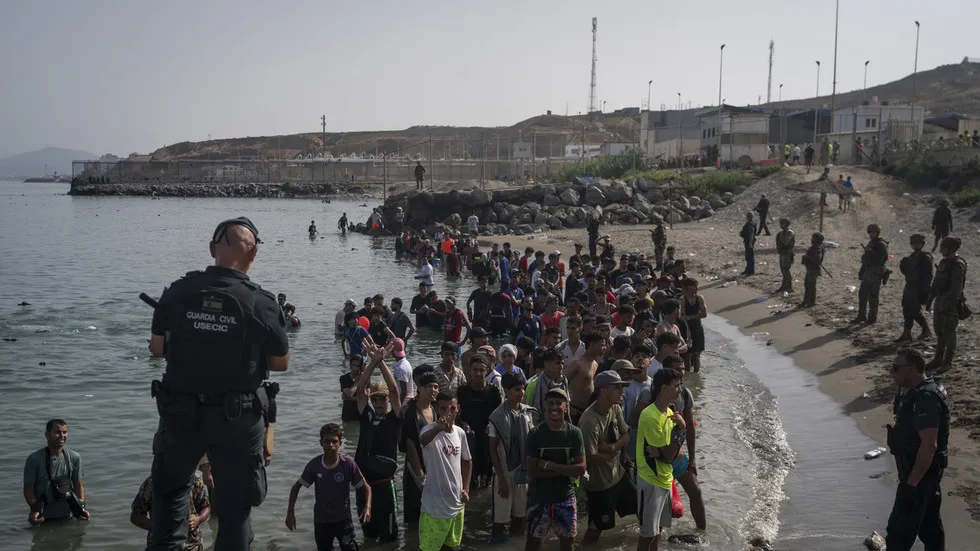

In a significant diplomatic development, Spain has firmly reiterated its stance on the North African enclaves of Ceuta and Melilla, asserting that it will not engage in discussions regarding their sovereignty with Morocco. This declaration follows a distressing surge in migration, with tens of thousands crossing into Ceuta earlier this month, resulting in tragic fatalities estimated at over 100. In response to the crisis, Madrid has mobilized military personnel to manage the situation and has expedited the process of repatriating migrants. While a majority have been returned, estimates indicate that between 3,000 and 5,000 migrants still remain within Spanish territory, as Morocco continues to pursue a diplomatic resolution to the issue.
Morocco’s Stance and Diplomatic Engagements
Moroccan Justice Minister Abdellatif Ouahbi articulated on Tuesday that the status of Ceuta and Melilla is a persistent topic in negotiations with Spain, reflecting Morocco's desire for a constructive dialogue aimed at a long-term resolution. The country has maintained that these enclaves, viewed as occupied territories since gaining independence in 1956, should ultimately be reintegrated into Moroccan sovereignty. Conversely, Spain has historically asserted its control over Melilla since the 15th century and Ceuta since the 17th century, viewing both cities as integral components of its national territory.
Spain's Position and the Recent Border Crisis
In light of recent events, Spanish Defense Minister Margarita Robles made an official visit to Ceuta, emphasizing the cities' status as “thoroughly Spanish” and “untouchable.” She indicated that any challenge to their sovereignty would be perceived as a direct threat to Spain, highlighting the necessity of preventing a recurrence of the recent border crisis. The Spanish Foreign Ministry echoed Robles' sentiments, asserting that the nation’s territorial integrity is not up for negotiation. The recent border crisis, which saw an overwhelming influx of migrants into Ceuta, prompted immediate action from the Spanish government, including the deployment of troops to restore order and facilitate the repatriation of migrants. While most have been successfully returned, local officials continue to report that thousands of individuals remain on Spanish soil.
In anticipation of further attempts at mass border crossings, the Moroccan Interior Ministry has heightened security around both enclaves. They have issued warnings to potential organizers and participants of planned crossings, emphasizing the legal repercussions they could face. Additionally, there is a call for Spain to fast-track the return of unaccompanied Moroccan minors still residing in Ceuta. Although relations between Spain and Morocco have seen improvements—especially following Spain's endorsement of Morocco’s autonomy proposal for Western Sahara in 2022—Rabat has yet to relinquish its claims over Ceuta and Melilla, underscoring the complexities of this geopolitical issue.
As reported by abcnepal.tv.