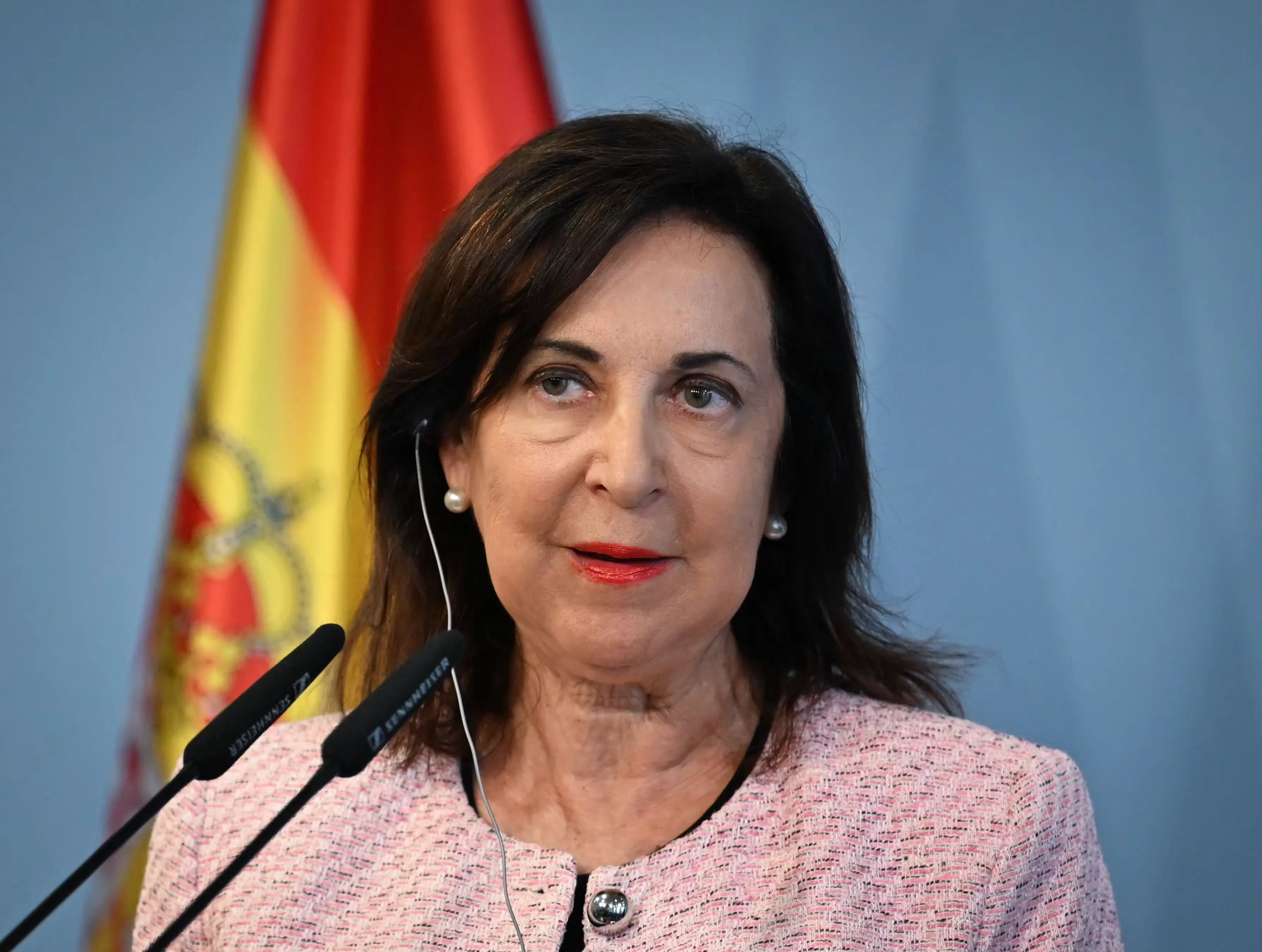

The Spanish government has once again dismissed Morocco's claims over the North African enclaves of Ceuta and Melilla. During a press visit to Ceuta on Wednesday, Defense Minister Margarita Robles asserted that these cities are not merely Spanish but "super-Spanish," emphasizing that they must not be challenged. Robles stated that any attack on Ceuta and Melilla would be considered an attack on all of Spain, according to the radio station Cadena SER.
This latest assertion from the Spanish government follows comments made by Moroccan Justice Minister Abdellatif Ouahbi, who reaffirmed Morocco's territorial claims in an interview with Asharq TV on Tuesday. Ouahbi noted, as reported by Reuters, that his country consistently raises the status of both cities during negotiations with Spain, aiming for a long-term solution through dialogue.
Spain's Territorial Integrity Remains Non-Negotiable
The Spanish Foreign Ministry issued a separate statement underscoring that Spain's territorial integrity is non-negotiable and will not be discussed with anyone. Since gaining independence in 1956, Morocco has regarded Ceuta and Melilla as occupied territories by Spain. In contrast, Madrid has maintained that these cities have been an integral part of its territory since the 15th and 17th centuries.
Morocco, a constitutional monarchy located in Northwest Africa, has coastlines along both the Atlantic and Mediterranean Seas and is home to approximately 38 million residents. Following extensive colonial rule by France and parts of Spain starting in 1912, the country achieved independence in 1956. Since the mid-1970s, Morocco has occupied most of Western Sahara, which the United Nations continues to classify as a non-self-governing territory with an unresolved status.
King Mohammed VI holds significant political powers within the kingdom, and the current Prime Minister is Aziz Akhannouch, who has been in office since 2021.
Morocco Warns of New Border Surge
Robles also referred to the recent border crisis that occurred on July 30, during which approximately 72,000 migrants temporarily crossed into Ceuta, resulting in at least 96 fatalities. "What happened on the 30th must not happen again," the minister declared. She condemned the smuggling rings that encouraged individuals to cross the border illicitly, stating that Spanish forces remain deployed to support the city.
The Moroccan Interior Ministry announced on Wednesday that security measures at the borders of Ceuta and Melilla have been heightened in response to online calls for another mass crossing event on August 15. Organizers and participants of such actions will face legal prosecution.
As part of Spain, the enclaves of Ceuta and Melilla are considered part of the European Union, subject to special regulations within the Schengen framework. Consequently, border checks are implemented at the crossings to mainland Spain. The land borders with Morocco represent the only land external borders of the EU on the African continent.
As reported by berliner-zeitung.de.