

Spain's Firm Stance on Ceuta and Melilla
In a significant diplomatic development, Spain has firmly rejected Morocco's recent proposal for negotiations regarding the future of the North African Spanish enclaves of Ceuta and Melilla. This comes in the wake of a massive influx of migrants—estimated between 72,000 and 78,000—who attempted to breach the borders of Ceuta during a tumultuous period from July 29 to July 31, seeking asylum and a pathway into the European Union. Reports from Euronews indicate that Spain's Foreign Ministry has dismissed Morocco's overture for discussions, emphasizing that both enclaves are integral parts of Spain and, by extension, the European Union. The Spanish government, under Prime Minister Pedro Sanchez, conveyed a 'categorical rejection' of Rabat's claims, asserting its sovereignty over these territories.
The tensions between the two nations have escalated since the migrant crisis unfolded, with Spain criticizing Morocco for allegedly failing to prevent the large-scale approach of migrants towards its borders. Morocco, on the other hand, has maintained that it has taken all necessary measures to control the situation. The Moroccan Justice Minister, Abdellatif Ouahbi, has reiterated claims of 'historical and geographical' rights over Ceuta and Melilla, advocating for a dialogue mechanism to address these controversial issues. He suggested that such discussions could lead to a 'definitive solution' that would involve the integration of the enclaves into Morocco, a sentiment he has expressed on multiple occasions.
Tragic Consequences and Humanitarian Concerns
As diplomatic relations between Spain and Morocco continue to strain, the humanitarian implications of the migrant crisis have become increasingly severe. Just days ago, Spain buried the remains of 18 unidentified migrants in Ceuta, victims of the tragic events that unfolded during the border rush. The bodies, which were among the more than 90 individuals who perished due to drownings and stampedes, were interred in the city's Muslim cemetery, marked only by numbers, as confirmed by interim cemetery director Said Mohammed. The Moroccan Association for Human Rights has voiced strong criticism regarding these burials, urging Spain to halt the process until every effort is made to identify the deceased and repatriate them to their families in Morocco.
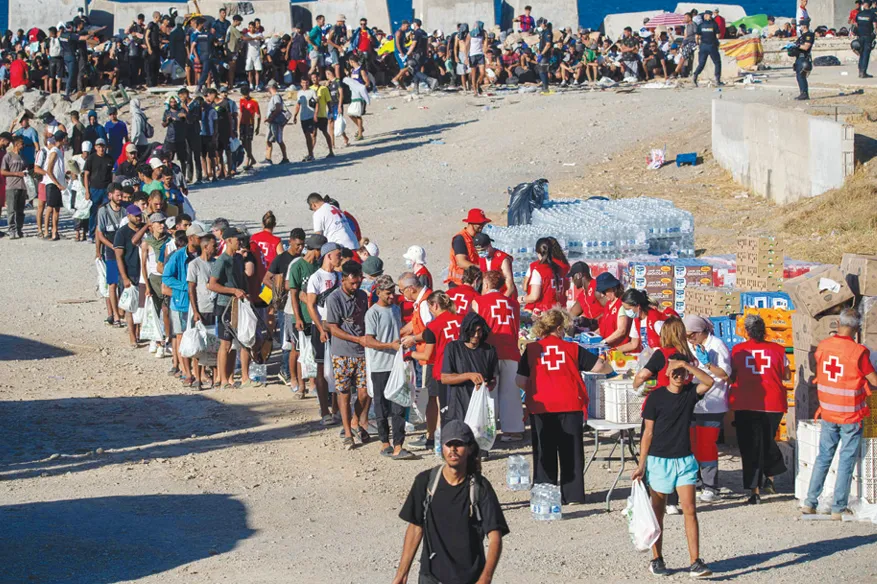
The discord over the handling of burials has further complicated the relationship between the two countries, with Morocco demanding the return of the victims and Spain citing obstacles posed by Moroccan authorities in facilitating such repatriations. While the vast majority of the migrants who entered Ceuta during the crisis have since returned to Morocco, it is estimated that between 5,000 and 10,000 individuals remain in the city, which has a population of approximately 83,000. This situation raises alarming concerns about a potential humanitarian crisis, as local authorities grapple with the challenges of providing adequate housing and sustenance for those still present in Ceuta.
As reported by global.chinadaily.com.cn.

