
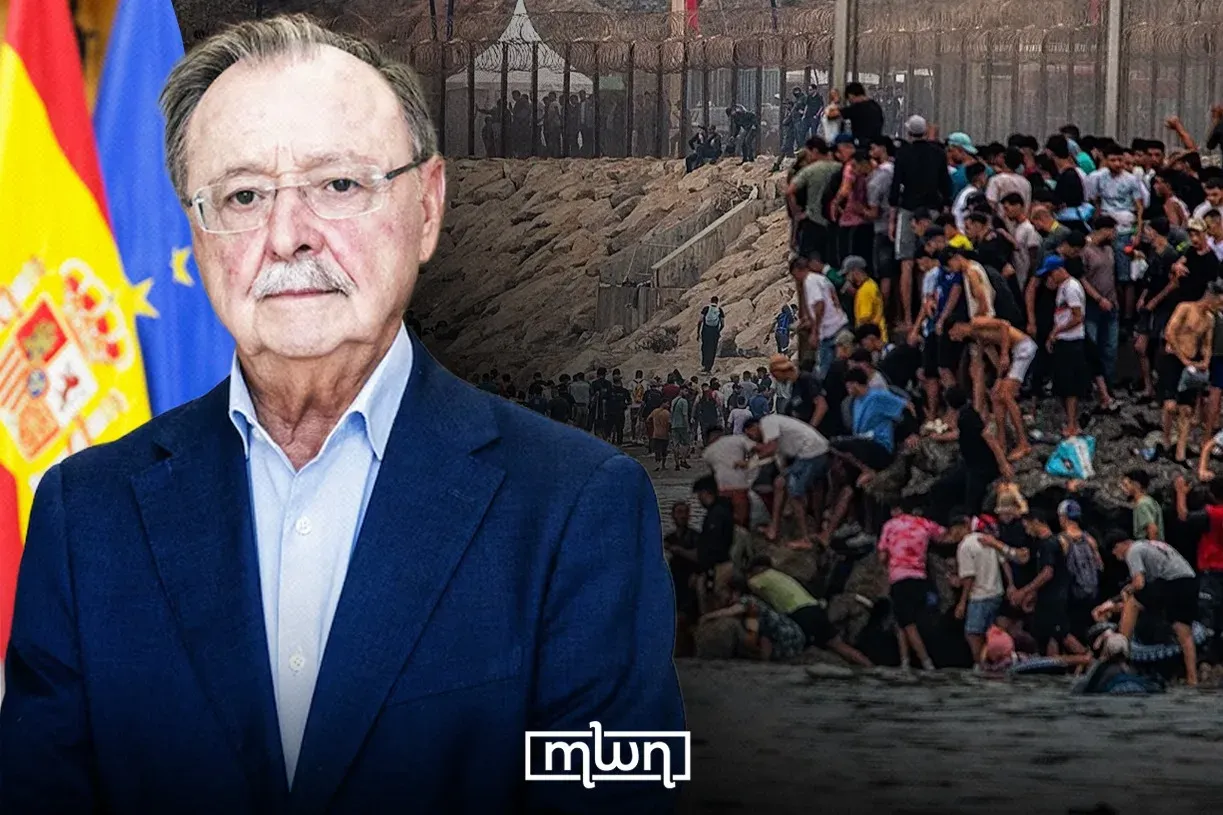

Casablanca – Spain's attempts to galvanize European Union action against Morocco in response to the recent mass influx through the Tarajal border crossing have not yielded any firm commitments from EU institutions. This follows a recent visit by Ceuta's President Juan Vivas to Brussels where he articulated his concerns regarding the situation. Vivas engaged with officials from the European Commission, the European Parliament, and other EU bodies, presenting his account of the events that unfolded. He claimed that European officials exhibited a level of receptivity and understanding towards his perspective, which accuses Morocco of exerting migration pressure to challenge Ceuta's territorial integrity.
Despite these discussions, Vivas returned from his meetings without any announced sanctions or punitive measures directed at Morocco. He expressed a desire for European authorities to issue a definitive statement affirming that Ceuta and Melilla are integral parts of Spain and, by extension, Europe. He emphasized that respect for borders is crucial for fostering cooperation with any country, underscoring the complexities that arise when such boundaries are disregarded.
When pressed about the possibility of economic sanctions or the suspension of certain cooperative agreements with Morocco, Vivas refrained from making explicit demands regarding Brussels' potential course of action. He stated, “We went to present the situation. They heard us, there was receptivity and understanding. And I hope there will be a response.”
Vivas outlined two primary objectives for his visit: to present the local government's narrative of the situation and to seek support from European institutions in managing the aftermath of the events. He highlighted the €115 million in extraordinary European aid pledged for Ceuta and noted that the forthcoming months would reveal whether this aid translates into tangible measures that address the crisis at hand.
His aspirations for the city include restoring normalcy, preventing a recurrence of such a crisis, addressing what he characterized as a humanitarian emergency, and ensuring that these events signify a pivotal moment in border management. Among his requests was an appeal for the EU to advocate for the return of individuals who remain in Ceuta following the mass entry incident.
Moreover, Vivas proposed the establishment of a European working group designed to expedite the return of unaccompanied minors under the EU Migration and Asylum Pact, prioritizing family reunification. In instances where family connections do not exist, he suggested appointing a guardian, followed by placement in a reception facility if neither option is available.
Further highlighting his concerns, Vivas called for enhanced security resources at the borders, advocating for a permanent presence of Frontex and the European Asylum Agency in both Ceuta and Melilla. He reiterated his stance, maintaining that his assessment of the situation has remained consistent since the onset of the crisis.
Vivas once again attributed the events of July to Moroccan authorities, contending that an operation involving over 80,000 individuals could not have occurred without their knowledge or consent. However, Spain's Prime Minister, Pedro Sánchez, has consistently stated that the nation's intelligence services found no evidence linking Moroccan authorities to the operation, and neither the European Commission nor any international body has provided conclusive proof of Moroccan involvement. Morocco has countered that the events were fueled by social media activity, misleading information, human trafficking networks, and confusion surrounding Spanish legal and administrative procedures.
As reported by moroccoworldnews.com.
