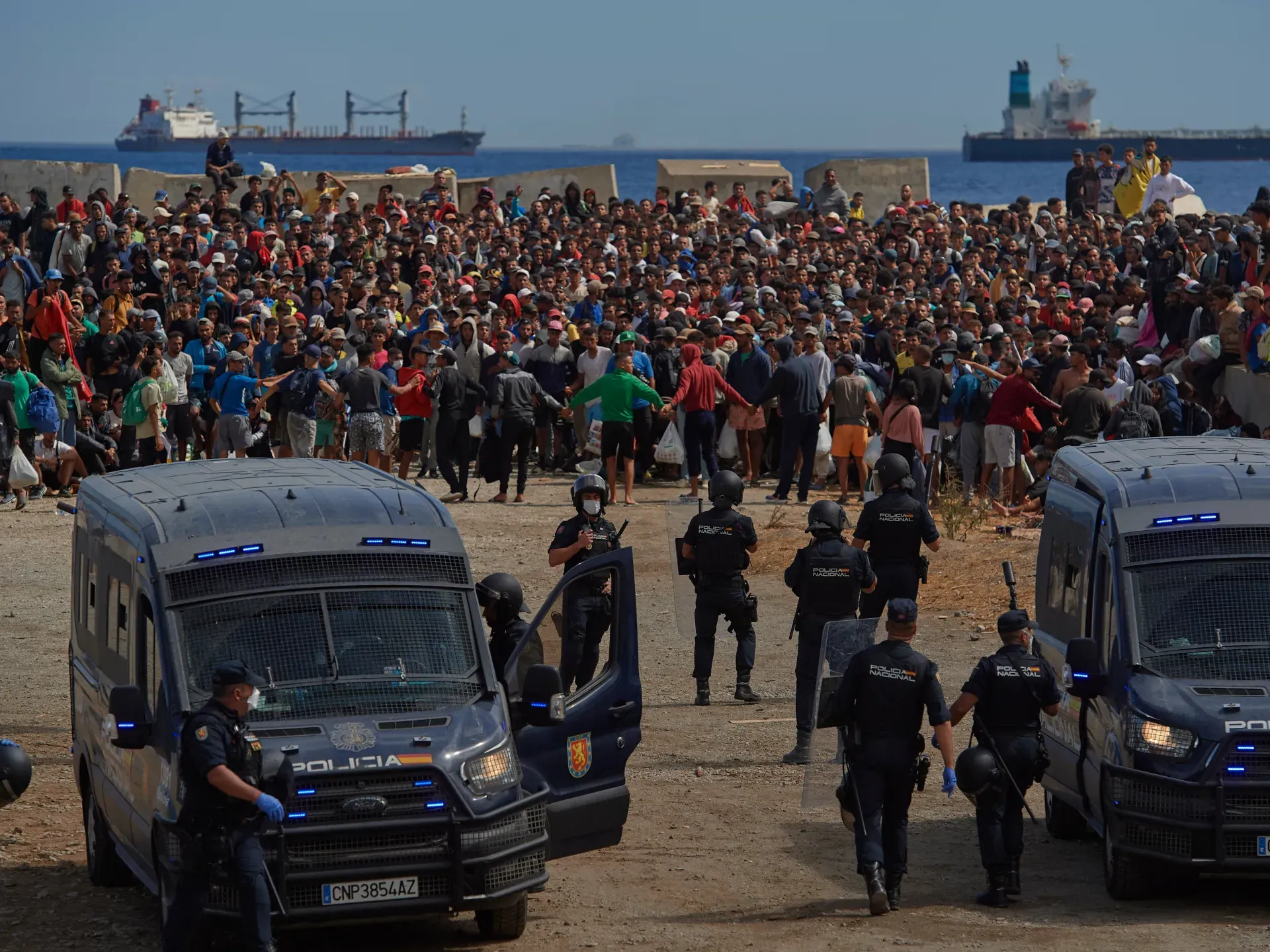

In a significant development concerning the ongoing migrant crisis, Spain has formally requested assistance from the European Border and Coastguard Agency, known as Frontex, to help process approximately 5,000 migrants currently situated in the Spanish enclave of Ceuta. This request, initiated by Spanish Interior Minister Fernando Grande-Marlaska, was directed to Beate Gminder, the European Commission's director general for migration and home affairs, highlighting the urgency of the situation that has been unfolding since a mass influx of migrants crossed into this North African territory roughly a month ago.
Grande-Marlaska's communication includes a plea for the deployment of an additional ten Frontex officers to expedite the screening and identification process of the migrants. The Spanish authorities are tasked with determining whether these individuals qualify for international protection or need to be repatriated to their countries of origin. Current estimates indicate that between 5,000 and 8,000 migrants, including a significant number of unaccompanied minors, remain in Ceuta, part of a larger group of 72,000 who crossed the border from Morocco on July 30. This tumultuous crossing resulted in a tragic loss of life, with official reports stating that 82 individuals perished on the Spanish side and 14 on the Moroccan side, although human rights organizations suggest that the actual numbers may be higher.
As tensions rise in Ceuta, fueled by a series of protests from residents demanding the removal of migrants, the situation has escalated into violence. Recent incidents include the destruction of tents on Trampolin Beach, where many migrants have set up temporary shelters, with reports of residents attacking and setting fire to these makeshift camps. On Thursday, clashes led to the arrest of twelve migrants following an incident where stones were thrown at an army vehicle, injuring both a soldier and several migrants. In response to these events, eleven individuals were reportedly expelled from Ceuta, according to local media sources.
Adding to the urgency of the situation, Madrid has also submitted a formal request for emergency funding from the European Union to assist in managing the crisis. The unfolding events in Ceuta not only underscore the complex challenges faced by authorities in handling migration but also highlight the broader implications for European cooperation in addressing humanitarian issues.
As reported by aljazeera.com.