

The perception of Spanish business leaders regarding Morocco is undergoing a significant transformation. No longer viewed merely as a neighboring market or a competitive production platform, Morocco is increasingly recognized as a potential center for industrial growth within the Mediterranean and African regions. This shift in perspective was articulated in an institutional statement released on July 9, 2026, following a mission led by Juan María Nin, president of the Círculo de Empresarios. The statement encourages Spanish companies to seize what it describes as a "historic opportunity for shared long-term prosperity."
This renewed appreciation for Morocco is fundamentally rooted in the evolution of its productive base. According to the document, investments made over the past few decades in transportation, energy, and telecommunications are beginning to yield multiplier effects on economic activity. The central focus has shifted from merely measuring the volume of constructed infrastructure to assessing their effectiveness in reducing logistical costs, expediting exchanges, and attracting more integrated industries.
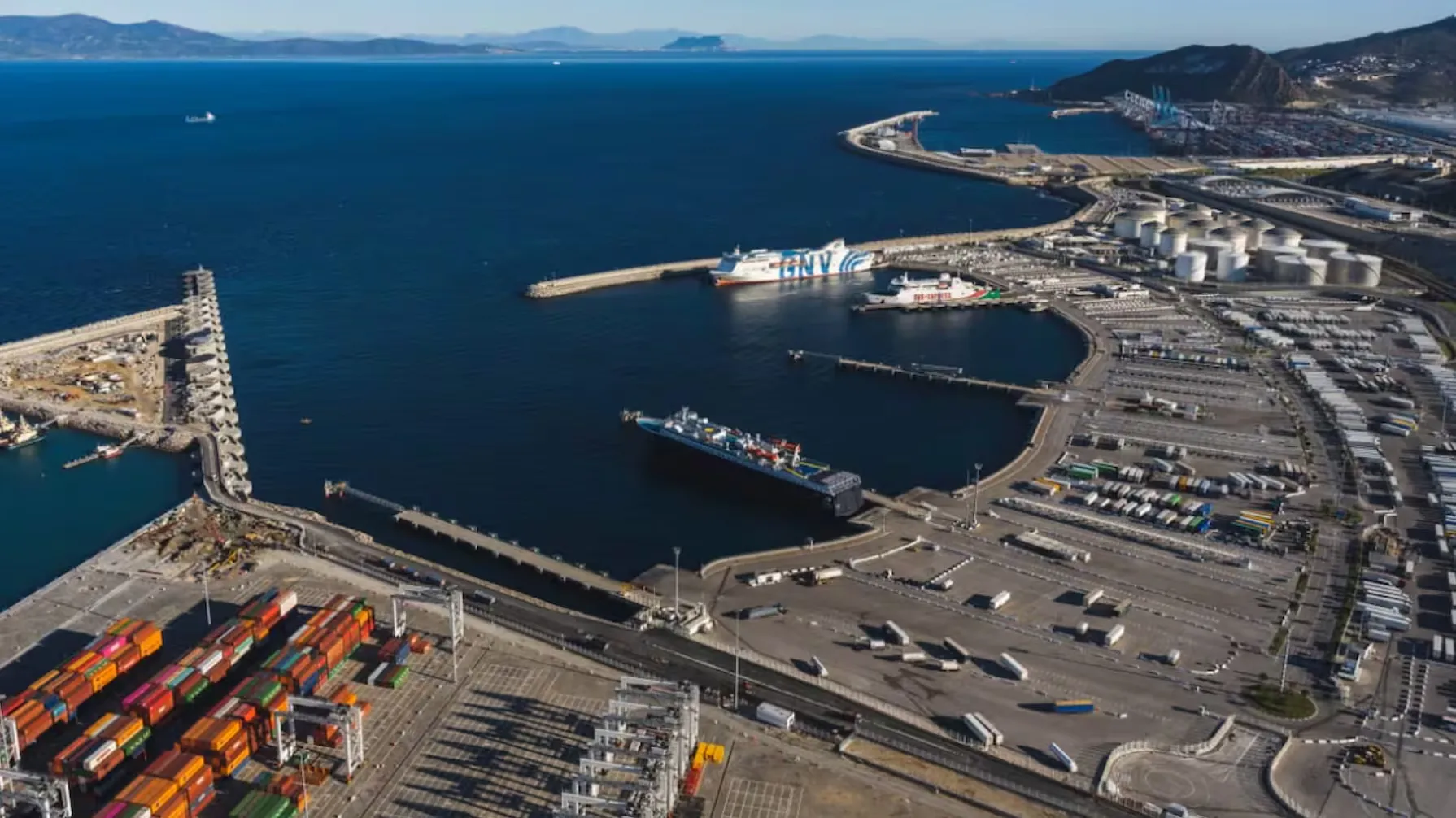
The statement highlights that Morocco's highway network has nearly multiplied twentyfold over recent decades, while its railway system has surpassed 2,000 kilometers. The inauguration of Al Boraq, Africa's first high-speed rail line, has further bolstered this infrastructure, complemented by the strategic Tanger Med port and the port development in Nador.
These advancements are gradually redefining Morocco's role in international value chains. The country is no longer merely offering competitive production costs; it now combines industrial capacity, port accessibility, and proximity to the European market. According to the Círculo de Empresarios, the expansion of port infrastructure is particularly facilitating Morocco's integration into global value chains.
A similar line of reasoning applies to telecommunications. The report indicates that mobile 4G coverage has reached 99% of the population, supplemented by strong penetration of both mobile and fixed broadband. Such connectivity is becoming a crucial factor for productivity in industries, financial services, logistics, and digital activities, particularly by enhancing coordination between Moroccan sites and European decision-making centers.
Human Capital: The Next Challenge for Industrialization
However, attractiveness does not solely hinge on physical capital. The statement emphasizes the improvements in education and higher learning. Between 2000 and 2023, dropout rates in public secondary education reportedly decreased by 63% to 85%, depending on age groups. The enrollment rate in tertiary education, whether vocational or university, reached 48% in 2024, marking an increase of over 30 percentage points compared to 2007.
These advancements are responding to an immediate economic need. The expansion of automotive, energy, financial, and digital sectors requires a sufficient number of technicians, engineers, and executives. The challenge now lies in aligning educational programs with the needs of businesses—an essential condition to ensure that the industrial upgrade is not hindered by skill shortages.
The document also highlights the modernity of Morocco's financial system, where traditional commercial banks coexist with new payment operators and fintech companies. Coupled with the country's positioning in phosphate production and its local investment strategy, this financial depth facilitates the mobilization of capital towards more complex industrial and technological activities.
Commercial Relations: Room for Improvement
Spain approaches this transformation from a unique vantage point, being Morocco's primary trading partner, with annual goods exchanges exceeding €22.5 billion. The Kingdom has simultaneously become the leading African market for Spanish companies and one of Madrid's key partners outside the European Union.
According to ICEX data cited in the declaration, over 300 Spanish companies currently operate in Morocco, employing nearly 30,000 individuals across sectors such as energy, automotive, banking, textiles, and agriculture. Furthermore, Morocco represents the top destination for Spanish investment in Africa, with a stock exceeding €2 billion.
However, this figure indicates potential for growth in terms of trade intensity. The main challenge is to evolve a relationship that has largely been based on goods flows into more profound productive partnerships, incorporating industrial investment, skill transfer, applied research, and joint development of African markets.
The geographical proximity, commercial interdependence, and the presence of over 900,000 Moroccans in Spain present advantages that are challenging for competitors to replicate, according to the Círculo de Empresarios. However, capitalizing on these advantages will depend on Spanish companies' ability to view Morocco not merely as an extension of their European base but as an industrial partner with its own strategy. The coming decade will reveal whether the "shared prosperity" advocated by Spanish business leaders translates into a mutual industrial upgrade or remains primarily driven by the expansion of trade.
As reported by fr.le360.ma.

