
Understanding Spain's Shift in Policy on Western Sahara
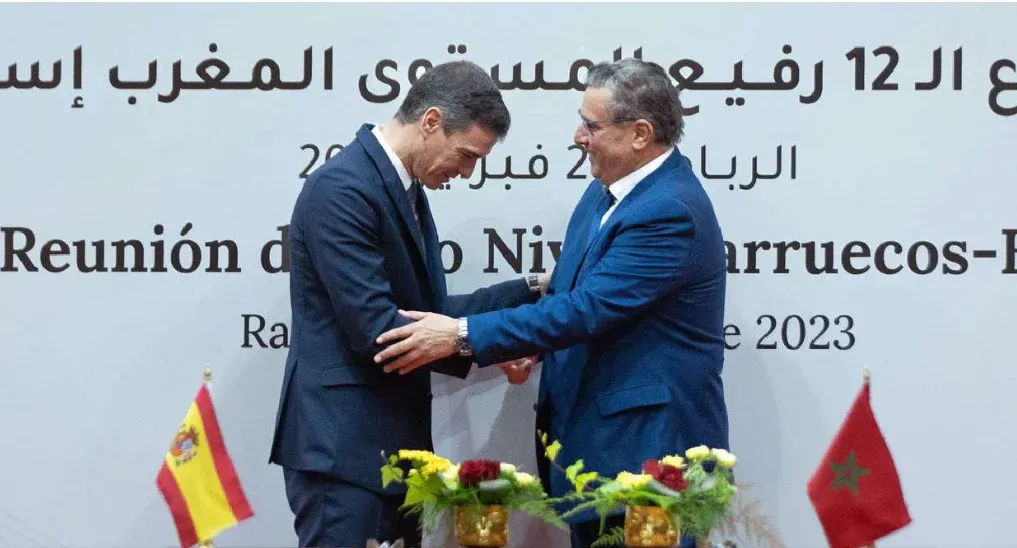
It has been over four years since Pedro Sánchez's government officially endorsed Morocco's autonomy plan for Western Sahara. This political pivot marked a significant departure from Spain's longstanding stance on the conflict, a shift that has stirred considerable upheaval among solidarity movements, legal experts, and many who continue to believe that Spain holds historical and political responsibilities towards its former colony. This decision has prompted a myriad of explanations in an attempt to comprehend the underlying motivations behind such a controversial policy change.
The situation escalated with the Ceuta crisis in May 2021, when thousands crossed the border within hours due to deteriorating relations between Madrid and Rabat. Factors such as the need to restore migration cooperation, the stability of Ceuta and Melilla, police collaboration, anti-terrorism efforts, and even the Pegasus scandal—where it was revealed that the President of the Government and other state officials were spied on using software linked to Moroccan intelligence—have been cited as influential elements in this decision, despite a lack of official attribution.
The Legal Implications of Spain's Decision
However, the debate surrounding this policy shift may have been misdirected from the outset. The fundamental question is not merely which of these factors influenced Spain's decision most significantly, but whether any of them could genuinely justify a change in position regarding a matter that directly impacts international law, the decolonization of a territory, and the right to self-determination of a people recognized by the United Nations. If the reasons typically cited to explain this Spanish pivot were indeed valid, the implications would be even more concerning than commonly acknowledged. Accepting that a migration crisis, diplomatic tension, or even espionage could sway such a monumental decision would imply that Spanish foreign policy can diverge from essential legal principles when political or strategic costs escalate.
None of these circumstances alter the legal status of Western Sahara, negate the right to self-determination upheld by the United Nations, or modify the international resolutions that continue to regard the territory as pending decolonization. The Ceuta crisis exemplifies this contradiction vividly, illustrating how reliant Spain is on Moroccan cooperation to manage migration flows at its southern European border. This reliance raises legitimate concerns regarding whether such dependencies should dictate decisions that ought to be governed by legal standards rather than power dynamics. While migration pressure can elucidate political concerns, it cannot redefine an occupation as recognized sovereignty nor diminish a people's right to freely determine their future.
This rationale similarly applies to other sensitive areas of the bilateral relationship, such as police cooperation, counter-terrorism efforts, border security, and regional stability—critical issues for any government. Nonetheless, none of these matters directly correlate with the international legality applicable to Western Sahara. Blurring these lines suggests an acceptance that principles hold value solely until they conflict with specific strategic interests.
Proponents of the policy shift often frame it as a pragmatic exercise in political realism. Yet, the flaw in this argument lies in its conflation of the pragmatic management of a complex relationship with the abandonment of principles that Spain professes to uphold in other international contexts. International law does not cease to exist simply because it is inconvenient, nor does it vanish because a regional power garners diplomatic support or because a conflict has persisted for decades without resolution.
Consequently, the question remains open four years later. The discourse now extends beyond Morocco, the Polisario Front, or bilateral relations between Madrid and Rabat. At stake is the credibility of a foreign policy that claims to uphold international legality and the right of peoples to determine their destinies, yet chose to diverge from these principles specifically in the case of Western Sahara. Meanwhile, the Sahrawi people continue to await what the United Nations has formally recognized for decades and what Spain championed for years before altering its stance: the opportunity to freely decide their future through a self-determination process in accordance with international law.
As reported by noteolvidesdelsaharaoccidental.org.