
The Spanish government is firmly committed to ensuring that every individual who has entered Spain irregularly will be returned to Morocco. This statement was emphasized by the Minister of Foreign Affairs, José Manuel Albares, twelve days after the outbreak of a humanitarian crisis at the border in Ceuta. The current situation sees thousands of individuals—estimated between 8,000 and 11,000—remaining on Spanish soil, and Albares has reiterated that anyone who crosses into Spain illegally is destined to be sent back to their country of origin. His remarks have raised concerns given the diverse backgrounds of those who crossed the border from Morocco on July 30, and the ministry has refrained from clarifying these statements when contacted by Público.
Among the individuals currently in Ceuta are asylum seekers from countries other than Morocco, many unaccompanied minors, and potential victims of human trafficking. The Spanish government cannot simply expel "all" individuals remaining in Ceuta, as stipulated in Article 23 of the Spanish Immigration Regulations. This regulation necessitates a distinction between Moroccan nationals and those from other countries. According to European law, Morocco is classified as a "safe country" for international protection, aligning it with Tunisia and Egypt. Consequently, Moroccan citizens are not eligible for asylum in Europe. Most Moroccan adults who initially stayed in Ceuta have since returned voluntarily, leaving behind a scenario where the likelihood of expulsion is more probable for this group, as noted by legal scholar Javier de Lucas.
However, expulsion cannot occur overnight. Each case must be handled individually, requiring a procedure for every expulsion case. De Lucas emphasizes the illegality of collective expulsions, referencing a recent Supreme Court ruling that prohibits expedited returns unless certain conditions are met at the border. The majority of individuals who entered Ceuta on July 30 did so by swimming rather than jumping over a fence, leaving the conventional expulsion process as the only viable option. This process guarantees their right to legal representation, translation services, and effective judicial protection.
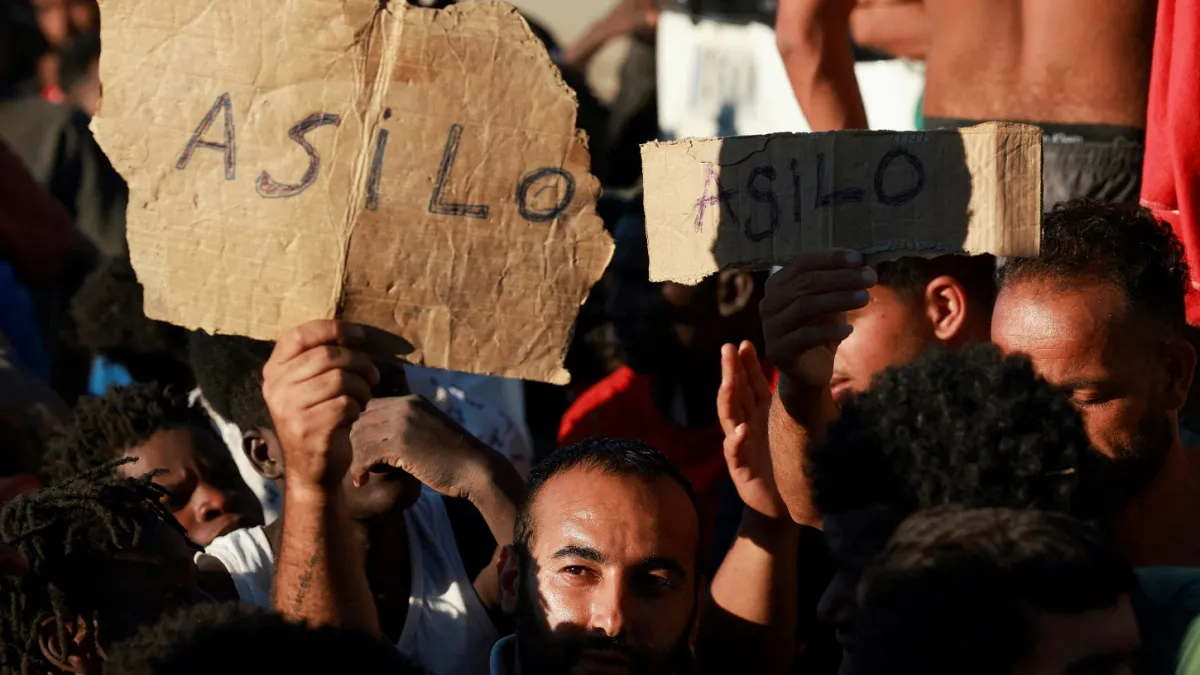
Individuals from third countries that are not categorized as "safe" can apply for asylum, thereby halting their expulsion procedures. Countries such as Mali, Burkina Faso, Libya, and Somalia fall into this category. As per De Lucas, anyone alleging persecution in their home country—due to war, ethnic discrimination, or political reasons—has the right to seek asylum. Once an individual receives a red card identifying them as an asylum seeker, their right to non-refoulement takes precedence, meaning they cannot be expelled. Público has reached out to the Interior Ministry for statistics on asylum applications among migrants in Ceuta but has yet to receive a response.
For third-country nationals who cannot access international protection, conventional expulsion procedures are initiated. Spain has agreements with not only the countries of origin of significant migratory flows from Africa but also transit nations, including Morocco. Therefore, the Spanish government can facilitate the return of individuals by releasing them on the Moroccan side of the border. Nonetheless, the Immigration Law highlights specific situations requiring careful consideration, such as pregnant women, sick individuals, or potential trafficking victims. In such cases, expulsion cannot occur if it jeopardizes the person’s health or safety.
As for unaccompanied minors, the political right has been quick to criminalize the most vulnerable victims of this crisis. The governing bodies led by the PP and Vox have rejected the reception of some of the 1,527 unaccompanied minors currently in Ceuta, despite regulations granting them special protection. Articles 167 to 171 of the Immigration Regulations detail the steps for the repatriation process for foreign minors. The first priority is family reunification, requiring inquiries into the minor's family circumstances in their country of origin. Minors aged 12 and older are considered capable of providing personal testimony, while those aged 16 to 18 must be heard in person.
If family reunification is not applicable and the minor agrees, they may be placed in the protection system of their home country. Recently, Morocco's Minister of Justice, Abdelatif Uahbi, expressed in an interview that the Moroccan government is determined to retrieve all their children. He attributed the delay in this process to "judicial and administrative obstacles" posed by the Spanish government. De Lucas argues that these purported obstacles are merely legal guarantees within the Spanish repatriation procedures and questions whether Moroccan welfare services meet European standards for protecting minors.
When asked about Albares's comments and whether Moroccan authorities might take responsibility for the minors in Ceuta, sources from the Ministry of Youth and Childhood reiterate that family reunification remains the primary option, albeit under certain conditions: the minor's willingness, the existence of a family unit to return to, and agreement from the receiving territory. However, they caution that reunification is often impossible due to the child's best interests. Many minors neither wish to return nor can envision a viable future in the contexts from which they have fled.
The urgency of expediting these cases was another point stressed by the Foreign Minister. However, time is not on their side. NGOs working on the ground estimate that even the simplest cases concerning Moroccan nationals could take an additional two weeks to resolve, provided they are prioritized. Legal experts suggest that increasing the staffing and resources for immigration services is crucial to speeding up these processes. Despite hearing calls for border reinforcements, there has been little discussion regarding bolstering the services that handle these cases. Consequently, the situation in Ceuta is expected to remain fluid, with many personalized procedures concerning unaccompanied minors likely taking one to two months or longer to resolve. The plight of asylum seekers, which can extend for years, adds to the complexities.
The political pressure exerted by both Spain and Morocco is insufficient to circumvent the lengthy, independent, and complicated processes that govern these situations. Even invoking the 2007 agreement aimed at facilitating the repatriation of unaccompanied minors does not supersede the Immigration Law or the Child Protection Law, according to De Juan. The Spanish government is advised to avoid repeating past mistakes, recalling that in 2021, after the entry of nearly 10,000 people in response to the hospitality shown to Brahim Ghali, the leader of the Polisario Front, Spain attempted to rely on this bilateral agreement to expel individuals, including minors, who had crossed the Ceuta fence. A 2024 Supreme Court ruling ultimately deemed these expulsions illegal.
Humanitarian organizations stationed in Ceuta continue to assert that the situation for migrants, including minors, remains unclear twelve days after the crisis began. There is a significant lack of information regarding the legal procedures being followed and the fate of these individuals. As members of the association Alas Protectoras have expressed to Público, there is concern over nighttime raids and controls, leaving them uncertain whether these actions involve identification, transfers, or expulsions. They emphasize that among these individuals are migrants entitled to international protection, minors, and others whose situations legally prohibit expulsion.
As reported by publico.es.