
Spain's Judicial Decisions and the Migrant Crisis at Ceuta
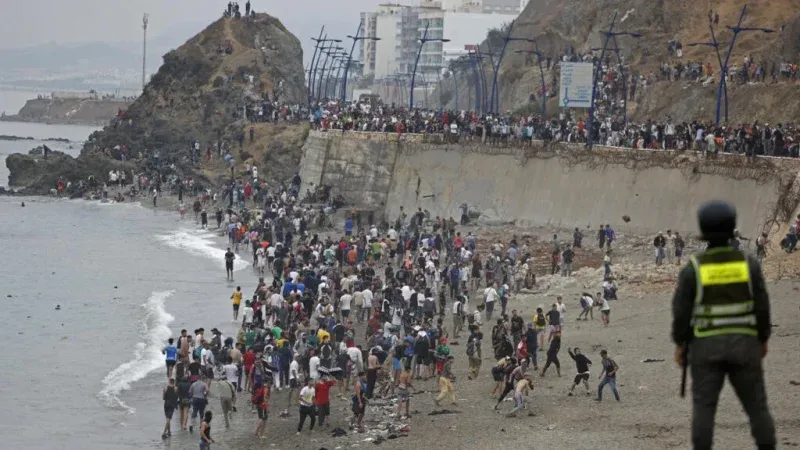
In a recent statement made on Monday, a senior Moroccan official highlighted the implications of a Spanish court's ruling that has significantly weakened the deterrents against irregular migration, contributing to a surge of migrants attempting to cross into the Spanish enclave of Ceuta, located in northern Morocco. This ruling, which was enacted on July 8, has restricted the immediate return of migrants arriving in Spanish territories via maritime routes, leading to what can only be described as a humanitarian crisis.
According to estimates provided by Spanish authorities, approximately 69,500 migrants have returned to Morocco from Ceuta following the mass crossing that occurred last week. Conversely, Moroccan officials report that around 40,000 individuals successfully entered the Spanish enclave during this period. Tragically, the migrant crisis has resulted in significant loss of life, with reports indicating 72 fatalities on the Spanish side of the border and 11 on the Moroccan side.
Juan Jesús Vivas, the governor of Ceuta, voiced accusations towards the Moroccan government, suggesting that it has "encouraged and allowed" the influx of migrants. Meanwhile, European Commission President Ursula von der Leyen warned against any attempts to exploit irregular migration as a means of exerting pressure on EU member states, highlighting the delicate balance between humanitarian concerns and political ramifications.
The Moroccan government official, addressing journalists for the first time since the onset of this crisis, emphasized that the local authorities in Ceuta should have anticipated the consequences of the judicial ruling, which has effectively dismantled existing deterrent mechanisms against irregular migration. This situation underscores the complexities and challenges faced by both Moroccan and Spanish authorities in managing migration flows and ensuring the safety of individuals seeking better opportunities.
This unfolding situation not only raises pressing humanitarian concerns but also calls into question the effectiveness of current policies and the need for comprehensive immigration reform that addresses the root causes of migration while safeguarding human rights.
As reported by mosaiquefm.net.