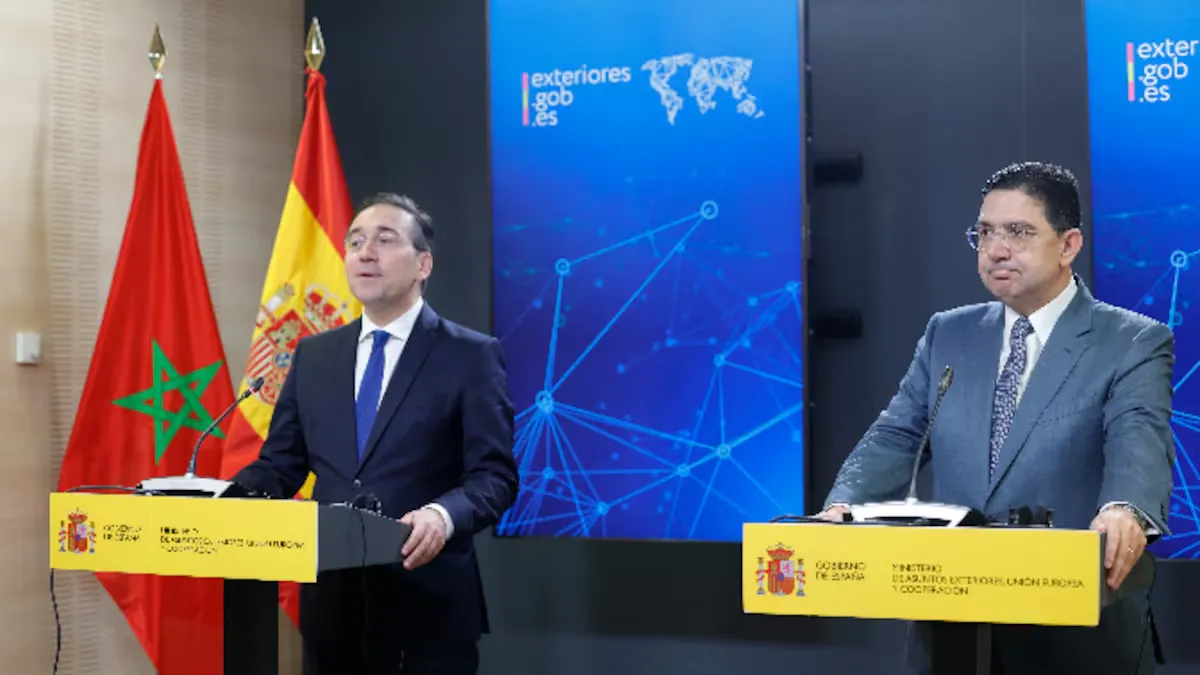

The situation surrounding the Spanish autonomous cities of Ceuta and Melilla has intensified as a month has passed since a significant influx of migrants occurred in Ceuta. In light of these events, Morocco has reiterated its claims of sovereignty over both territories. Moroccan Justice Minister Abdellatif Ouahbi emphasized what he referred to as Morocco's "historical and geographical right" to Ceuta and Melilla, suggesting the need for diplomatic dialogue with Spain regarding the future of these regions.
Despite these claims, Spain has not initiated any diplomatic measures against Morocco. In fact, just recently, Spanish Foreign Minister José Manuel Albares underscored the importance of diplomatic engagement with Morocco to address the ongoing migration crisis in Ceuta. He has consistently highlighted the positive nature of discussions between the two nations, even amid Morocco's demands. Nevertheless, he firmly stated that there has been, and will be, no dialogue concerning the sovereignty of Ceuta and Melilla.
Interestingly, while Spain has refrained from taking a diplomatic stance regarding Morocco's claims, under the leadership of Prime Minister Pedro Sánchez, the government has opted to summon its ambassadors from Nicaragua, Argentina, and Israel for consultations in response to various diplomatic issues. This reflects a contrasting approach to how Spain handles its foreign relations, particularly when faced with accusations from other countries.
Diplomatic Strains with Nicaragua and Argentina
The diplomatic conflict with Nicaragua began on August 11, 2021, when Albares called for consultations with Spain's ambassador to Nicaragua, María del Mar Fernández-Palacios. This move came after the Nicaraguan government, led by Daniel Ortega, issued a harsh statement accusing Spain of meddling in Nicaragua's internal affairs and criticizing several Spanish institutions. The diplomatic crisis escalated when Spain raised concerns about the democratic guarantees surrounding Nicaraguan elections and condemned the arrests of opposition politicians.
In May 2024, tensions flared with Argentina when President Javier Milei made derogatory comments about Begoña Gómez, the wife of Pedro Sánchez, labeling her as "corrupt" during a public event. In response, Albares summoned Spain's ambassador to Argentina and demanded a public apology from Milei. However, the apology was never issued, leading to Spain's decision to permanently withdraw its ambassador, María Jesús Alonso, from Argentina on May 21, 2024.
Contrast in Diplomatic Actions Towards Israel
In contrast to its handling of Morocco, Spain has taken decisive diplomatic actions against Israel. In September 2025, the Sánchez government summoned its ambassador in Israel due to sanctions imposed by the Netanyahu administration against Spanish ministers Yolanda Díaz and Sira Rego, which included barring their entry into Israel and suspending official contacts. Following these events, Spain dismissed Ana Sálomon as its ambassador to Israel.
While Spain has resorted to summoning foreign ambassadors in Madrid as a form of protest—an action deemed less severe than recalling its own ambassador—this approach was previously exercised concerning Morocco in May 2021. This was during another migration crisis when approximately 8,000 migrants entered Ceuta, a number significantly lower than the nearly 70,000 migrants who arrived in the autonomous city last August. However, the current Spanish administration has opted not to utilize this diplomatic tool in the present situation involving Morocco.
The rationale behind this decision is multifaceted. According to Bernabé López, a professor of Arabic Studies, migration and security are critical issues for Spain. It may not be in Spain's best interest to adopt measures against a nation that does not recognize the legitimacy of borders and has the capacity to exert pressure through migration and security concerns.
As reported by cadenaser.com.