
Defending Morocco's Actions in Ceuta Crisis
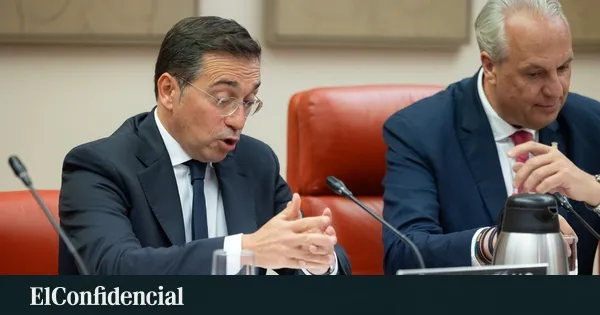
After participating in a critical meeting led by Prime Minister Pedro Sánchez, Spanish Foreign Minister José Manuel Albares addressed the Congress regarding the situation in Ceuta. His remarks came in the wake of significant criticism from both opposition parties and some parliamentary allies, notably including ERC, who expressed their skepticism with irony. Albares staunchly defended Morocco's actions, despite the fact that the North African nation had allowed over 72,000 individuals to exit its territory. Notably, two Moroccan ministers have asserted the sovereignty of Ceuta and Melilla on multiple occasions since July 30, and the latest of these declarations occurred just this past Monday before King Mohammed VI, following Spain’s formal rejection of such claims. Nevertheless, Albares continues to commend Morocco's response to the crisis.
In his address, Albares outlined three key requests he made to his Moroccan counterpart: first, he asked for increased resources on the Moroccan side to help curb the influx of individuals entering Spain; second, he sought the return of those who had entered Spain irregularly; and third, he called for enhanced border security measures to deter future attempts at mass entry, particularly referencing the organized movement planned for August 15. He emphasized the importance of ongoing diplomatic communication with Morocco, asserting that it has been crucial not only for addressing the current crisis but also for preventing similar situations in the future. Albares underscored the necessity of maintaining a diplomatic dialogue with Morocco, given its geographical proximity to Ceuta and Melilla, stressing that such interactions are essential during crises that require diplomatic intervention.
Challenges to Spain's Territorial Integrity
Albares firmly stated that he has unequivocally defended Spain's sovereignty over Ceuta and Melilla in his discussions with Moroccan officials. He asserted, "There has never been, nor will there ever be, any conversation regarding this matter." The Foreign Minister indicated that he and the Ministry have formally rejected any statements that challenge Spain's territorial integrity, using all available diplomatic channels. However, it has been noted that Albares has not yet summoned the Moroccan ambassador in Madrid for consultations, even though he had previously communicated with the Italian ambassador following Italy's strict travel controls imposed on travelers from Spain in response to the massive influx of irregular migrants into Ceuta.
This apparent discrepancy in diplomatic treatment was further highlighted during Albares' statement, where he defended Morocco while criticizing Italy. He expressed disappointment in the lack of solidarity from some European governments, particularly Italy, stating that, "Without solidarity, there can be no European Union." He pointed out that Italy, which received a significantly higher number of irregular migrants last year compared to Spain, imposed arbitrary travel restrictions without prior consultation with Spain. Albares accused the Italian government of acting on internal political motives, which he deemed irresponsible and damaging to the dignity of Spaniards and the unity of Europe.
Throughout his address, Albares faced a barrage of criticism from opposition members regarding the government's handling of the crisis, with calls for accountability in light of Morocco's actions and the broader implications for Spain's territorial integrity. Various party representatives underscored the need for a clearer stance regarding Morocco's intentions, emphasizing that the current situation poses a serious risk if not adequately addressed. Albares responded by defending the government's diplomatic strategy, insisting that his role is to foster relations beneficial to Spain, while urging parliamentary groups not to confuse diplomatic discretion with a lack of resolve.
As reported by elconfidencial.com.