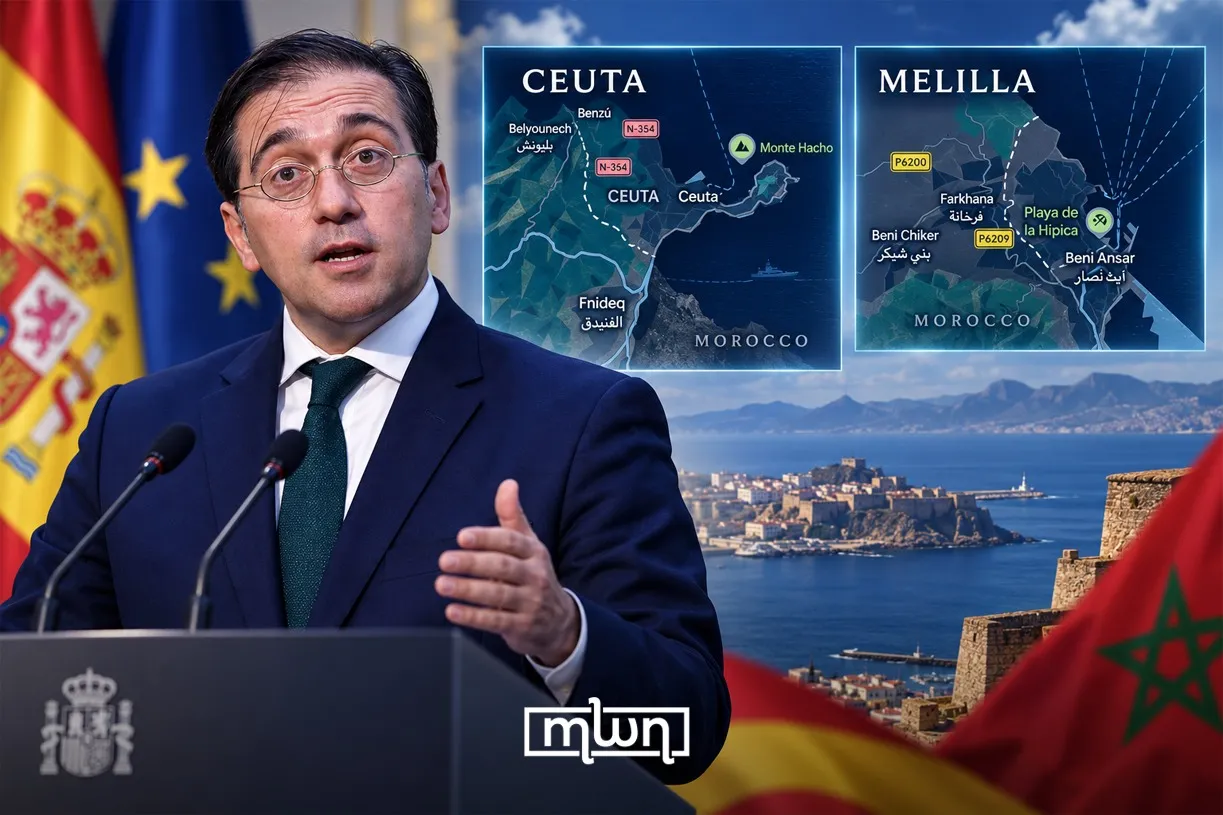

In a recent interview, Spain's Foreign Minister, José Manuel Albares, expressed serious concerns regarding the implications of recent remarks made by Moroccan ministers regarding Ceuta and Melilla. Albares cautioned that such claims could potentially harm the diplomatic relations between Spain and Morocco. He firmly stated that Madrid is unwilling to enter into negotiations with Rabat concerning the territorial integrity of these two cities, which are currently under Spanish administration. Albares emphasized that he has communicated his apprehensions directly to Nasser Bourita, Morocco's Foreign Minister, labeling the comments from Moroccan officials as "absolutely unacceptable."
During the interview with Spanish public broadcaster La 1, Albares reiterated Spain's position on Ceuta and Melilla, asserting unequivocally that "Ceuta and Melilla are Spain." He made it clear that Madrid has no intention of discussing the issue of territorial integrity with Morocco, now or in the future. He noted that the remarks made by Moroccan officials were part of a political campaign in Morocco ahead of the elections set for September 23. Albares clarified that these officials were acting as representatives of their political parties rather than in an official governmental capacity, yet he maintained that the electoral context does not mitigate the adverse effects such statements can have on Spain-Morocco relations.
Furthermore, Albares addressed the surge of migrants attempting to cross into Ceuta at the end of July, asserting that he had reached out to Bourita as the situation escalated. The Moroccan Foreign Minister assured him that Morocco was not responsible for the migration wave and that Moroccan authorities had quickly mobilized resources to manage the situation, which had overwhelmed local officials at one point. Albares pointed out the difficulty in determining who instigated the migration movement but highlighted an "absolutely unusual movement on social media" prior to the events, particularly on July 30. He indicated that social media posts created a misleading narrative that the border into Ceuta was open, stemming from a misinterpretation of a ruling by Spain’s Supreme Court on July 8.
Albares argued that the influence of social media was significant, as it effectively incited thousands to head toward Ceuta. He mentioned that Spanish authorities are currently investigating the circumstances surrounding the influx, aiming to gather enough evidence to ascertain the source of the campaign that led to this migration and to prevent similar situations from arising in the future. While Albares acknowledged the challenges in identifying those responsible, he stressed the importance of ongoing investigations to establish clarity before the government makes any further decisions regarding the matter.
As reported by moroccoworldnews.com.