
Government's Commitment to Repatriate Unaccompanied Minors
The Spanish government, led by Prime Minister Pedro Sánchez, has made a bold assertion regarding its intention to repatriate 1,500 unaccompanied foreign minors, known as MENAs, currently residing in Ceuta. This comes in the wake of a significant influx of 80,000 undocumented migrants from Morocco, which occurred on July 30. However, despite these declarations, the government has admitted that it has not successfully repatriated any minors back to Morocco since 2018, despite having a bilateral agreement in place since 2007 aimed at facilitating such returns. In fact, by 2025, only 41 minors had been repatriated by the current administration, raising questions about the effectiveness of their immigration policies.
Félix Bolaños, the Minister of the Presidency, Justice, and Relations with the Cortes, emphasized the government's commitment to ensure that all minors in Ceuta can be reunited with their families in Morocco. He highlighted that discussions with Moroccan officials have been ongoing at all levels, reinforcing the shared goal of family reunification. With 1,527 minors currently reported in Ceuta following the recent migration wave, the urgency for a systematic approach to their repatriation has never been greater.
Challenges in the Repatriation Process
This ambitious repatriation strategy, however, is fraught with challenges. Although the government has expressed its commitment, the statistics reveal a staggering reality. Of the nearly 28,000 minors who entered Spain illegally between 2018 and 2025, only a mere 0.15% have been returned to their families. The procedure for repatriating minors is complex and requires a thorough evaluation to ensure that the child's best interests are prioritized. This includes engaging with diplomatic channels to locate family members or child protection services that can take responsibility for them, which has proven to be a cumbersome process.
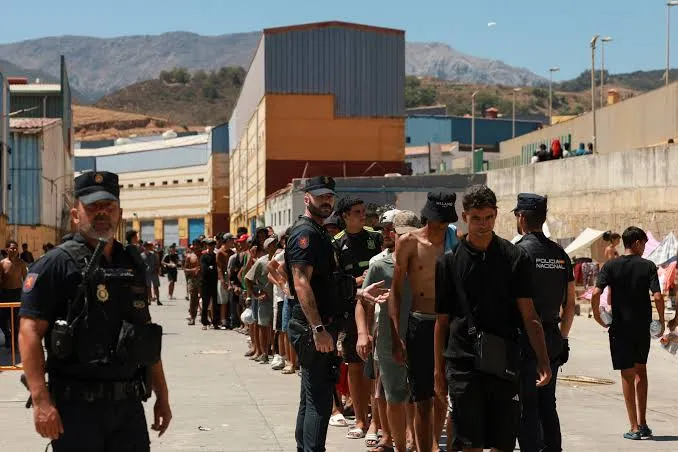
Furthermore, the recent surge in applications for family affiliation has overwhelmed the local police department in Ceuta, which struggled to manage the influx of individuals seeking assistance. Despite efforts to bolster staffing, the absence of translators complicated communications with the minors, leading to chaotic scenes and long lines outside police facilities. This situation underscores the pressing need for the government to streamline its processes and ensure adequate resources are in place to handle the complexities of migrant repatriation effectively.
As reported by okdiario.com.