

Spain Faces Criticism Over Migrant Return Process
On Sunday, the Spanish government announced that more than 5,300 migrants who remained in the city of Ceuta after an unprecedented influx in July have returned to Morocco within just one month. This situation arises as authorities are under mounting pressure to restore calm in the city, which has been experiencing increasing tensions. The newly released figures come amidst criticisms directed at the government regarding the slow pace of migrant returns from Ceuta, a Spanish enclave situated in North Africa. This slow response has had adverse effects on Prime Minister Pedro Sánchez, especially with elections looming just a year away.
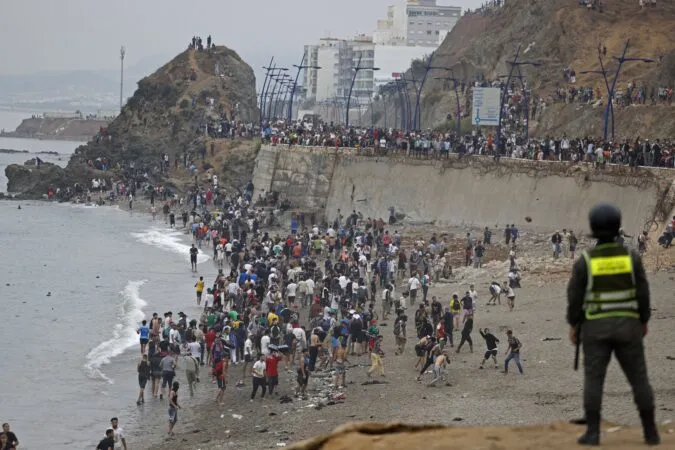
During the significant migrant surge on July 30 and 31, the number of individuals crossing into Ceuta exceeded 70,000, resulting in tragic incidents. Fortunately, most of these migrants returned to Morocco shortly after their arrival. The government had to verify the identities of thousands of migrants who remained in the city for weeks to determine their eligibility for asylum, particularly as unaccompanied minors cannot be deported immediately.
Angel Victor Torres, the Minister of Regional Policy tasked with leading the government's response to this crisis, stated in a video posted on social media that 5,321 individuals have "voluntarily" returned to Morocco since August 10. Additionally, Torres mentioned that 90 people have "withdrawn" their applications for international protection, while approximately 1,000 individuals are being registered to complete their return procedures.
The minister did not clarify how many migrants still remain in Ceuta after these returns, a matter that has sparked a debate between the leftist government and the local authorities, who are managed by conservative officials. The local government leader of Ceuta, Juan Jesús Vivas, from the opposition People's Party, claimed on Friday that around 13,000 migrants still reside in the city, whereas government estimates suggest significantly lower numbers.
In response to the ongoing situation, residents of Ceuta continue to organize regular protests, while migrants are camping on beaches and sleeping on the streets, accusing the government of abandoning the city, which is heavily burdened by a humanitarian crisis. On Sunday, the Ministry of Migration announced the creation of 864 additional places in temporary migrant shelters, increasing the total capacity to approximately 4,300 spaces, with plans to raise this number to 6,000 "in the near future."
As reported by alyaoum24.com.
