
The migration crisis that has erupted in Ceuta has compelled the Spanish Government to mobilize significant portions of its Cabinet to address the situation on the ground and mitigate the impacts of this unprecedented emergency. The approach being taken by La Moncloa emphasizes providing immediate assistance while simultaneously downplaying the diplomatic tensions with Morocco and the pressure from European partners such as Italy and Denmark, who have recently reiterated calls for a more stringent response to what they describe as "uncontrolled immigration."
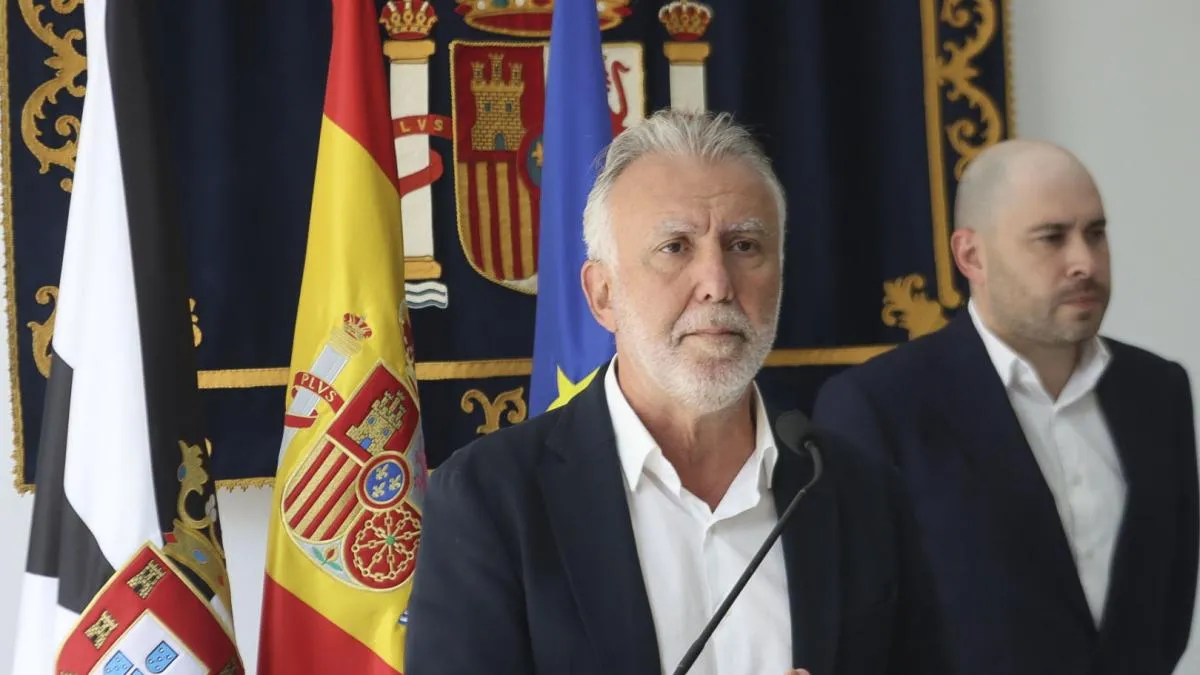
The series of ministerial visits showcases the government's efforts to formulate a comprehensive response to the crisis. On Saturday, Sira Rego, the Minister of Youth and Childhood, initiated the discussions focusing on the plight of unaccompanied minors. Following her, Ángel Víctor Torres, the Minister of Territorial Policy, took charge of coordinating efforts with local authorities. Between today and tomorrow, José Manuel Albares, the Minister of Foreign Affairs, and Margarita Robles, the Minister of Defense, are set to arrive in Ceuta to further bolster the government’s presence.
This deployment is also aimed at countering criticism from the opposition and local residents of Ceuta, who demonstrated on Sunday to “demand answers.” The government is striving to convey a message of state resilience, as exemplified by Óscar López, the Minister for Digital Transformation and Public Function, who defended the government's actions against the criticisms, asserting that it has not only “faced the situation” but has also responded to the challenge by mobilizing sufficient resources and personnel in what they have termed a "tremendous emergency."
According to data provided by Moncloa, the crisis peaked with thousands attempting to enter, although it was noted that the vast majority returned to Morocco within the first 24 to 48 hours, thus preventing what would have resulted in the “total collapse” of a population of 85,000 residents.
Despite the immediate containment on the ground, the government's strategy leaves the diplomatic aspects of the conflict in limbo. This situation not only involves Morocco—whose border controls were overwhelmed during the massive influx—but also raises concerns within the European Union. A joint statement by Italian Prime Minister Giorgia Meloni and Danish Prime Minister Mette Frederiksen, both allies of the PSOE in the Progressive Alliance of Socialists and Democrats, called for the establishment of repatriation centers in third countries, which could pressure Spain to take a definitive stance on the externalization of its borders.
For now, the government has chosen to avoid exacerbating these diplomatic fronts and is focusing on demonstrating the state’s capacity to manage the emergency without allowing the migration crisis to escalate into another diplomatic crisis, particularly outside of Europe’s domestic context.
As reported by lavanguardia.com.