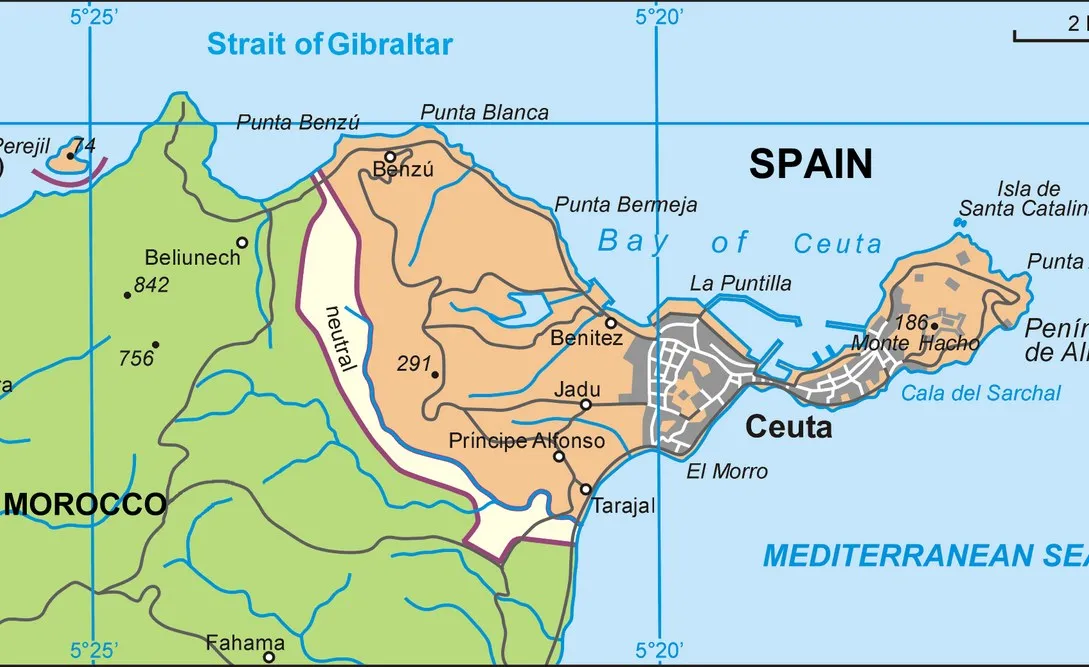

Spain's Forewarning of a Migrant Influx
In a startling revelation, Spain's national intelligence agency disclosed documents indicating that a warning regarding potential "mass entries" of migrants into Ceuta was issued just a day prior to a significant crisis where over 70,000 migrants attempted to breach the enclave's border. These documents were made public on Wednesday, shedding light on the events leading up to this unprecedented surge. Among the declassified files are more than 40 internal alerts, intelligence assessments, and communications from various law enforcement and intelligence agencies that illustrate the coordinated response to the impending influx.
One particularly urgent memo, dispatched by the National Intelligence Center, cautioned local authorities in Ceuta about an organized effort to execute mass entries. It specifically noted that there were two distinct groups with a combined following of approximately 180,000 individuals, underscoring the scale of the situation. Additionally, the CENIF, a border division of the National Police, issued its own warning concerning the presence of social media groups that were actively planning mass entries on the night of July 29, 2026, demonstrating a high level of awareness regarding the potential crisis.
EU's Response and Financial Support
In light of this crisis, the European Union has pledged €115 million (around $130 million) to assist Spain in fortifying its external borders and managing the return of migrants who overwhelmed the authorities in Ceuta during the tumultuous late July period. This funding, requested by Spain on August 24, aims to finance enhanced border surveillance and infrastructure improvements, including the installation of thermal cameras and underwater drones, as well as facilities dedicated to the processing and screening of migrants. European Commission Vice President Henna Virkkunen emphasized the EU's commitment to combating illegal migration and ensuring the swift return of individuals residing unlawfully within Ceuta.
The events on July 30 and 31, where over 72,000 individuals crossed into Spanish territory from Morocco, triggered a major humanitarian crisis, resulting in numerous fatalities, primarily due to drowning. Although many who breached Ceuta's borders have since been returned, a significant number of migrants, including unaccompanied minors living in dire conditions, remain in the enclave. This incident has ignited tensions among EU member states, particularly between Spain's left-wing government and Italy's far-right leadership. While Prime Minister Pedro Sanchez has asserted that there is no concrete evidence implicating Morocco in orchestrating the crisis, investigations are underway to determine whether African authorities played a role in facilitating the mass migration.
As reported by allafrica.com.