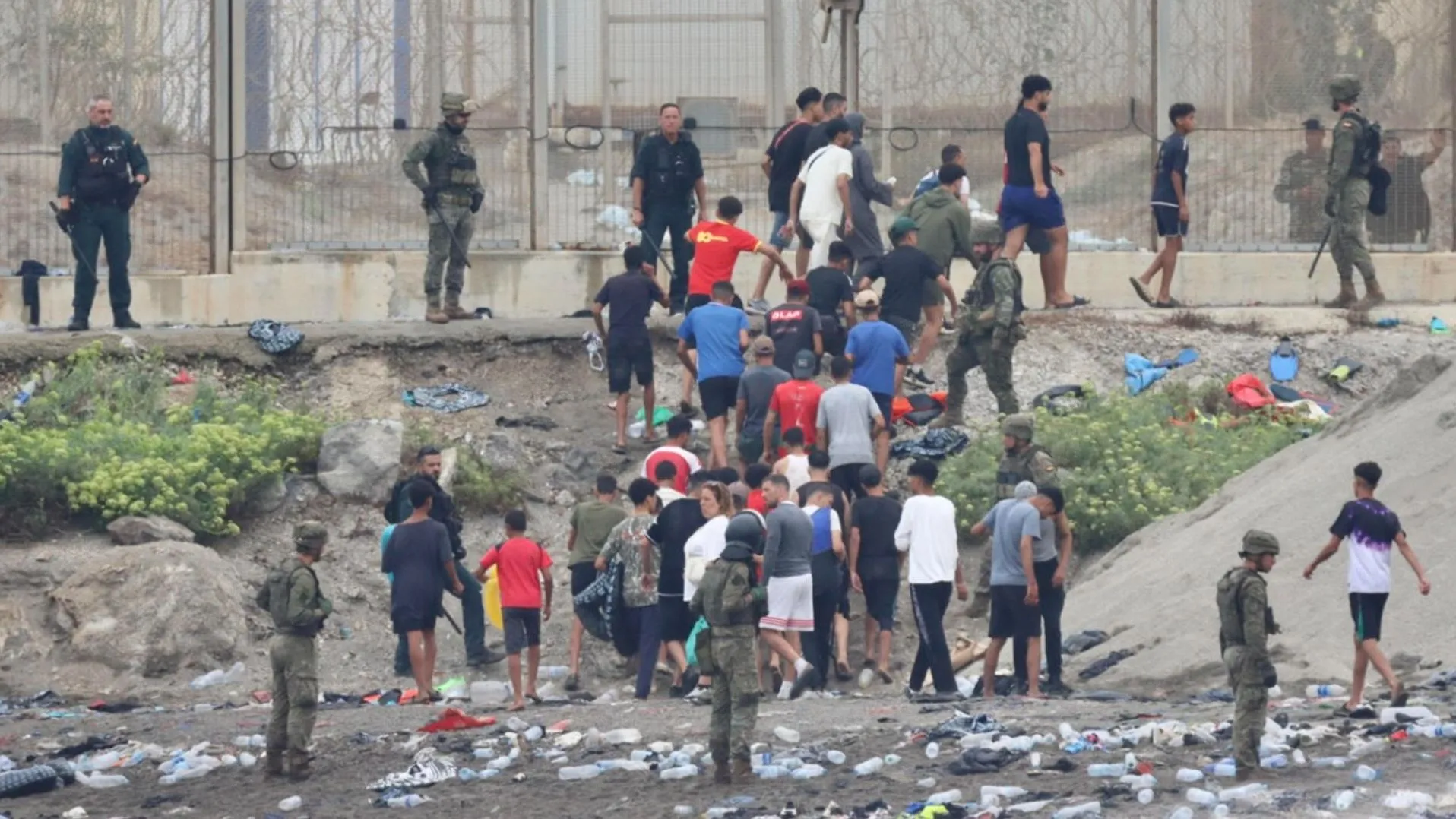

The Spanish Interior Ministry has confirmed that there is currently no notification regarding a new mass entry attempt in Ceuta, similar to the significant influx experienced on July 30 and 31. According to sources from the department led by Fernando Grande-Marlaska, the ministry is, however, maintaining increased security measures in critical areas, particularly at the Tarajal border and the Melilla fence. In an effort to deter irregular entries into these autonomous cities, the Spanish embassy in Rabat has launched a social media campaign aimed at discouraging migrants from attempting to cross into Spain.
Concerns are mounting over potential new calls for mass crossings as Morocco approaches its legislative elections this Wednesday. Officials fear that these calls, amplified on social media, may coincide with a moment when Moroccan security forces are preoccupied with the electoral process. This sentiment was echoed by Rocío Albert, the Economy, Finance, and Employment Counselor of the Madrid Community, who expressed worry about a potential "new invasion" due to the perceived incapacity of the government to manage the situation effectively.
Enhanced Security Measures in Critical Areas
The Interior Ministry continues to bolster its presence in critical areas, including the Melilla fence, Ceuta port, and the El Tarajal border. Local security boards have been entrusted with adapting deployments on the ground to respond to any emerging challenges. Sources from the Unified Civil Guard Union have reported that around 144 personnel are currently stationed in Ceuta and approximately 40 in Melilla. The National Police has indicated that while there has not been an extraordinary reinforcement of the Intervention Police Units (UIP), a contingency plan is in place should another crisis arise. Officers remain on alert and can be deployed to the borders or mobilized from the Peninsula if required.
Social Media Campaign to Deter Irregular Arrivals
In the meantime, the Spanish embassy in Rabat has been actively disseminating messages on social media to discourage irregular crossings into Ceuta and Melilla, aligning with previous communications from the Spanish Foreign Ministry. These messages are crucial amid rising tensions due to new social media calls for mass entry into the Spanish enclaves. The embassy's account on X (formerly Twitter) emphasizes that "irregular entry into Spain through Ceuta and Melilla does not entitle one to access the Peninsula, remain in Spain, or travel freely within the rest of the European Union." Furthermore, the campaign warns potential migrants against misinformation, clarifying that a recent Supreme Court ruling does not alter immigration laws nor does it declare illegal the rejection of entry at the borders.
As the situation evolves, it is important to highlight that Ceuta and Melilla operate under a unique control regime within Europe, featuring a dual filter system that includes border controls with Morocco and a second Schengen control prior to entry into the Peninsula by sea or air. The campaigns encourage interested individuals to seek official information regarding legal entry and residency in Spain and the EU, coinciding with renewed calls for mobilization related to crossings into Ceuta and Melilla.
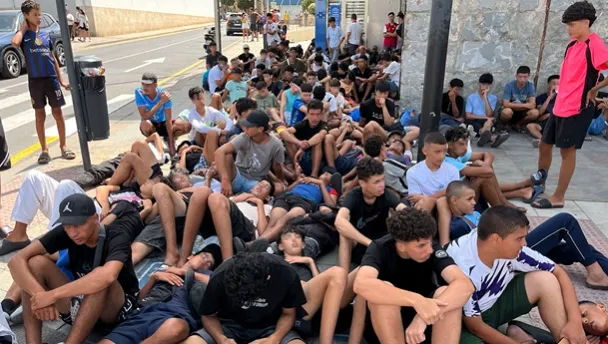
Despite the ongoing challenges, many migrants, predominantly young individuals, continue to remain in Ceuta following the massive entry of over 70,000 people in late July, spurred by rumors and social media campaigns that have led to a humanitarian crisis resulting in at least 140 fatalities, according to civil organizations. However, there are expectations that voluntary departures from Ceuta may increase as the season changes and inclement weather approaches in October. Meanwhile, hundreds of local residents gathered recently at the Juan Carlos I esplanade, just three kilometers from the Moroccan border, to march towards the Tarajal in defense of the Spanish identity and territorial integrity of the city.
As reported by rtve.es.