
Protests Erupt Over Migrant Treatment in Ceuta
The opposition in Spain has sharply criticized Prime Minister Pedro Sánchez's handling of the ongoing migrant situation in Ceuta, a Spanish exclave located next to Morocco. As the migrant population in Ceuta remains high, tens of thousands have taken to the streets in nationwide demonstrations against the government's migration policies. Citizens in Ceuta are not only expressing their concerns about the migrants but also reaffirming their belief that the exclave is an integral part of Spain.
Protesters and speakers at these rallies have accused Sánchez's central government of adopting a complacent policy towards Morocco and failing to provide adequate support to Ceuta. Recently, Moroccan Minister for Islamic Affairs, Ahmed Toufiq, reiterated his country’s historical claims over the “occupied cities” of Ceuta and Melilla, while Justice Minister Abdellatif Ouahbi demanded the return of these two Spanish enclaves to the “bosom of the homeland.”
As thousands of migrants continue to remain in the Spanish exclave, the Madrid government has established a crisis team and reached out to the European Commission for support. However, tensions with Morocco have resurfaced, complicating the situation further.
Opposition Leaders Call for Government Accountability
Alberto Núñez Feijóo, the leader of the conservative People's Party (PP), has described the influx of migrants as an “invasion” orchestrated by Morocco. He accused Sánchez and his administration of lying about the situation, claiming they had denied any prior warning regarding the migration crisis and insisted that Morocco was not involved in inciting it. Both assertions, according to Feijóo, are untrue.
The central government reported that approximately 50,000 people participated in the Madrid demonstration alone. Late in the evening, national police were compelled to disperse extremist groups near the Congress building using tear gas and rubber bullets. Four protesters, including two minors, were arrested for disturbances and resisting authority, while four police officers sustained injuries during the unrest.
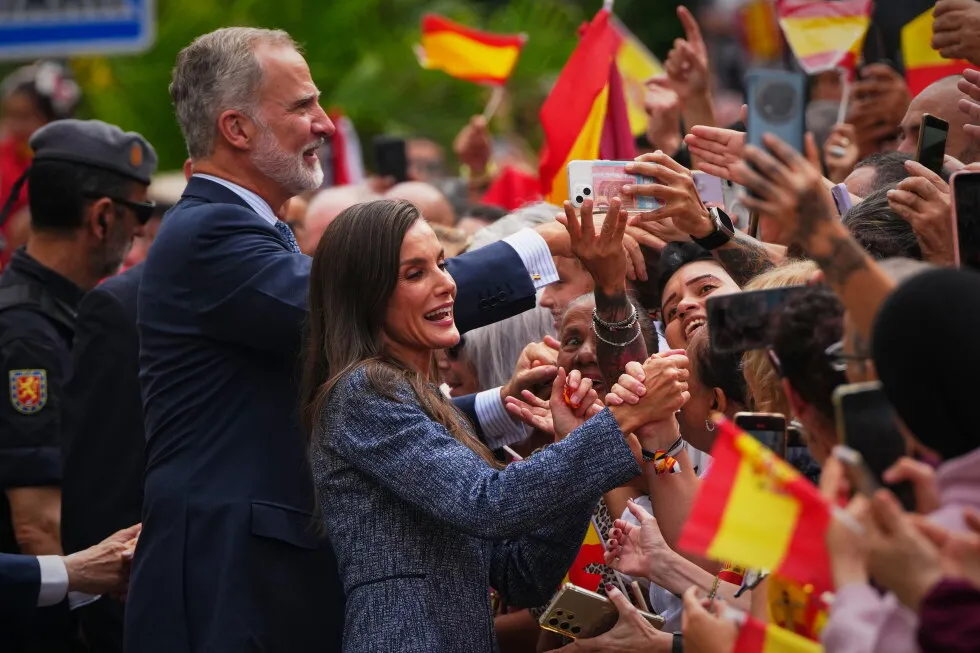
In Ceuta, thousands rallied under a sea of Spanish flags, demanding a return to normalcy and affirming the exclave’s status as part of Spain. Banners declared, “Ceuta will not sell itself, Ceuta will not surrender.” The demonstrations were organized by the FEMP, the federation of Spanish municipalities led by the opposition's PP. Madrid’s Mayor, José Luis Martínez-Almeida, affirmed, “Ceuta is Spanish and will not be left alone,” while PP General Secretary Miguel Tellado estimated that around 2,000 protests were held across Spain, reiterating calls for the government’s resignation and new elections. The far-right Vox party also participated in the demonstrations.
Counter-demonstrations occurred in various cities, including Barcelona and Bilbao, where participants condemned racism with slogans like “No human being is illegal.” According to government reports, at least 72,000 migrants entered Ceuta on July 30 and 31. A month later, around 5,000 migrants still remain in the exclave, living in makeshift camps on streets and beaches, creating significant strain on the 83,000 local residents. Protests continue to erupt, sometimes resulting in violent confrontations against migrants and private aid organizations.
Due to legal constraints, Spain cannot collectively deport migrants and must assess each asylum application individually, a process that could take weeks or even months. The central government is also reluctant to transfer migrants to the mainland, as Ceuta is not part of the Schengen Area, which could lead to heightened border controls from other Schengen members, as seen with Italy.
While many of the 80,000 Moroccans who arrived in late July have returned home, thousands still remain hidden in the streets and forests of Ceuta, only emerging for food distributions organized by local charities. This ongoing crisis continues to challenge Spain's immigration policies and the social fabric of Ceuta.
As reported by sueddeutsche.de.